
 ENG
ENG
 English
 русский
 한국어
한국어 Deutsch
Submit feedback
News
 Home / News / Industry News / Why Is Electrosurgical Pencil Wire Critical for Modern Electrosurgery?
 Why Is Electrosurgical Pencil Wire Critical for Modern Electrosurgery?
 2025.12.24
 Industry News
Content
- 1 The Fundamental Role of Electrosurgical Pencil Wire
- 2 How Pencil Wire Supports Precision and Control
- 3 Safety Implications in the Operating Room
- 4 Material Selection and Performance Requirements
- 5 Compatibility with Modern Electrosurgical Systems
- 6 Impact on Surgical Efficiency and Workflow
- 7 Quality Standards and Regulatory Considerations
- 8 Future Trends in Electrosurgical Pencil Wire Design
The Fundamental Role of Electrosurgical Pencil Wire
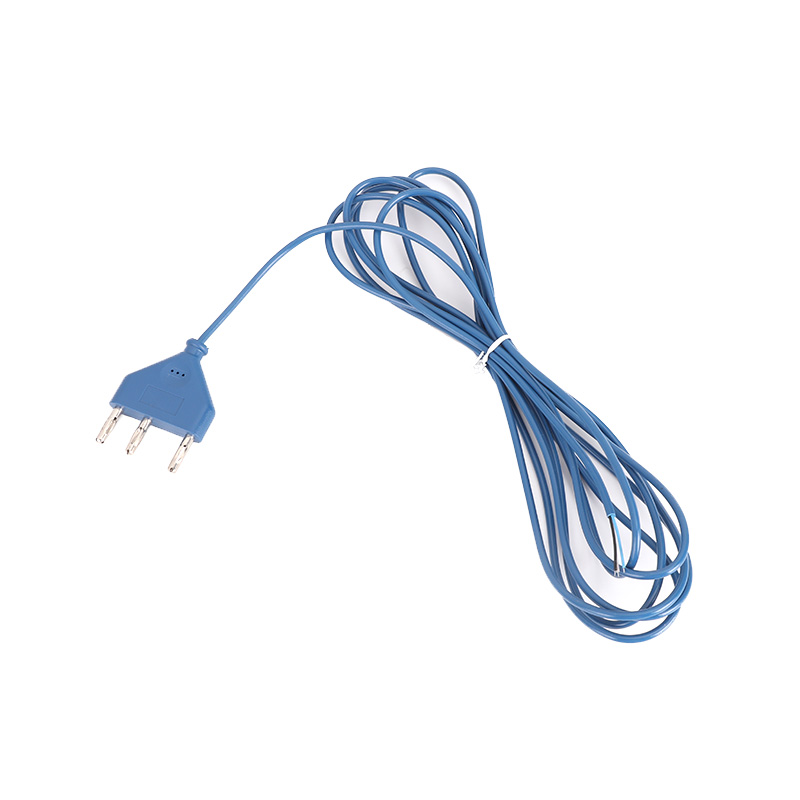
Power cord for electrosurgical pencil is a critical component in modern electrosurgical systems, acting as the primary conductor that delivers high-frequency electrical energy from the generator to the active electrode. This controlled energy enables surgeons to cut, coagulate, desiccate, or fulgurate tissue with a high degree of precision. Without a reliable and well-designed pencil wire, even the most advanced electrosurgical generator cannot perform safely or effectively.
In clinical practice, the pencil wire must transmit electrical current consistently while maintaining flexibility, insulation integrity, and resistance to heat. These characteristics directly affect surgical accuracy and patient outcomes. As operating rooms increasingly rely on electrosurgery for efficiency and reduced blood loss, the importance of this seemingly simple component has become more apparent.
How Pencil Wire Supports Precision and Control
Precision is at the heart of modern electrosurgery. The electrosurgical pencil wire plays a key role by ensuring stable current delivery with minimal signal loss or interference. Any inconsistency in conductivity can lead to uneven tissue effects, such as excessive thermal spread or incomplete coagulation.
Stable Energy Transmission
High-quality pencil wires are engineered with conductive cores that maintain uniform electrical resistance along the entire length. This stability allows surgeons to predict tissue response accurately, which is especially important in delicate procedures involving nerves, vessels, or thin tissue layers.
Ergonomic Integration
The wire must also integrate seamlessly with the electrosurgical pencil handpiece. Adequate flexibility and strain relief prevent resistance changes during movement, supporting smooth hand control and reducing operator fatigue during long procedures.
Safety Implications in the Operating Room
Patient and staff safety is a primary concern in electrosurgery, and pencil wire quality directly affects risk levels. Poor insulation, inferior materials, or weak connections can lead to electrical leakage, unintended burns, or equipment failure.
Insulation and Thermal Protection
Electrosurgical pencil wires are typically coated with medical-grade insulation materials designed to withstand high temperatures and repeated sterilization cycles. This insulation prevents stray currents from escaping the wire and protects both patients and surgical staff from accidental contact burns.
- Reduces risk of unintended tissue damage
- Minimizes electrical leakage
- Enhances compliance with surgical safety standards
Material Selection and Performance Requirements
Material choice is a defining factor in the performance of electrosurgical pencil wire. Manufacturers must balance conductivity, durability, flexibility, and biocompatibility to meet clinical demands.
Conductive Core Materials
Copper and copper alloys are commonly used due to their excellent conductivity. In higher-end designs, specialized alloy compositions may be employed to improve resistance to fatigue and heat deformation during prolonged use.
Outer Jacket and Insulation
The outer layer often consists of silicone or thermoplastic elastomers that provide flexibility and high dielectric strength. These materials allow the wire to bend repeatedly without cracking, which is essential in dynamic surgical environments.
Compatibility with Modern Electrosurgical Systems
Modern operating rooms use a wide range of electrosurgical generators, each with specific output characteristics. Electrosurgical pencil wire must be compatible with different power settings, waveforms, and connectors to ensure consistent performance.
| Compatibility Factor | Clinical Importance |
| Connector Type | Ensures secure and stable power delivery |
| Voltage Tolerance | Prevents insulation breakdown |
| Generator Matching | Optimizes cutting and coagulation effects |
Impact on Surgical Efficiency and Workflow
Reliable electrosurgical pencil wire contributes to smoother surgical workflows. When surgeons can trust the responsiveness and consistency of their tools, procedures can be completed more efficiently with fewer interruptions.
Reduced need for instrument replacement, fewer equipment-related delays, and predictable tissue response all translate into shorter operative times. This efficiency benefits not only surgical teams but also healthcare facilities aiming to optimize operating room utilization.
Quality Standards and Regulatory Considerations
Electrosurgical pencil wire must comply with stringent medical device regulations and international standards. These standards govern electrical safety, material biocompatibility, and mechanical durability.
- Electrical safety and leakage current limits
- Resistance to repeated sterilization
- Mechanical strength and strain resistance
Compliance with these requirements ensures that pencil wire performs reliably across a wide range of surgical applications while meeting hospital procurement and regulatory expectations.
Future Trends in Electrosurgical Pencil Wire Design
As electrosurgery continues to evolve, pencil wire design is also advancing. Trends include thinner yet more durable conductors, improved insulation materials, and enhanced compatibility with smart electrosurgical systems.
These innovations aim to further reduce energy loss, improve tactile feedback, and support minimally invasive techniques. In this context, electrosurgical pencil wire will remain a foundational element, quietly enabling the precision and safety that modern surgery demands.


PRODUCTS
ABOUT US
CONTACT INFO.
- +86-18758062352
- +86-0571-64701616
- [email protected]
- No. 7, Xinqu Road, Xin’Anjiang Street, Jiande, Hangzhou, Zhejiang, China

Copyright © 2023 Hangzhou Newmany Electronics Co., Ltd. All Rights Reserved. Power Strip Manufacturer in China| Login

 TOP
TOP