
 ENG
ENG
 English
 русский
 한국어
한국어 Deutsch
Submit feedback
News
 Home / News / Industry News / What Not to Plug Into Power Strips: Dangerous Habits and How to Fix Them
 What Not to Plug Into Power Strips: Dangerous Habits and How to Fix Them
 2026.05.25
 Industry News
Never Daisy-Chain Power Strips Together
Daisy chaining—plugging one power strip into another to multiply available outlets—is the single most common power strip misuse in homes and offices. It feels like a logical solution when outlets run short. Electrically, it's a serious fire risk that violates most national electrical codes and the explicit warnings printed on virtually every strip sold.
Here's why the physics make it dangerous. Every power strip is rated for a maximum current load based on the gauge of its internal wiring. When you plug a second strip into the first, every device on the downstream strip draws current through the first strip's cord and internal conductors. The first strip's wiring now carries the combined load of both strips—potentially double or triple its rated capacity—while its overcurrent protection is only calibrated to trip at its own rated limit, not the actual combined load passing through it. The result is wiring that runs hot far beyond design parameters, protected by a breaker that doesn't know it's overloaded.
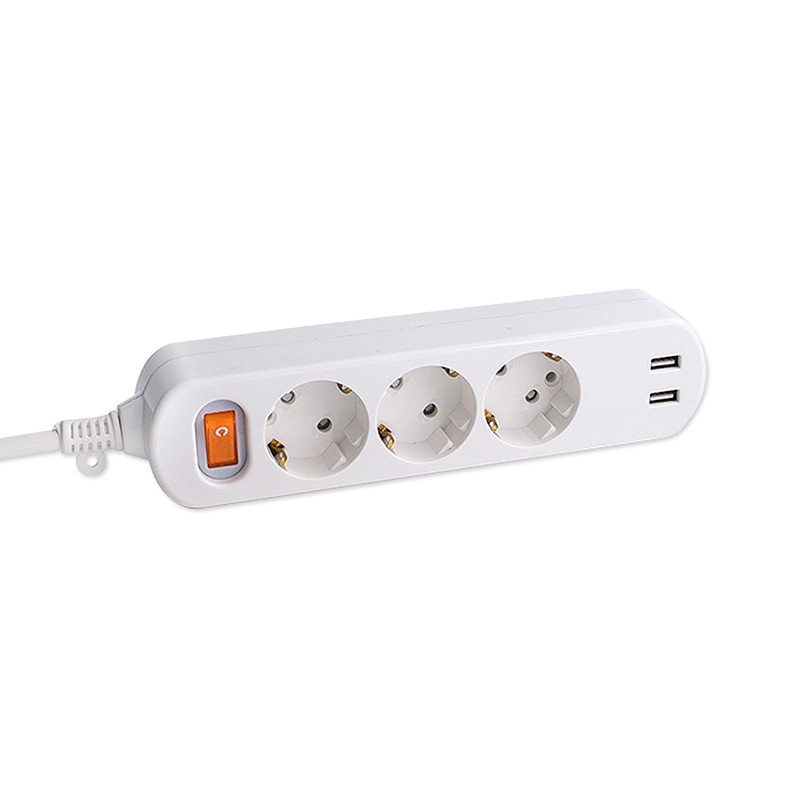
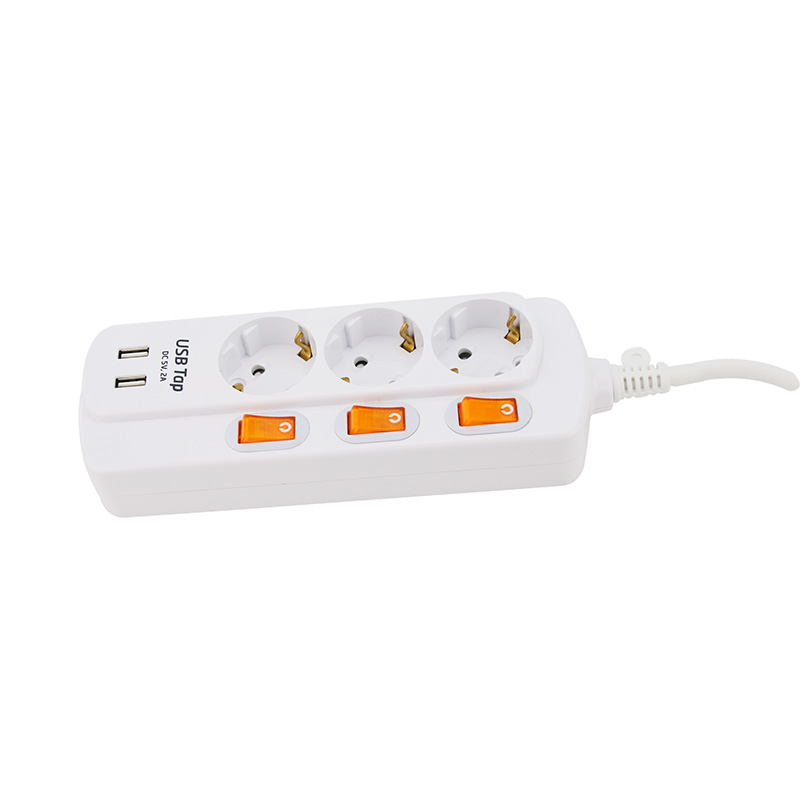
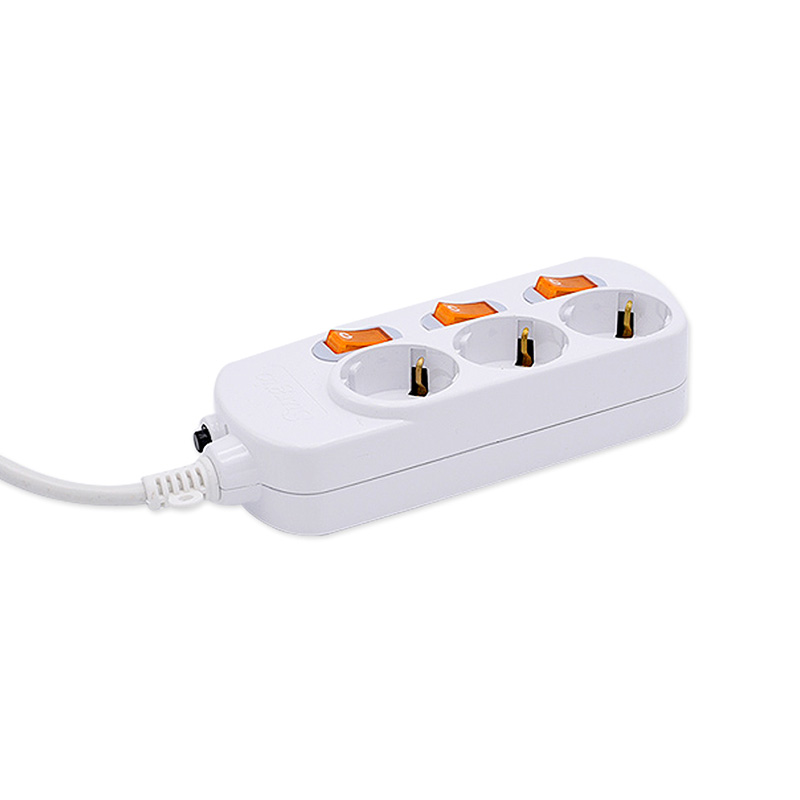
If you genuinely need more outlets in a specific location, the correct solution is a single multi-outlet strip on its own wall circuit—or, for permanent needs, having an electrician add a dedicated outlet. Power strips with independent switches for per-outlet control let you manage exactly which devices are live at any moment, reducing accumulated load without resorting to chaining.
Content
Don't Use Power Strips in Wet or Damp Locations
Standard power strips are rated for dry indoor use only. Kitchens, bathrooms, garages, basements, laundry rooms, and outdoor areas all create conditions that standard strips aren't built to handle—and water is the mechanism that turns an electrical hazard into an immediate danger.
When moisture contacts a live power strip, it creates a conductive path between the internal wiring and the housing, the outlet contacts, or the floor. This can cause a ground fault—a current path outside the intended circuit—that may not trip the circuit breaker fast enough to prevent shock or ignition. A ground fault circuit interrupter (GFCI) outlet detects that deviation within milliseconds and cuts power before lethal current can flow. A power strip has no equivalent sensing capability.
In kitchens, the proximity of sinks, dishwashers, and steam from cooking creates near-constant ambient moisture risk. In bathrooms, splashes from sinks and showers can reach strips mounted along baseboards or sitting on countertops. Basements and garages present flooding and condensation risks. For any of these environments, the answer is properly installed GFCI outlets at the wall—not a weatherproof extension or a covered strip. Only products specifically rated for outdoor or wet-location use (clearly marked on the product and packaging) belong anywhere near moisture.
Never Cover a Power Strip with Rugs, Carpet, or Furniture
Electricity flowing through a conductor generates heat—this is unavoidable physics. A power strip dissipates that heat through its housing surface and into the surrounding air. Cover the strip, and you eliminate that dissipation pathway.
Running a strip under a rug or carpet is one of the leading causes of slow-developing electrical fires. The thermal insulation of the carpet traps heat against the strip's housing. Over hours of use, the housing temperature climbs beyond design limits. At sufficient temperatures, the plastic begins to soften and eventually ignite—often long after the people in the room have gone to sleep. Carpet and rugs don't just insulate thermally; they also provide ready fuel once ignition begins.
Tucking strips under sofas or behind furniture creates the same problem through restricted airflow rather than physical insulation. A strip jammed between a couch cushion and the wall has no air movement around it. Even without a carpet, the heat accumulates. The correct approach is to route cords along baseboards using cable management clips or conduit, keeping the strip itself in open air. A strip that feels warm to the touch during normal use is a strip that needs better ventilation—or fewer devices connected.
Don't Use Uncertified or Visibly Damaged Strips
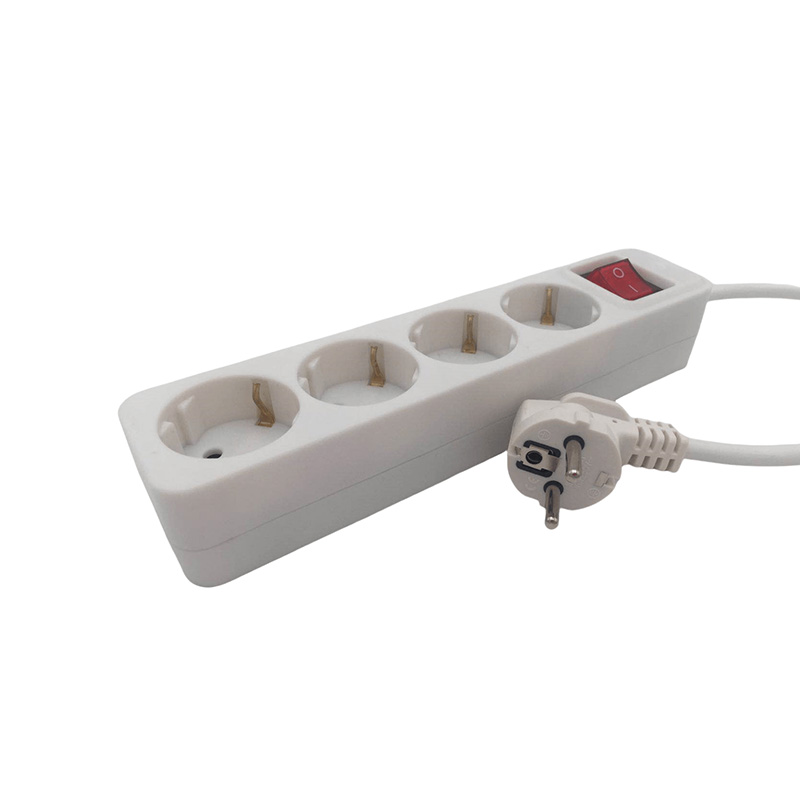
Not every power strip on the market is safe, and the price tag is a poor indicator of quality. The meaningful signal is a safety certification mark: UL (Underwriters Laboratories), ETL, CE, or the equivalent national testing body for your market. These marks confirm that an independent laboratory has tested the product against current electrical safety standards—covering internal wiring gauge, contact quality, overcurrent protection, and housing flame resistance.
Uncertified strips, which enter the market through discount retail channels and online marketplaces, often use undersized internal wiring that cannot safely carry the rated current, contacts that arc under load, and housings that melt or ignite rather than self-extinguishing. The CPSC has issued multiple warnings about uncertified power strips that fail to meet industry safety standards for extension cords and power strips, creating fire and electrocution hazards even without being overloaded. Housing material is a key differentiator: how polypropylene's chemical resistance affects long-term power strip durability explains why PP and PC material grades used in quality strips provide meaningfully better thermal and chemical stability than commodity plastics. The PP-material power strip range built for everyday safety uses flame-retardant housing grades that meet international standards.
For strips already in use: inspect cords and housings regularly. A cracked housing, a loose outlet that allows plugs to wobble, a cord that feels warm along its length during normal use, or any scorching or discoloration around an outlet face are immediate grounds for replacement. A damaged strip is not a strip that works with reduced capacity—it's a strip that's actively becoming more dangerous with every hour of use.
| Warning Sign | What It Indicates | Action Required |
|---|---|---|
| Warm or hot cord during use | Wiring carrying more current than rated | Unplug immediately, replace strip |
| Scorching or discoloration on housing | Past overheating event or arcing | Discard, do not reuse |
| Loose or wobbly outlet contacts | Worn contacts, arcing risk | Replace strip |
| Cracked or broken housing | Exposed internal wiring risk | Replace strip |
| No certification mark on product or packaging | Not independently tested for safety | Do not use |
Avoid Plugging In Medical or Life-Critical Equipment
Home medical devices—CPAP and BiPAP machines, home oxygen concentrators, infusion pumps, and cardiac monitors—require consistent, uninterrupted power that a standard power strip cannot reliably guarantee. Power strips introduce additional connection points, each of which represents a potential failure mode: a loose plug, a tripped overload breaker, or a failing contact can interrupt power without warning.
For CPAP machines and similar sleep therapy devices, an unexpected power interruption during use is disruptive and potentially unsafe for people with certain conditions. For life-support devices, it can be critical. Most medical device manufacturers explicitly specify that their equipment should be connected directly to a grounded wall outlet—some require dedicated circuits. Check the device manual before making any connection decision, and when in doubt, consult the prescribing clinician or the device manufacturer directly.
If a wall outlet is not conveniently located near where a medical device is used, the correct solution is having an electrician install an additional outlet—not routing a power strip cord across the room. The cost of a new outlet installation is insignificant compared to the risk of a life-critical device losing power unexpectedly.
The Safer Alternatives: When to Call an Electrician
Several situations that people address with power strips actually require a proper electrical solution. Recognizing the boundary between "a strip is fine here" and "this needs a licensed electrician" is a practical safety skill.
If you find yourself running a power strip across a doorway, under a rug, or through a wall opening to reach a device, that's the signal that the outlet layout of the space is inadequate. A qualified electrician can add outlets to any room, install dedicated circuits for high-draw appliances, and assess whether the existing electrical panel can support the load. This is the correct fix—not a longer strip with more outlets.
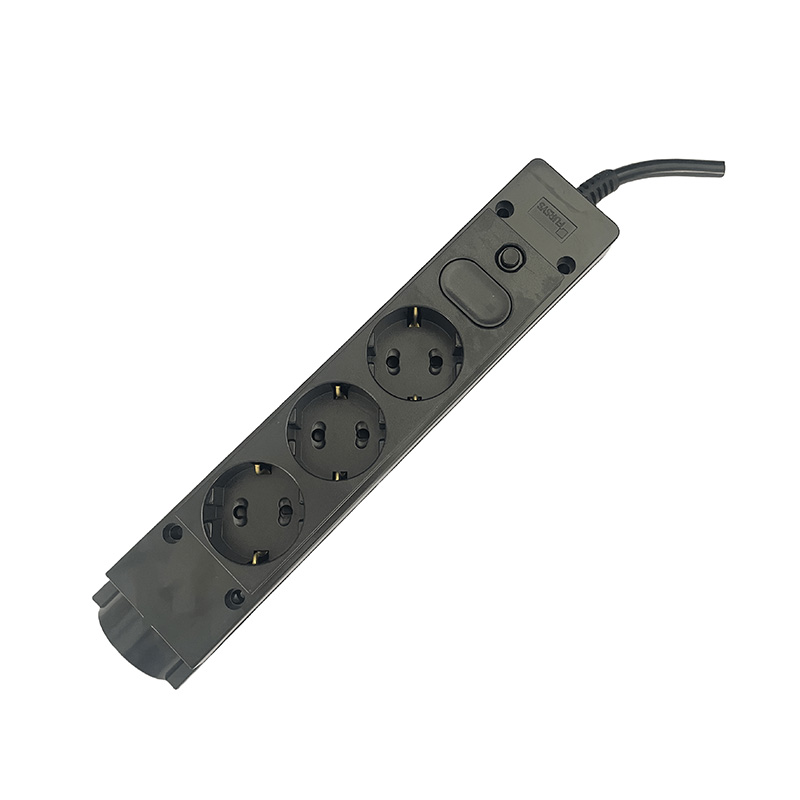
For locations where you need power coverage across a larger area—workshops, construction sites, outdoor events—cable reels designed for indoor and outdoor electrical extension provide a purpose-built solution with appropriate cord gauge and strain relief for distance runs. For compact multi-device needs at a single point, T-shape multi-outlet socket extension options provide a low-profile alternative to full-length strips when you need two or three outlets in one location without the bulk.
The underlying principle is consistent: match the tool to the actual electrical requirement. A power strip is a convenience product for low-draw electronics in a desktop or entertainment setup. Every use case outside that definition deserves a purpose-built solution—whether that's a GFCI outlet, a dedicated circuit, a cable reel, or a call to an electrician.

PRODUCTS
ABOUT US
CONTACT INFO.
- +86-18758062352
- +86-0571-64701616
- [email protected]
- No. 7, Xinqu Road, Xin’Anjiang Street, Jiande, Hangzhou, Zhejiang, China

Copyright © 2023 Hangzhou Newmany Electronics Co., Ltd. All Rights Reserved. Power Strip Manufacturer in China| Login

 TOP
TOP