
 ENG
ENG
 English
 русский
 한국어
한국어 Deutsch
Submit feedback
News
 Home / News / Industry News / What Not to Plug Into a Power Strip: The Complete Appliance Safety Guide
 What Not to Plug Into a Power Strip: The Complete Appliance Safety Guide
 2026.05.20
 Industry News
Why Power Strips Have Limits Most People Ignore
A standard household power strip is rated for 15 amps at 120 volts—a theoretical ceiling of 1,800 watts. In practice, safety professionals recommend staying well below that: 960 watts is the widely accepted working limit to account for heat buildup, cord quality variation, and the reality that multiple devices rarely hit their peak draw at exactly the same moment. Cross that threshold consistently, and the strip's internal wiring begins to overheat. Sustained overheating damages insulation, melts plastic housings, and in the worst cases, ignites the combustibles around it.
The trap is that power strips look identical whether they're lightly loaded or dangerously overloaded. There's no visible warning until something fails. According to the U.S. Consumer Product Safety Commission's official extension cord and power strip safety guidelines, overloading is one of the primary causes of electrical fires involving these devices—and the root of most overloading incidents is plugging in the wrong type of device. Choosing a strip with a built-in breaker helps, but it doesn't change the underlying wiring limits. Power strips with built-in overload protection switches give you a layer of defense—but they are a safety net, not a license to run high-wattage appliances through a shared circuit.
The categories below represent the devices that push strips past their design limits fastest—and the ones most likely to cause a fire before a circuit breaker ever trips.
Content
Heating and Cooling Appliances
Space heaters sit at the top of every electrician's "never plug into a strip" list—and for two compounding reasons. First, a typical portable space heater draws between 750 and 1,500 watts continuously, often accounting for the entire safe capacity of a power strip by itself. Second, most heaters cycle on and off to maintain a set temperature, and each time the heating element switches on, it draws a surge of current that briefly spikes well above the steady-state draw. That inrush current stresses the strip's wiring and internal contacts with every cycle, degrading them faster than a constant load would.
Window and portable air conditioning units create the same inrush problem through their compressors. Compressor motors require three to seven times their running current to start—a jolt that can immediately trip a power strip's thermal protection or, if the strip lacks it, push current through wiring it was never designed to handle. Both space heaters and air conditioners require a dedicated wall outlet, preferably on their own circuit.
Electric blankets and heating pads might seem low-risk by comparison, but they're designed to run for hours unattended—often overnight. Long-duration continuous loads are exactly the scenario that causes resistive heating in undersized wiring to accumulate into a hazard. The fire risk isn't in a single minute of use; it's in four or five hours of unmonitored operation. Understanding how PC material power strips handle heat resistance and flame retardancy illustrates why housing material matters when any heat-generating device is involved—even indirect proximity heat.
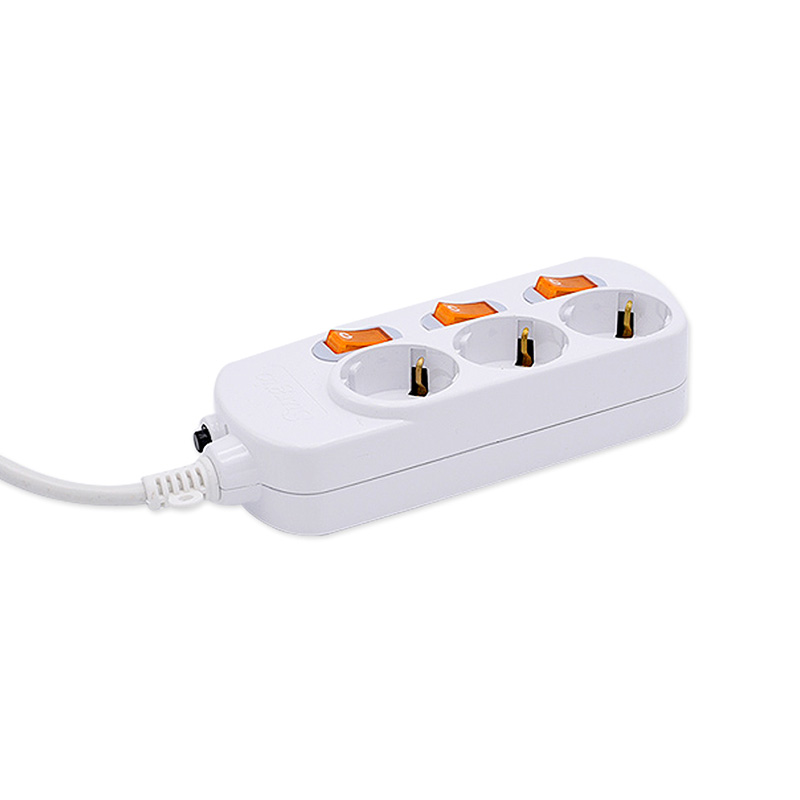
Kitchen Appliances That Demand a Dedicated Outlet
The kitchen is where power strip misuse concentrates most dangerously, because nearly every countertop appliance draws more power than it appears to. A consumer microwave pulls between 600 and 1,700 watts depending on the model and power level—a single unit that can consume the strip's entire safe capacity before anything else is plugged in. Refrigerators and chest freezers add a compressor cycling dynamic on top of their baseline 100–800 watt draw, creating the same inrush current problem as air conditioners.
Toasters and toaster ovens are deceptive because they're compact. A standard toaster can pull up to 900 watts; a toaster oven 1,200–1,800 watts. Coffee makers, electric kettles, and slow cookers all fall in the 800–1,500 watt range. Plugging two of these simultaneously into one strip—even a 6-outlet model—will exceed safe operating load within seconds of both switching on. The fault protection measures a power strip takes after detecting overload may trip the strip offline—but only if the strip has that protection, and only if the fault is detected quickly enough.
High-powered blenders add another risk layer beyond wattage: liquid. Blenders drawing 1,000–1,500 watts through a powerful motor also handle wet ingredients, and a spill onto a live strip creates a short-circuit risk entirely separate from overloading. The rule for kitchens is categorical: use the wall outlets, and install GFCI protection on any outlet within six feet of a sink.
Laundry and Heavy-Duty Home Equipment
Washing machines and dryers are not power strip appliances under any circumstances. Even the most energy-efficient modern washing machine draws up to 1,400 watts during the wash cycle and generates significant inrush current when the motor starts. A dryer operates on 240 volts—a voltage level that standard power strips aren't designed for at all, making the issue not just overloading but fundamental incompatibility.
Sump pumps present a specific combination of hazards. They cycle on and off based on water levels, generating repeated inrush current surges, and they operate precisely when the basement is wet—an environment where a power strip should never be present regardless of what's plugged into it. A sump pump that loses power during a flood event because its strip overloaded and tripped is worse than not having the pump at all.
Air compressors for DIY or garage use carry motor startup currents that routinely exceed 15 amps at the moment of ignition—more than a standard household circuit's capacity, let alone a shared strip. These require heavy-duty dedicated circuits, not workarounds through a shared power tap.
Bathroom and Personal Care Devices
Hair dryers are among the highest single-device loads in any home, drawing 1,500 to 2,000 watts—figures that place a high-powered model at or above a power strip's rated ceiling by itself. Curling irons and flat irons draw less individually (around 150–400 watts each), but they cycle on and off to hold temperature, and they're almost always used in bathrooms alongside other devices on the same strip.
The electricity-and-water proximity in bathrooms makes this category especially dangerous beyond pure wattage. Standard power strips are not rated for wet or damp environments. A GFCI outlet detects ground faults from water contact and cuts power within milliseconds—a power strip has no equivalent protection. Running heat styling tools from a strip balanced on a counter edge near a sink combines overloading risk with electrocution risk in a single setup.
The rule is simple: any device that generates heat and is used near water belongs on a GFCI wall outlet, full stop. Power strips in bathrooms are a fire and electrocution hazard regardless of what's plugged into them.
What You Can Safely Plug In—and How to Choose the Right Strip
Power strips are well-suited for low-draw electronics: laptops, monitors, desktop computers, phone chargers, desk lamps, routers, gaming consoles, and audio equipment. These devices typically draw 10–150 watts each, making it realistic to run several from one strip while staying well within the 960-watt working limit. An entertainment center or home office setup is exactly the use case these products were designed for.
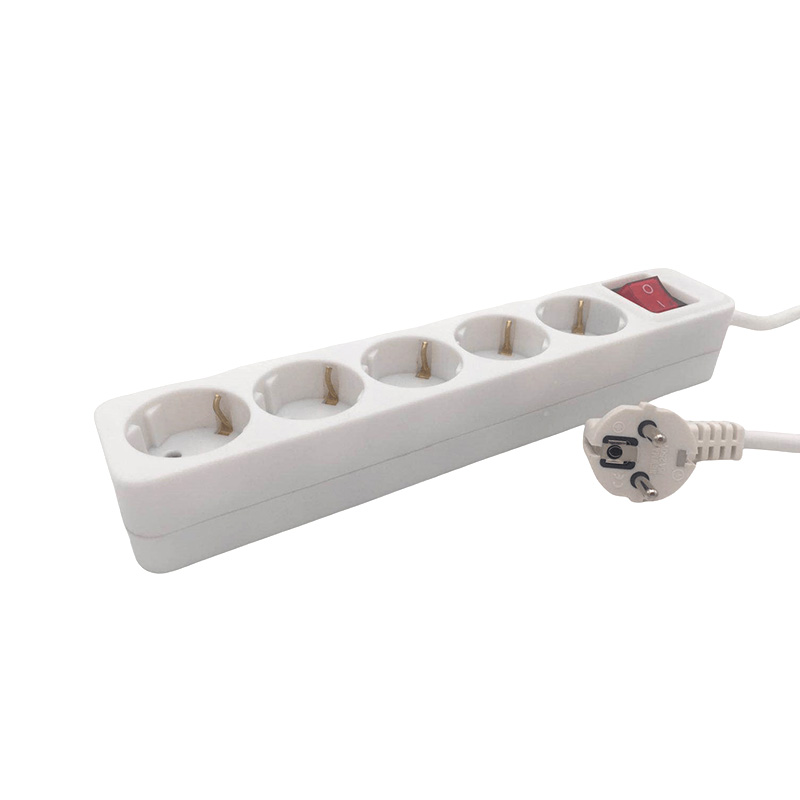
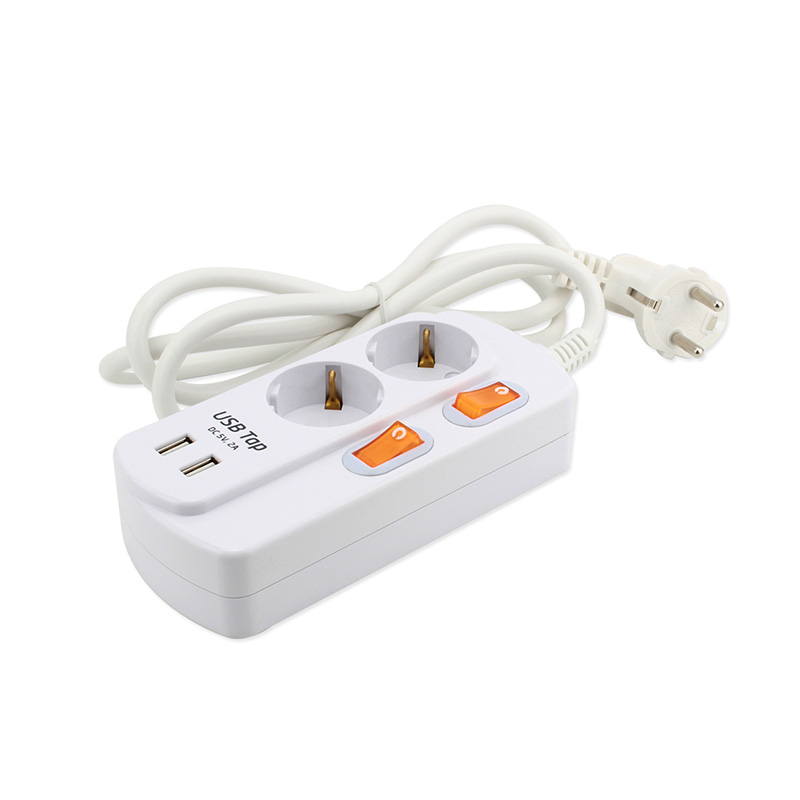
For charging multiple devices simultaneously without consuming outlet space, power strips with USB ports for low-draw device charging keep phone and tablet charging off the AC outlets entirely, freeing those positions for devices that need full-voltage supply. Before purchasing any strip, check for a UL, ETL, or equivalent national safety certification—uncertified strips are the ones most likely to lack the internal protection that prevents minor overloads from becoming fires.
Material quality matters too. PC-material power strips with overload protection use polycarbonate housings with higher heat and flame resistance than lower-grade plastics—a meaningful difference in a device that generates heat during normal operation. The goal isn't to find a strip that can "handle more"—it's to understand clearly which devices belong on a wall outlet, and reserve the strip for the electronics it was designed to support.

PRODUCTS
ABOUT US
CONTACT INFO.
- +86-18758062352
- +86-0571-64701616
- [email protected]
- No. 7, Xinqu Road, Xin’Anjiang Street, Jiande, Hangzhou, Zhejiang, China

Copyright © 2023 Hangzhou Newmany Electronics Co., Ltd. All Rights Reserved. Power Strip Manufacturer in China| Login

 TOP
TOP