
 ENG
ENG
 English
 русский
 한국어
한국어 Deutsch
Submit feedback
News

What Not to Plug Into a Power Strip — Safety Guide
 2026.05.14
 Industry News
Power strips make modern life more manageable — one wall outlet becomes six, a desk full of devices stays tidy, and everything stays charged. But that convenience comes with a hard limit that most people never think about until something goes wrong. Plug in the wrong combination of appliances, and a power strip doesn't just trip a breaker. It overheats, melts, and in serious cases, starts a fire.
Knowing what belongs on a power strip — and what absolutely doesn't — is one of the simplest ways to reduce electrical risk at home or in the office.
Content
- 1 Why Power Strips Have Limits
- 2 Large Kitchen Appliances
- 3 Refrigerators and Freezers
- 4 Space Heaters and Air Conditioners
- 5 Washing Machines and Dryers
- 6 Hair Dryers and Styling Tools
- 7 Medical Devices
- 8 Another Power Strip (Daisy Chaining)
- 9 What You Can Safely Plug In
- 10 How to Choose a Safer Power Strip
Why Power Strips Have Limits
Every power strip is rated for a maximum electrical load, typically expressed in amps or watts. Most standard household strips are rated for 15 amps at 120 volts, which translates to roughly 1,800 watts total capacity. The internal wiring, outlets, and casing are all engineered to handle that ceiling — not exceed it.
When the combined draw of connected devices approaches or exceeds that rating, the wiring inside the strip begins to heat up. Heat degrades insulation, weakens connections, and — without an internal circuit breaker to cut the flow — can ignite surrounding materials. The U.S. Fire Administration recommends never overloading power strips and using only strips that include internal overload protection.
The rule of thumb used by electricians is straightforward: if a device generates heat, runs a compressor, or has a powerful motor, it should be plugged directly into a wall outlet — not a power strip. Everything else falls into a judgment call based on wattage.
Large Kitchen Appliances
Microwaves, toaster ovens, electric kettles, coffee makers, and countertop grills are among the most commonly misused devices on power strips. Each one draws between 800 and 1,500 watts on its own — and that's before anything else is plugged into the same strip.
The problem isn't just peak wattage. Many of these appliances cycle on and off repeatedly during use, creating repeated current spikes that stress the strip's internal wiring over time. A microwave that runs for 10 minutes doesn't draw a steady load — it pulses, and each pulse pushes the strip harder than a continuous draw of the same average wattage would. Plug any one of these appliances directly into a wall outlet, ideally on a dedicated circuit if the kitchen layout allows.
Refrigerators and Freezers
Refrigerators are a particularly deceptive case. Their average wattage looks manageable — often 100 to 400 watts in steady state — but the compressor startup draws a surge of current several times higher than that every time the cooling cycle kicks in. These startup surges happen silently, automatically, and repeatedly throughout the day and night.
Over time, those repeated spikes degrade a power strip's internal components faster than continuous loads do. There's also the issue of duration: a refrigerator runs 24 hours a day, 365 days a year. Power strips are designed for intermittent use with light electronics, not continuous heavy-duty operation. Refrigerators and freezers belong on dedicated wall circuits — full stop.
Space Heaters and Air Conditioners
Space heaters are consistently cited as one of the leading causes of power strip fires, and the reason is straightforward: they draw maximum wattage continuously. A typical portable space heater runs at 1,500 watts — which, on its own, already consumes 83% of a standard strip's rated capacity. Add anything else to that strip and it's overloaded.
Unlike a microwave that runs for 90 seconds, a space heater may run for hours. That sustained load at or near the strip's limit generates heat in the wiring that accumulates rather than dissipates. Window air conditioners carry the same risk: high continuous draw combined with compressor startup surges makes them genuinely dangerous on a power strip. Both should always be plugged directly into a dedicated wall outlet.
Washing Machines and Dryers
Washing machines and dryers combine two of the worst characteristics for power strip use: large electric motors with high startup current demands, and operation in or near areas where moisture is present. The motor in a washing machine can draw three to six times its running current during startup — a spike that can trip or damage a power strip's internal breaker even on the first use.
Electric dryers typically require a 240-volt dedicated circuit entirely, which rules out standard power strips by design. Even gas dryers, which use electricity only for the motor and controls, draw enough current during startup to make power strip use inadvisable. Both appliances belong on hardwired, dedicated circuits.
Hair Dryers and Styling Tools
Hair dryers, curling irons, and flat irons create a two-part problem. First, they draw significant power — a standard hair dryer runs between 1,000 and 1,875 watts, comparable to a space heater. Second, they're almost always used in bathrooms, where water introduces a second layer of electrical risk entirely separate from overloading.
Water and electricity are a dangerous combination regardless of load. A power strip in a bathroom — even one that isn't overloaded — creates shock and electrocution hazards that no circuit breaker can fully protect against. Hair tools should be plugged into GFCI-protected wall outlets in the bathroom, not into a strip routed in from another room.
Medical Devices
Devices like home oxygen concentrators, CPAP machines, and powered wheelchairs require reliable, uninterrupted power. A power strip that trips its breaker under load, or that experiences a voltage drop due to overloading, can disrupt these devices at exactly the wrong moment.
Medical equipment manufacturers generally specify that their devices should be plugged directly into properly grounded wall outlets. For equipment where power interruption is a health risk, an uninterruptible power supply (UPS) with its own battery backup is the appropriate solution — not a standard power strip, even a high-quality one.
Another Power Strip (Daisy Chaining)
Plugging one power strip into another — a practice called daisy chaining — is prohibited by OSHA regulations, the National Fire Protection Association (NFPA), and Underwriters Laboratories (UL) standards. It is also one of the most common electrical safety violations found in both homes and workplaces.
The problem is cumulative load without adequate protection. The power strip connected to the wall was designed and rated for a specific maximum load. Chaining a second strip onto it effectively multiplies the number of outlets drawing from that first strip's single rated connection, often far exceeding what it was built to handle. The first strip's internal breaker — if it has one — may not trip fast enough to prevent overheating. The same logic applies to plugging a power strip into an extension cord: it extends reach while masking load, and the combination frequently violates the wattage rating of both devices.
What You Can Safely Plug In
Power strips are genuinely useful for the devices they were designed to serve: low-draw electronics that don't run heating elements or large motors. Laptops, desktop computers (standard setups without multiple high-end GPUs), monitors, routers, phone chargers, lamps, televisions, and streaming devices all fall comfortably within the safe range for a good-quality strip with overload protection.
The practical test: if all the devices on a strip total well under 1,500 watts, none of them run continuously at peak draw, and none of them have compressors or large heating elements, the strip is being used as intended. When in doubt, add up the wattage ratings on each device's label or adapter and compare the total to the strip's rated capacity.
How to Choose a Safer Power Strip
Not all power strips offer the same level of protection. A basic strip with no circuit breaker provides convenience and nothing else — if the load exceeds its rating, the internal wiring heats up with no automatic cutoff. Strips with built-in overload protection circuit breakers are significantly safer: when total load exceeds the rated threshold, the breaker cuts power before wiring damage can occur.
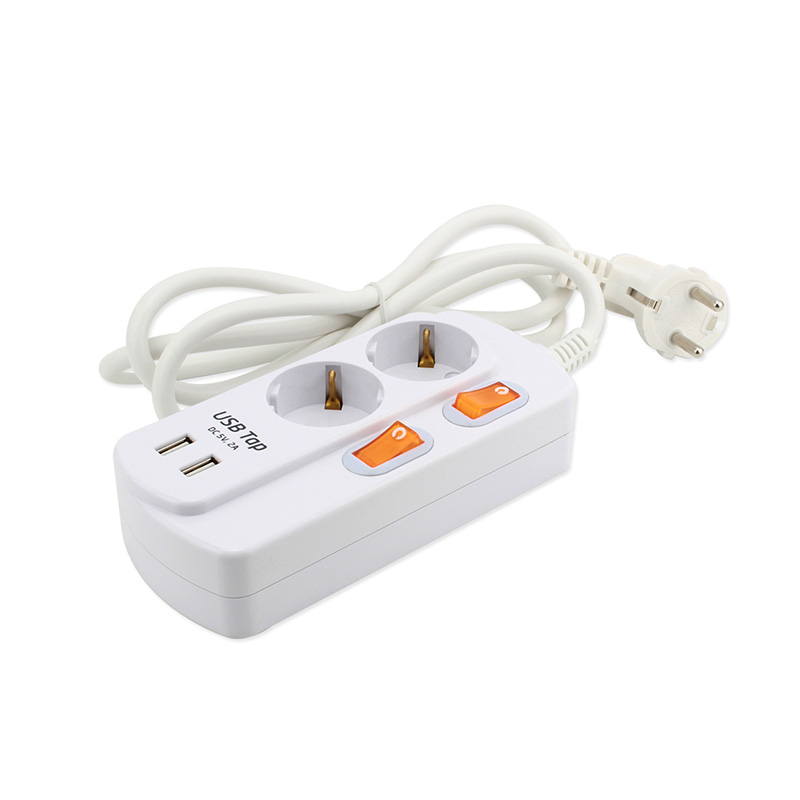
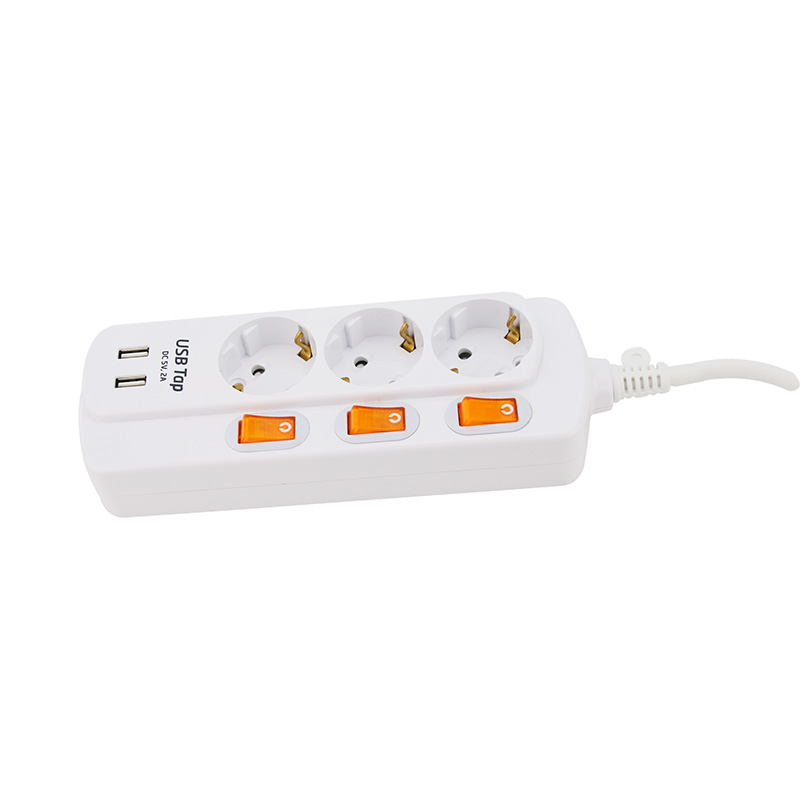
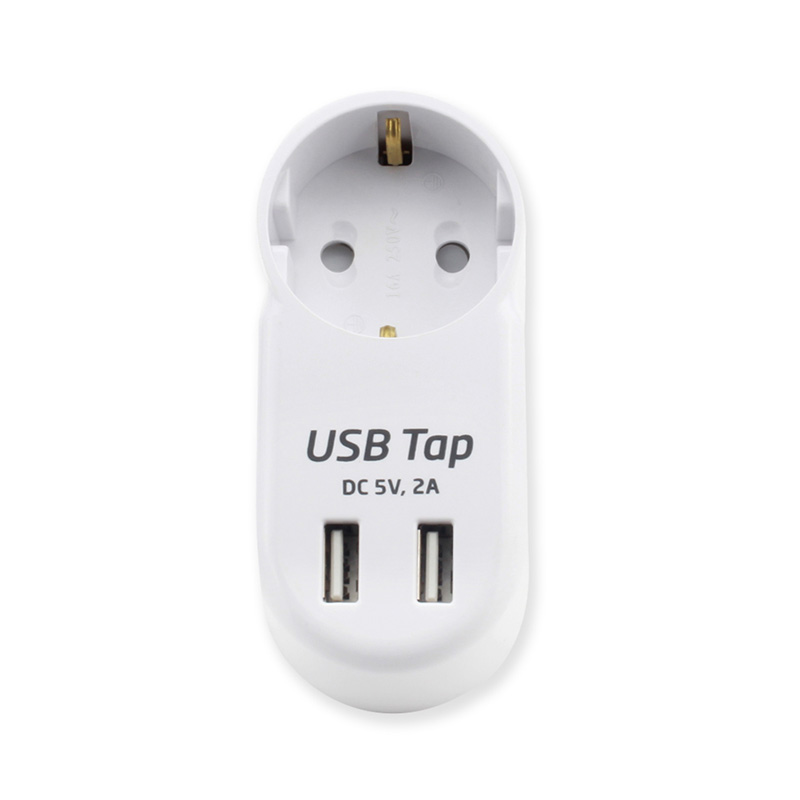
Individual outlet switches add another layer of control. Power strips with individual switches for each outlet let you cut power to specific devices without unplugging them — useful for reducing standby draw and eliminating the risk of leaving high-draw devices energized when not in use. For setups with multiple phones, tablets, or portable devices, power strips with built-in USB ports consolidate charging without consuming additional outlet slots, keeping total outlet load lower.
Housing material matters too. PC-material power strips with overload protection use polycarbonate casings that are more heat-resistant and fire-retardant than lower-grade plastics — an important characteristic given that the housing is the last physical barrier between an overheating internal component and the surrounding environment. Whatever strip you choose, look for certification from a recognized testing laboratory (UL, CE, or equivalent) and replace any strip that shows signs of discoloration, unusual heat, or outlet looseness immediately.


PRODUCTS
ABOUT US
CONTACT INFO.
- +86-18758062352
- +86-0571-64701616
- [email protected]
- No. 7, Xinqu Road, Xin’Anjiang Street, Jiande, Hangzhou, Zhejiang, China

Copyright © 2023 Hangzhou Newmany Electronics Co., Ltd. All Rights Reserved. Power Strip Manufacturer in China| Login

 TOP
TOP