
 ENG
ENG
 English
 русский
 한국어
한국어 Deutsch
Submit feedback
News

Toolbox Power Strip: What to Look For and How to Set It Up Right
 2026.05.06
 Industry News
Content
What Is a Toolbox Power Strip
A toolbox power strip is a heavy-duty electrical outlet strip specifically engineered for use in garages, workshops, and on jobsites. Unlike standard household power strips, these units are built with reinforced metal or impact-resistant housings, stronger cords, and mounting systems designed to attach directly to a tool chest, workbench, or metal cabinet surface.
The primary purpose is simple: when you are working in a garage or professional shop, you need power exactly where your tools are — not on the other side of the room. A toolbox power strip puts multiple outlets and USB charging ports right at your fingertips, so you can keep battery chargers, diagnostic equipment, work lights, and power tools all running from a single, organized source.
Common use scenarios include home DIY garages, professional automotive repair shops, construction site job boxes, and mobile service vans. In each setting, the key demand is the same: reliable power delivery in a rugged environment where tools, grease, and vibration are everyday realities.
Key Features to Look For
Not all toolbox power strips are created equal. Before purchasing, it pays to understand which specifications actually matter for workshop use.
Number of outlets and USB ports is the first consideration. Most toolbox-grade strips offer between 5 and 8 AC outlets. Look for at least one USB-C port with Power Delivery (45W or higher) alongside two USB-A ports if you regularly charge smartphones, tablets, or Bluetooth devices at the bench.
The housing material directly affects longevity. Steel or heavy-gauge aluminum housings resist dents, impacts, and accidental drops far better than plastic. Some models include a rubberized jacket over the cord to resist cuts and abrasion from sharp tool edges.
Cord length is often overlooked until installation day. An 8-foot grounded cord provides enough reach for most tool chest configurations, while a 6-foot cord may leave you short if the nearest wall outlet is not directly adjacent. Built-in cord wrap features help keep the excess tidy.
Surge protection rating is expressed in joules. For a workshop environment, look for a minimum of 1,000 joules; 2,000 joules or above is preferable if you are running sensitive diagnostic electronics or laptop-based scan tools. A lighted on/off switch with an integrated circuit breaker gives you a fast way to cut power and protects the strip from overload.
Magnetic vs. Non-Magnetic Mounting
The mounting method is one of the most practical decisions when choosing a toolbox power strip, and the right answer depends on how you work.
Magnetic mounting is the most popular option for tool chest users. High-powered magnets — typically rated at a combined pull force of 15 to 20 lbs — allow the strip to snap firmly onto the side panel or top rail of a steel tool cabinet. The key advantage is flexibility: you can reposition or remove the strip in seconds without tools. This makes magnetic models ideal for anyone who rearranges their workspace frequently or shares equipment between locations.
The tradeoff is that magnetic models rely on the surface being ferrous (iron or steel). Aluminum cabinets, wooden workbenches, and fiberglass job boxes will not hold a magnetic strip. In these cases, a non-magnetic strip with keyed or slotted mounting holes is the right choice. These models use screws for a permanent, vibration-proof installation and are better suited for fixed workbench setups in production shops or commercial garages.
Some premium strips combine both options — strong magnets for temporary placement plus recessed mounting holes for permanent installation — giving you the best of both worlds in a single unit.
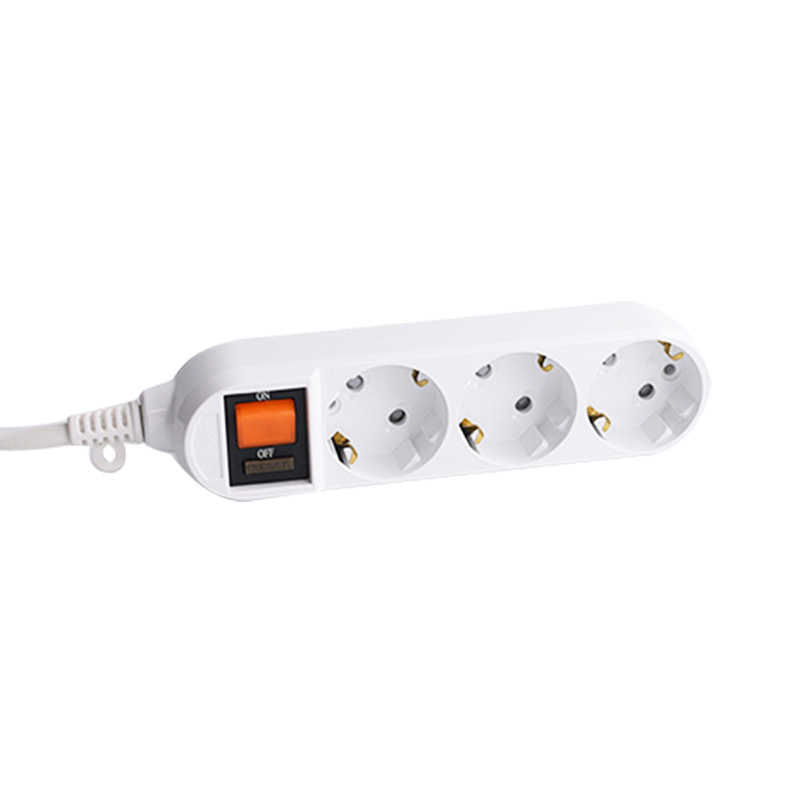
Safety and Load Capacity
A workshop is a high-demand electrical environment. Running multiple power tools, battery chargers, and lights simultaneously puts real stress on any power strip, and choosing an undersized unit is a genuine fire and equipment risk.
Amperage rating is the most critical safety specification. Standard household strips are rated at 15 amps (1,875 watts at 125V). Heavy-duty workshop strips are available in 15A and 20A versions. If your garage panel has 20-amp circuits and you regularly run compressors, welders, or large grinders, a 20-amp strip with a 20-amp plug (NEMA 5-20P) is the correct choice — provided the circuit itself is also rated at 20 amps.
Never exceed 80% of the rated capacity on a continuous basis. For a 15A strip, that means keeping your total connected load under 1,440 watts during extended use.
Look for strips that carry ETL or UL listing marks. These certifications confirm that the product has been independently tested to recognized North American safety standards. An ETL or UL mark is not a guarantee, but it is a meaningful baseline check that protects both your equipment and your workspace.
Finally, avoid daisy-chaining power strips together. Connecting one strip to another multiplies the risk of overload and is against most electrical codes for professional environments.
How to Set Up a Power Strip in Your Toolbox
Installing a toolbox power strip correctly takes less than ten minutes and makes a noticeable difference in daily workflow.
- Choose your mounting location. The side panel of a tool chest, just below the top rail, is the most common placement. It keeps outlets accessible without blocking drawer handles or the worktop.
- Route the power cord cleanly. Run the cord along a natural edge — the back corner of the cabinet or through a dedicated cable cutout if your chest has one. Avoid routing the cord across the floor where it becomes a trip hazard.
- Secure the cord at intervals. Use adhesive cable clips or hook-and-loop straps every 12 to 18 inches to prevent the cord from swinging free when drawers are opened.
- Test before loading outlets. Plug in a single device first and verify the circuit breaker holds before connecting multiple loads simultaneously.
- Label your outlets (optional but useful). In a busy shop with multiple chargers running, a small piece of label tape identifying each outlet saves time and prevents accidentally unplugging the wrong device.
Tips for Maintaining Your Toolbox Power Strip
A quality toolbox power strip can last a decade or more with minimal care. A few straightforward habits extend its life significantly.
Keep outlets free of metal shavings and dust. In a grinding or drilling environment, fine metal particles can accumulate inside outlet slots over time. Periodically blow out the strip with compressed air — with the unit unplugged — to prevent conductive buildup.
Inspect the cord regularly. The power cord takes more abuse in a workshop than in any household setting. Check monthly for cuts, kinks, or cracked insulation, particularly at the strain relief points near the plug and the strip body. A damaged cord should be replaced immediately; do not tape over insulation damage as a long-term fix.
Reset the circuit breaker correctly. If the strip trips during heavy use, unplug several devices before pressing the reset button. Repeatedly resetting under full load accelerates wear on the breaker mechanism.
Finally, replace the strip if the surge protection has been exhausted. Many surge-protecting strips include an indicator light that goes out when the MOV components have absorbed their rated capacity of energy. At that point the strip still functions as a power source, but the protective circuitry is no longer active. Replace it before a damaging spike reaches your equipment.

PRODUCTS
ABOUT US
CONTACT INFO.
- +86-18758062352
- +86-0571-64701616
- [email protected]
- No. 7, Xinqu Road, Xin’Anjiang Street, Jiande, Hangzhou, Zhejiang, China

Copyright © 2023 Hangzhou Newmany Electronics Co., Ltd. All Rights Reserved. Power Strip Manufacturer in China| Login

 TOP
TOP