
 ENG
ENG
 English
 русский
 한국어
한국어 Deutsch
Submit feedback
News
 Home / News / Industry News / Power Strip vs Surge Protector: Is a Power Strip the Same as a Surge Protector?
 Power Strip vs Surge Protector: Is a Power Strip the Same as a Surge Protector?
 2026.08.17
 Industry News
You just set up a new television and a desktop computer. Behind the desk, a six-socket strip with a switch looks like all the protection you need. It is not. A power strip is not the same as a surge protector, and confusing the two can leave expensive electronics exposed to voltage spikes. The distinction comes down to one component, and it determines whether your equipment survives the next surge.
Content
What a Power Strip Actually Does
A power strip is essentially an extension cord that splits one wall outlet into multiple sockets. Inside the housing, the sockets are wired in parallel, so each one receives the full mains voltage. A typical strip contains a length of cable, a row of sockets, and little else. Some models add a switch and a resettable circuit breaker, but that is the ceiling of their complexity.
That circuit breaker, when present, protects against overcurrent, not overvoltage. If connected devices draw more current than the strip is rated for — for example, more than 16 A on a typical EU-rated unit — the breaker trips. But when a lightning strike or a utility grid event sends a high-voltage transient down the line, the strip simply passes it straight through. The surge reaches your computer, television, or router with nothing to stop it.
What a Surge Protector Adds
A surge protector does everything a power strip does and then adds a component designed to clamp voltage spikes. The most common element is a metal oxide varistor (MOV), a semiconductor that changes resistance sharply when voltage exceeds a safe threshold. Excess energy is shunted to ground instead of flowing into your equipment.
Three ratings tell you how well a surge protector performs:
- Joule rating: The total amount of energy the unit can absorb before its protective components wear out. Higher is better; 1,000 joules or more is a reasonable target for computers and entertainment systems.
- Clamping voltage: The voltage level at which the suppressor starts to divert the surge. UL 1449, the common North American standard, classifies clamping voltages at 330 V, 400 V, and 500 V. Lower is safer.
- Response time: How quickly the suppressor reacts, usually measured in nanoseconds. Faster clamping means less voltage reaches your equipment.
Surge protection components degrade each time they absorb a spike. That is why quality protectors include a status light; when the light goes out, the protection is gone and the unit should be replaced.
Key Differences at a Glance
The fastest way to summarize the distinction is to compare what each device actually does for you.
| Feature | Power Strip | Surge Protector |
|---|---|---|
| Adds extra outlets | Yes | Yes |
| Extends cord reach | Yes | Yes |
| Clamps voltage spikes | No | Yes |
| Contains MOV or clamping component | No | Yes |
| Protection indicator light | Rarely | Usually |
| Cost range | Low | Higher |
| Best for | Lamps, phone chargers, low-value appliances | Computers, TVs, audio equipment, medical devices |
Notice the pattern: both devices expand the number of sockets you can use, but only one of them moderates what comes through the cable. If your priority is protecting data or expensive components, the difference is decisive.
Why the Confusion Can Be Costly
The danger is practical. Retail listings, similar-looking housings, and well-meaning advice all blur the line between the two products. In a typical household, a plain power strip ends up powering a computer, a router, a monitor, and an external drive. When a local transformer fault or a nearby lightning strike sends a spike through the mains, the strip offers zero resistance. The devices may keep running afterward, but the damage to sensitive components is already done.
There is also a fire-safety angle. Power strips get overloaded because they invite more plugs. Two space heaters on one strip, or a heater plus a kettle, can easily exceed the continuous current rating. Loose socket contacts and poor-quality plastic make the situation worse. That is why flame-retardant housing materials matter as much as the internal wiring when a strip operates near its limit.
How to Tell Them Apart Before You Buy
Reading the label takes ten seconds and removes all guesswork.
- If the box says "surge protector," "transient voltage surge suppressor," or references UL 1449, it contains protective components.
- If the label only lists wattage, amperage, or outlet count, treat it as a plain power strip.
- Check for a protection light. On a true surge protector, a lit LED confirms the MOV is still functional; on a power strip, no such light exists.
- Check the joule rating. Anything below several hundred joules offers minimal protection, and a rating under 200 joules should not be trusted for sensitive electronics.
For lamps, kettles, and phone chargers, a well-built power strip is perfectly adequate. For anything containing a microprocessor, a hard drive, or a medical component, add surge protection.
What Good Power Strip Design Looks Like
Because the power strip versus surge protector question depends on honest engineering, it helps to understand what separates a quality strip from a cheap one. As a manufacturer that has built these products for decades, we look at three things.
Overload Protection Is Not Surge Protection
Many power strips sold in Europe and Asia carry a thermal or magnetic overload breaker. That breaker limits current, not voltage. It is still worth having because it prevents the strip from carrying more current than its cable and sockets can handle. A 6-outlet EU power strip with overload protection is a sensible choice for workshop tools and everyday appliances, but you should still keep surge-sensitive electronics behind a real suppressor. Some newer designs even include self-diagnostic circuitry that can detect and report fault conditions before they cause a failure.
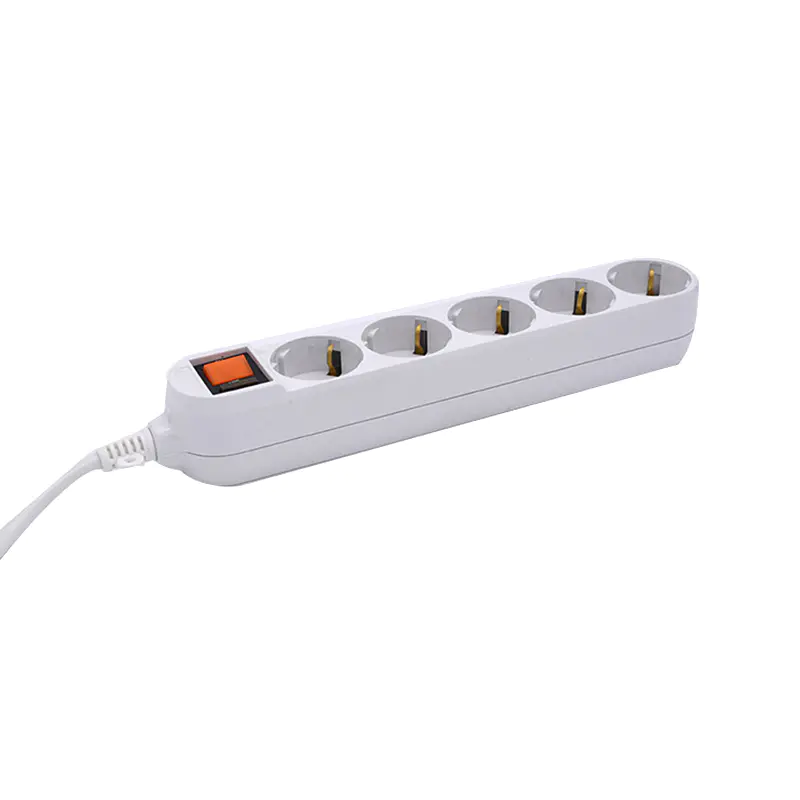
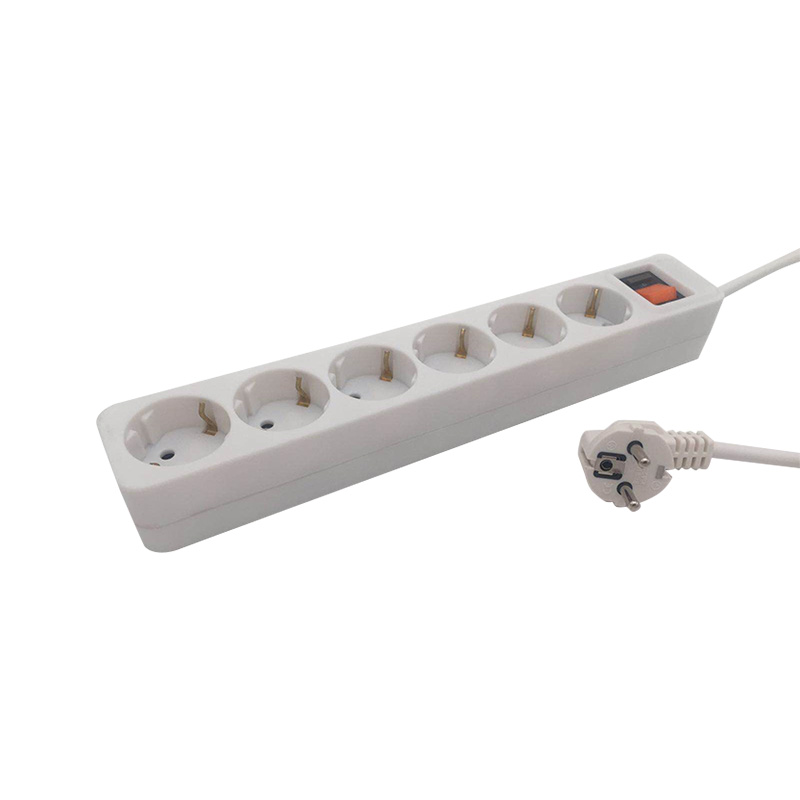
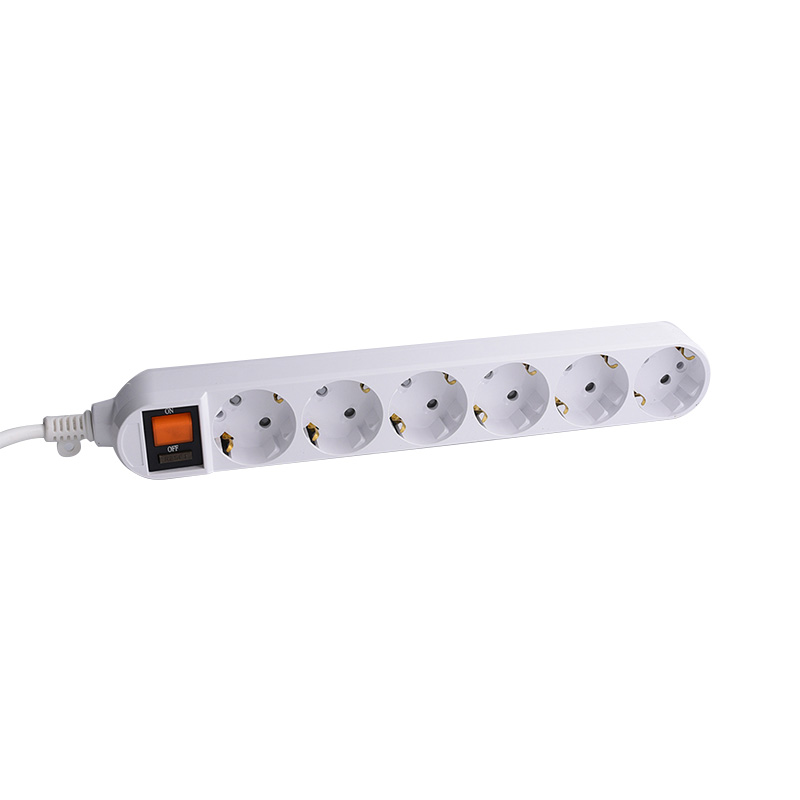 Custom PC material Long extension cord 6 outlets EU standard socket ManufacturerHangzhou Newmany is China Customized PC material Long extension cord 6 outlets EU standard socket Manufacturers and PC material Long exte...View Product →
Materials and Manufacturing Quality
The housing and sockets do real work. PC (polycarbonate) offers better heat resistance and flame retardancy, while PP (polypropylene) adds chemical resistance and toughness. Poor-quality plastic can soften, discolor, or deform under continuous load, and loose socket contacts create resistance that generates heat. The housing material durability changes the long-term reliability of the whole strip, especially in humid, dusty, or industrial environments. When a manufacturer uses PC in the housing and tests socket contact pressure, the strip survives years of plugging and unplugging without losing grip.
Switch Layout and Everyday Usability
Independent switches on each socket let you cut power to an idle device without pulling the plug. A master switch gives you one point of control for the whole board. For desks and workbenches, a 4-outlet power strip with independent switches and an overload protection button matches the way people actually use equipment. For travel bags and bedside tables, a compact model with USB ports pulls double duty; a 3-outlet power strip with two USB ports and a master switch keeps bulky adapters out of the socket.
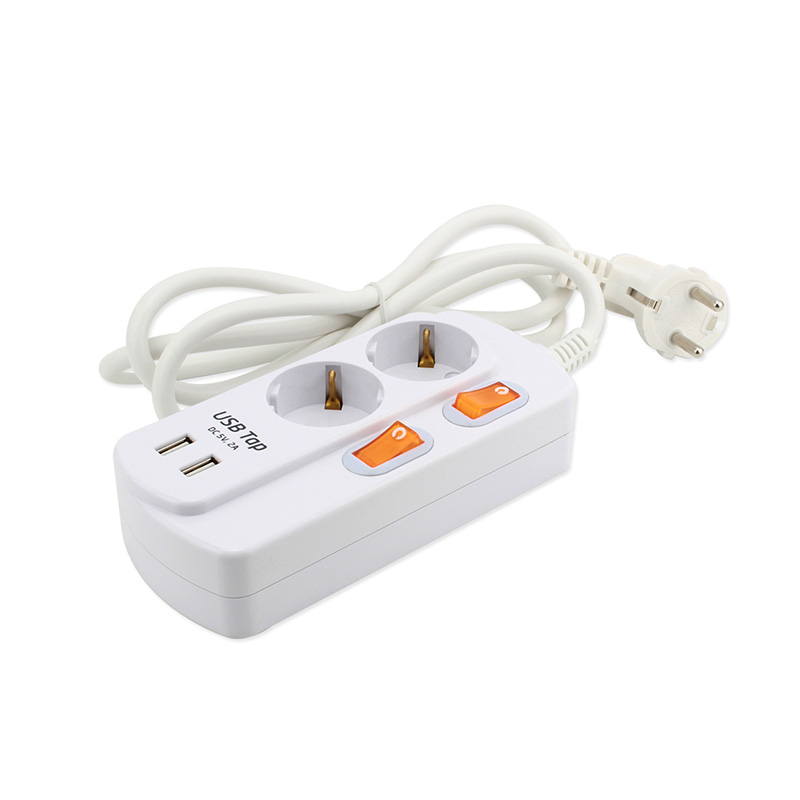
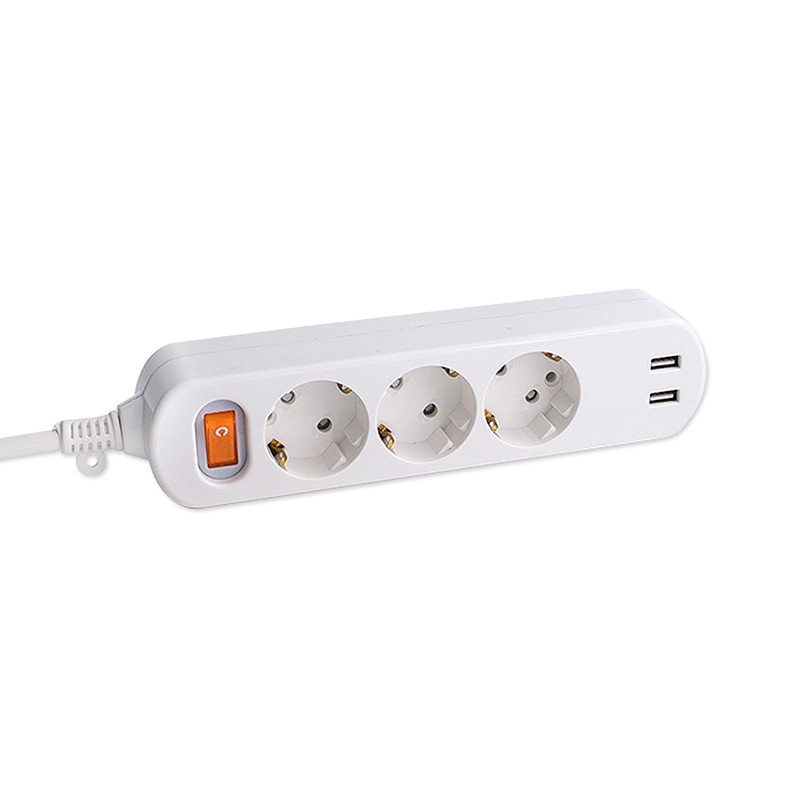 Custom 3 outlets EU standard socket with 2 USB ports and 1 master switch ManufacHangzhou Newmany is China Customized 3 outlets EU standard socket with 2 USB ports and 1 master switch Manufacturers and 3 outlets EU sta...View Product →
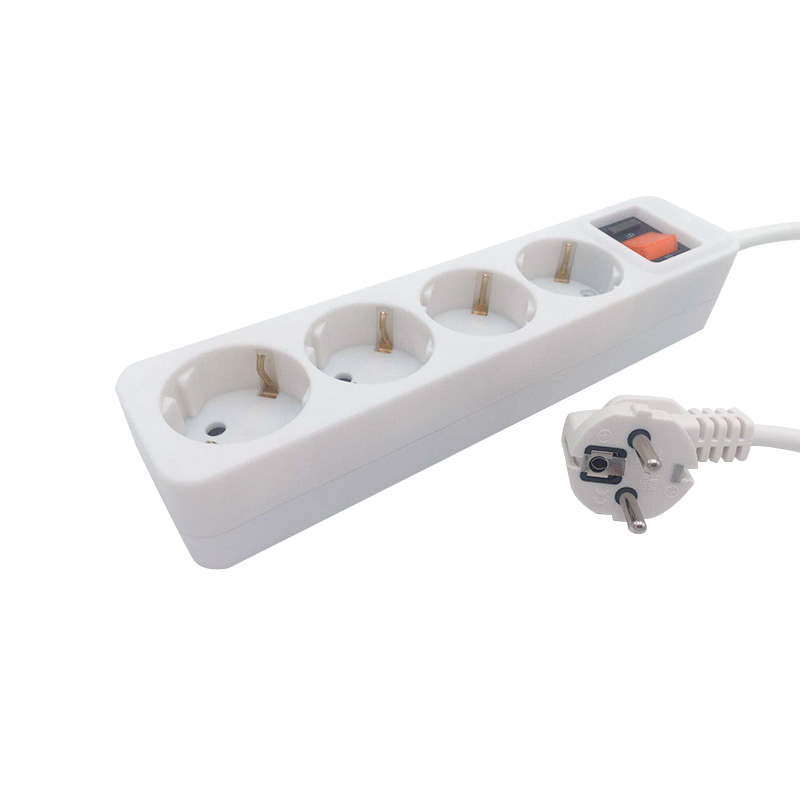
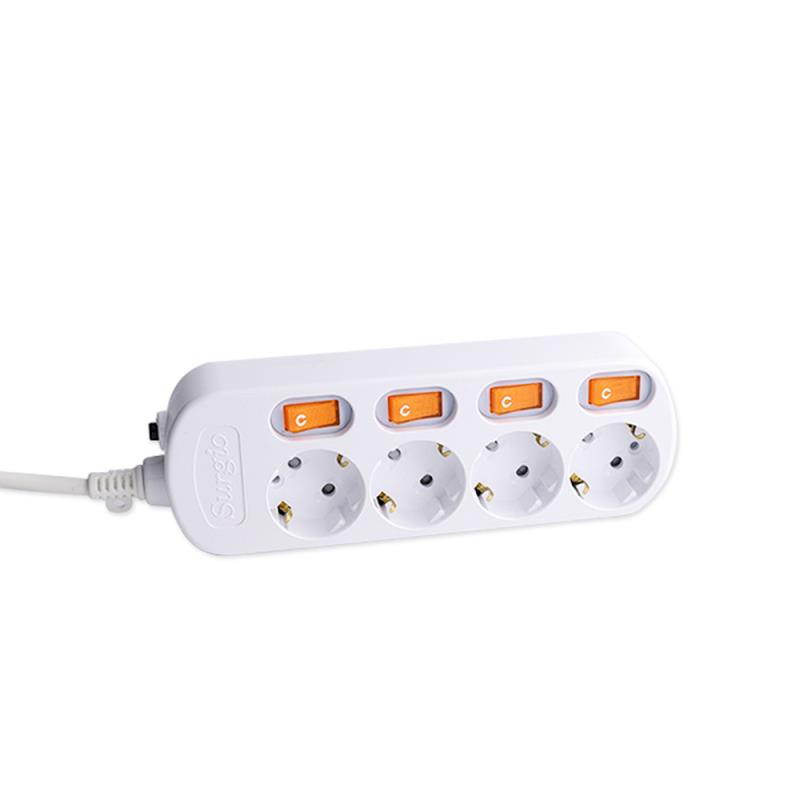 Custom 220V-250V 4 outlets EU standard socket with independent switch ManufacturHangzhou Newmany is China Customized 220V-250V 4 outlets EU standard socket with independent switch Manufacturers and 220V-250V 4 outlets...View Product →
Certifications matter as well. Units that carry national approval marks have passed tests for grounding continuity, insulation resistance, and high-voltage withstand. That level of verification matters whether you are buying one strip for a home office or a container of them for resale.
The Safer Choice Depends on the Load
So the original question — is a power strip the same as a surge protector — has a clear answer: no. A power strip increases the number of sockets. A surge protector does that and clamps dangerous voltage transients before they reach your equipment.
Keep a plain power strip for low-value, non-sensitive loads. Use a surge protector for computers, televisions, network gear, and anything storing important data. Never daisy-chain either type, respect the rated current, and replace any unit that runs warm, smells of burning plastic, or has a damaged cord. The right device for the job is the one that matches the value of what you plug into it.
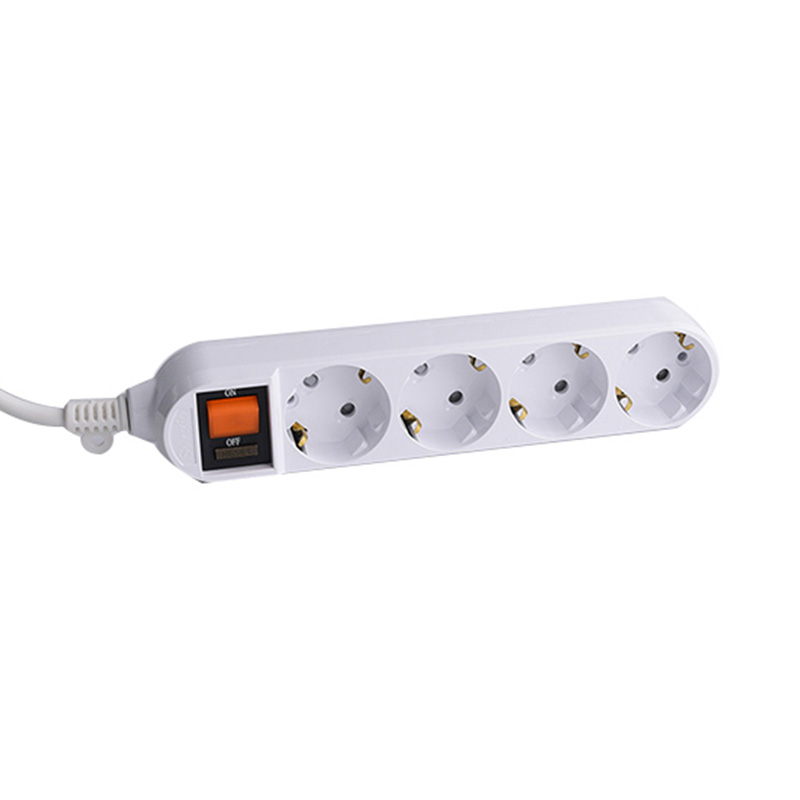


PRODUCTS
ABOUT US
CONTACT INFO.
- +86-18758062352
- +86-0571-64701616
- [email protected]
- No. 7, Xinqu Road, Xin’Anjiang Street, Jiande, Hangzhou, Zhejiang, China

Copyright © 2023 Hangzhou Newmany Electronics Co., Ltd. All Rights Reserved. Power Strip Manufacturer in China| Login

 TOP
TOP