
 ENG
ENG
 English
 русский
 한국어
한국어 Deutsch
Submit feedback
News
 Home / News / Industry News / Extension Cord vs Power Strip: Key Differences, Safety Tips, and How to Choose
 Extension Cord vs Power Strip: Key Differences, Safety Tips, and How to Choose
 2026.08.24
 Industry News
You have just moved a desk near a window, only to realize that the nearest wall outlet is on the opposite side of the room. In one drawer there is a long extension cord; on the shelf there is a power strip with four sockets. Which one should you grab?
The short answer is that an extension cord solves a distance problem, while a power strip solves an outlet shortage problem. The more complete answer involves wire gauge, current draw, plug style, surge protection, and whether the product is rated for the place where you plan to use it. Understanding extension cords vs power strips before buying can prevent overheating, tripped breakers, and costly damage to your devices.
Content
What Is an Extension Cord?
An extension cord is a flexible cable with a plug on one end and one or more sockets on the other. Its main purpose is to deliver power from an outlet to a device that sits beyond the normal reach of a built-in cord. Extension cords come in lengths from about 1 meter to 30 meters or more, and they are rated by wire gauge and maximum current. Common household ratings are 10 A or 16 A in many countries, but the safe capacity drops as the cable gets longer.
Safety guidelines treat extension cords as temporary equipment. If a cord remains in place for months, it begins to look like permanent wiring, and permanent wiring requires conduit, junction boxes, and proper wall connections. Workplace safety programs routinely classify an extension cord left in service for more than 90 days as permanent wiring, which can create a code violation.
What Is a Power Strip?
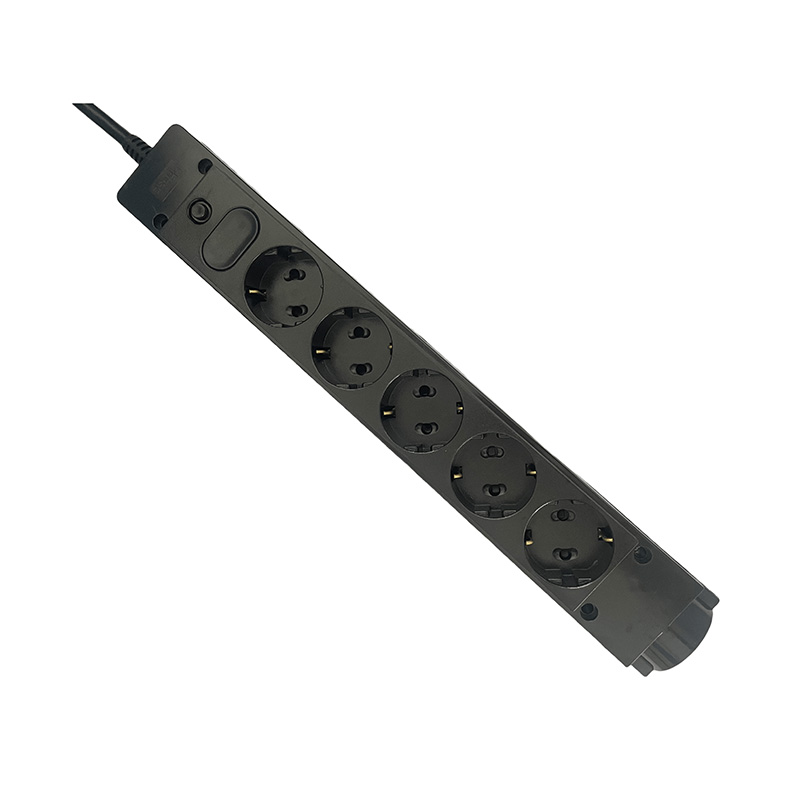
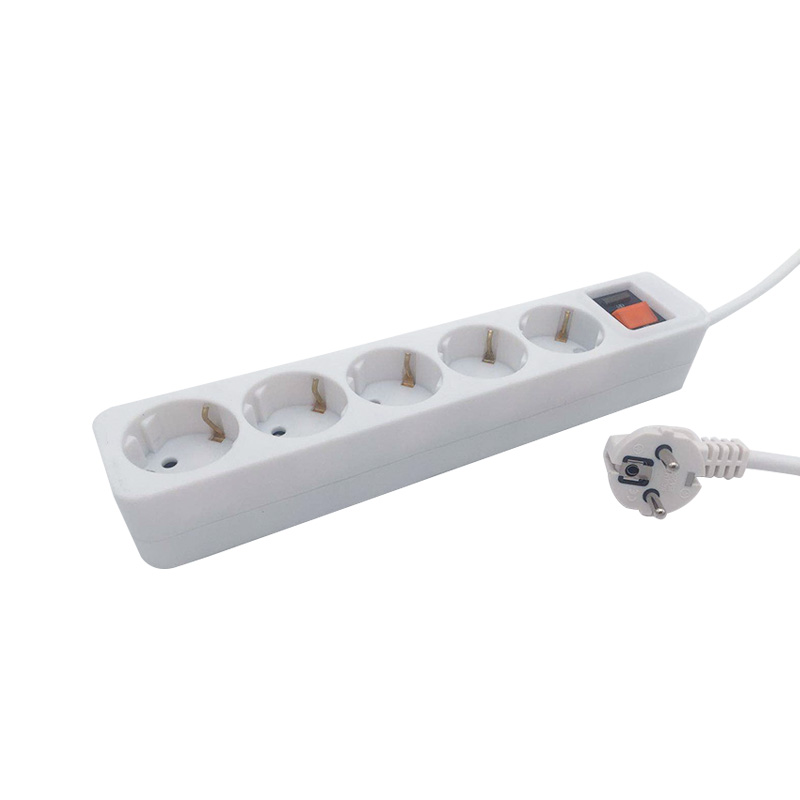
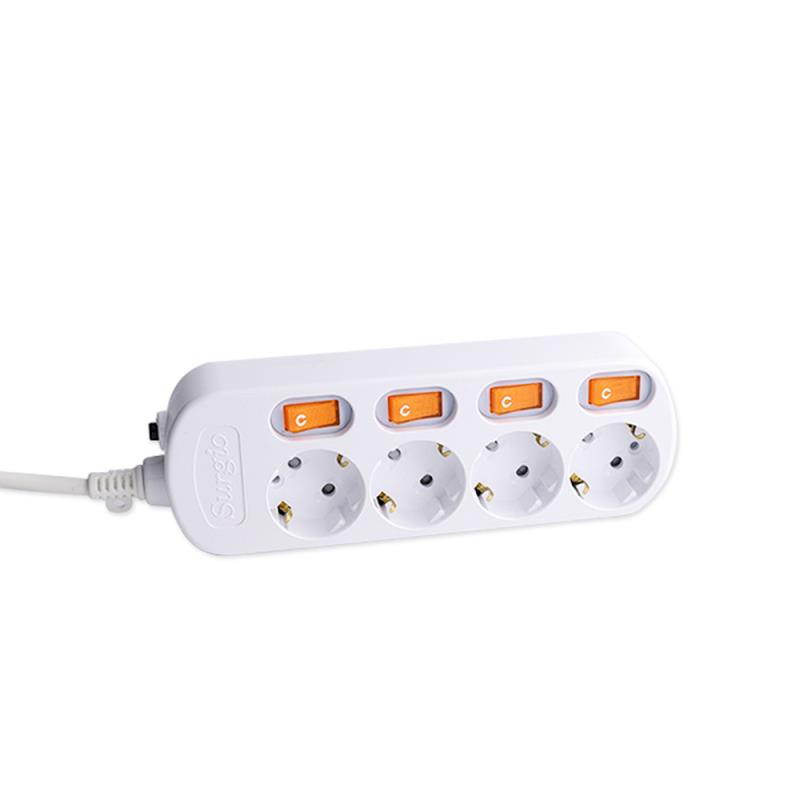
A power strip is a block of multiple sockets that plugs into a single wall outlet. It is designed for situations where several devices already sit close to the outlet and simply need additional connection points. Basic power strips provide only sockets, while more useful models add a master switch, individually switched outlets, an overload protector, or USB charging ports.
Power strips are best used indoors with low-to-moderate power electronics. A typical desktop setup with a monitor, a laptop charger, a phone charger, and a desk lamp draws less than 10 A, which is well within the capacity of a good power strip. The most important feature to look for is overload protection, so the strip can interrupt the circuit before cables or housings get dangerously hot. A model such as the 4-outlet EU power strip with overload protection is a practical example of that safeguard in a compact desktop format.
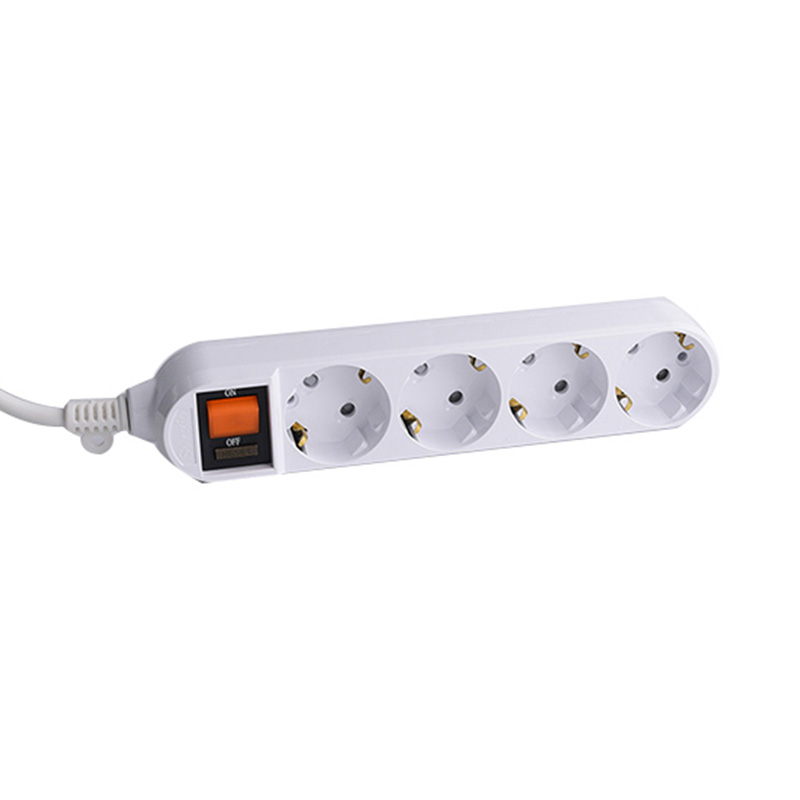 Custom Cable3G 4 outlets EU standard socket with overload protection switch ManuHangzhou Newmany is China Customized Cable3G 4 outlets EU standard socket with overload protection switch Manufacturers and Cable3G 4 out...View Product →
Extension Cords vs Power Strips: The Key Differences
The decision comes down to three questions: Do you need more reach, more sockets, or both? Is the use temporary or semi-permanent? And are you powering sensitive electronics or a heavy appliance? The table below walks through the main differences.
| Feature | Extension Cord | Power Strip |
|---|---|---|
| Primary job | Extend the distance from an outlet | Add multiple outlets from one socket |
| Typical use | Temporary, often one device | Semi-permanent, several low-power devices |
| Number of sockets | Usually one, sometimes more | Typically 2 to 12 |
| Built-in protection | Usually none | Switch, circuit breaker, sometimes surge protection |
| Best location | Indoor or outdoor, depending on rating | Indoor on a desk, shelf, or workbench |
| Main risk | Overheating if too long or too thin | Overloading and daisy chaining |
Notice that an extension cord is not automatically worse than a power strip; it is simply built for a different job.
When to Use an Extension Cord vs a Power Strip
Use an extension cord when:
- You need to reach an appliance more than a couple of meters from the outlet.
- The task is temporary, such as using a hedge trimmer, pressure washer, or holiday light.
- You are working outdoors and need a cord with an IP rating for weather resistance.
- A heavy appliance should have its own supply and should not share a power strip with other devices.
Use a power strip when:
- Several low-power devices are already within arm's reach of one outlet.
- You want a master switch to cut power to all connected electronics at once.
- You need overload protection or additional USB ports.
- You are setting up a permanent desk, entertainment center, or bedside table.
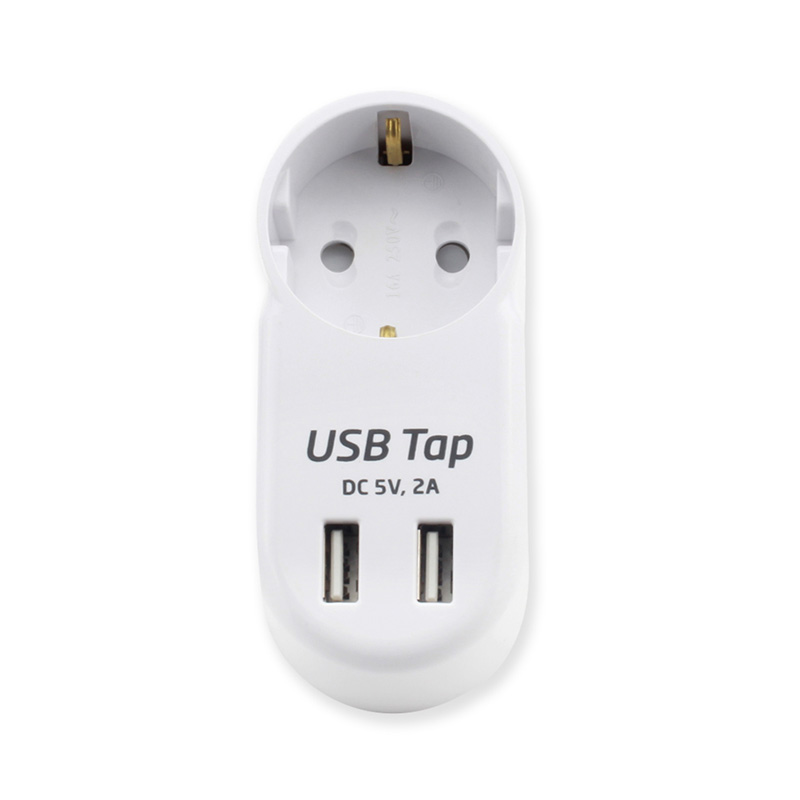
If USB charging is part of that setup, a strip with integrated USB ports can remove two or three wall chargers. The EU power strip with three sockets and two USB ports is a good fit for a desk or night table because it covers the usual devices in one compact unit.
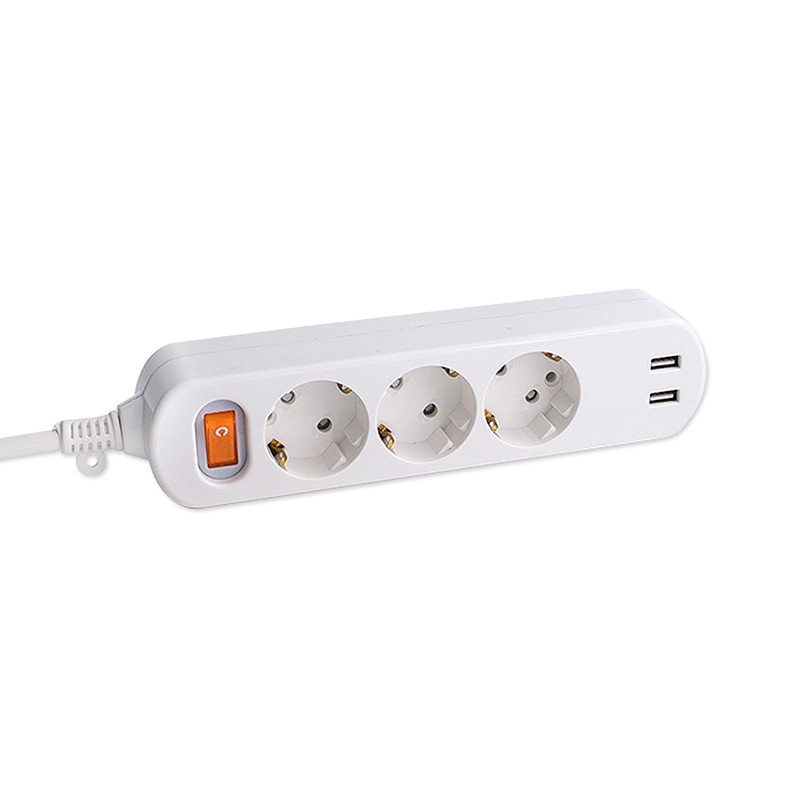 Custom 3 outlets EU standard socket with 2 USB ports and 1 master switch ManufacHangzhou Newmany is China Customized 3 outlets EU standard socket with 2 USB ports and 1 master switch Manufacturers and 3 outlets EU sta...View Product →
Safety Considerations
Safely using either device starts with the same principle: do not ask a cable or a plastic housing to carry more current than it was designed for.
- Never daisy chain power strips. Plugging one strip into another multiplies the number of outlets but not the capacity of the circuit.
- Check the current rating. Add up the amps of all connected devices and keep the total below the strip or circuit rating.
- Use the correct wire gauge for the distance. A thinner cord on a long run will drop voltage and heat up.
- Do not run extension cords under carpets, through doorways, or under furniture where they can be walked on or trapped.
- Inspect plugs and cable jackets for cracks, fraying, or exposed wires.
- Leave airflow around the power strip and avoid covering it with fabric.
Check the housing material, too. A power strip with a flame-retardant polycarbonate shell handles heat better than a cheap unrated plastic shell. That is why our article on PC material heat resistance and flame retardancy focuses on the role of the housing in preventing fire risks.
How to Choose the Right Power Solution
Start by measuring the distance between your devices and the nearest wall outlet. If the distance is more than about 2 meters, an extension cord may be necessary. If the distance is short but the outlet is full, a power strip is the better tool. If you need both reach and multiple sockets, choose a product designed to do both, such as a power strip with a long cord or a cable reel, rather than chaining a power strip to an extension cord.
When you compare products, look for clear ratings. In the European market, this usually means CE marking and a maximum current rating printed on the housing. In South Korea, products should carry KC certification. In North America, UL or ETL listing matters. A manufacturer that sells across these regions should be able to state which standards a product meets.
At our factory, we design power strips and related power distribution products to meet the standards of the destination market. We offer a wide range of power strips with different socket counts, switches, and USB options, so you can match the model to the actual load rather than guessing. For a long reach in a workshop or garden, a cable reel may serve better than a standard extension cord. The EU standard cable reel for indoor and outdoor use keeps the cable under control and lets you pull out exactly as much as you need.
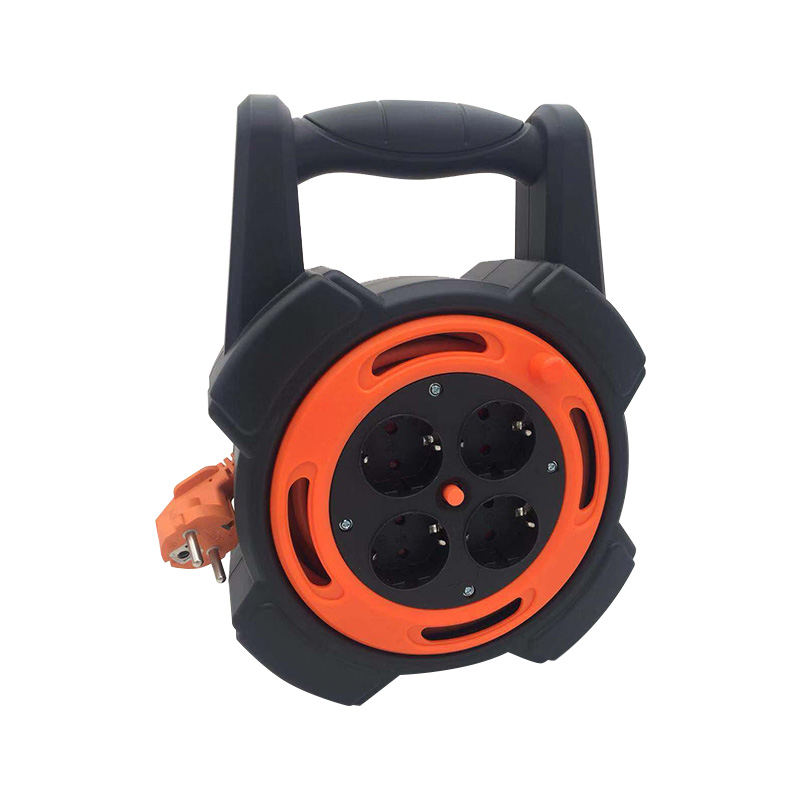 Custom EU standard Cable reels for indoor and outdoor use Manufacturers, SupplieHangzhou Newmany is China Customized EU standard Cable reels for indoor and outdoor use Manufacturers and EU standard Cable reels for ind...View Product →
Why Build Quality and Certification Matter
The difference between a safe power strip and a dangerous one is not always visible. The thickness of the copper contacts, the quality of the switch, the flame-retardant properties of the plastic housing, and the reliability of the overload mechanism all affect performance. For a mains-voltage product, the safest choice is one that has been tested under a recognised quality system.
Hangzhou Newmany Electronics has been manufacturing power connection products since 1989 and has operated under an ISO 9001 quality management system since 1999. That experience matters when you are buying extension cords or power strips for a home, workshop, or export order. It means the product has gone through controlled processes rather than being assembled without testing.
If you are buying for a business, ask about standards compliance and overcurrent protection. A responsible supplier will explain the difference between a basic multi-socket block and a power strip with overload protection. That information is more useful than a low price alone.
The best choice between an extension cord and a power strip depends on the problem you are solving. If distance is the issue, use an extension cord rated for the load and the environment. If outlet count is the issue, use a power strip with a switch and overload protection. If both are issues, choose a product designed to provide extra reach and multiple sockets at the same time. Match the electrical rating to the devices, avoid daisy chaining, and inspect cables regularly. With those habits, you can power almost any setup without turning a convenience into a hazard.
PRODUCTS
ABOUT US
CONTACT INFO.
- +86-18758062352
- +86-0571-64701616
- [email protected]
- No. 7, Xinqu Road, Xin’Anjiang Street, Jiande, Hangzhou, Zhejiang, China

Copyright © 2023 Hangzhou Newmany Electronics Co., Ltd. All Rights Reserved. Power Strip Manufacturer in China| Login

 TOP
TOP