
 ENG
ENG
 English
 русский
 한국어
한국어 Deutsch
Submit feedback
News
 Home / News / Industry News / Automatic Power Strip: How It Protects Your Devices and Cuts Standby Power
 Automatic Power Strip: How It Protects Your Devices and Cuts Standby Power
 2026.09.01
 Industry News
An automatic power strip should be treated as a protective component, not a passive accessory. When you plug a heavy load into a cheap extension strip, you are gambling with both the appliances and the building's wiring. A properly designed automatic power strip responds to abnormal current draw by cutting power before heat builds up. The result is simpler: you get the same convenience as a standard power strip, but with an added layer of safety that operates without any human intervention.
Content
- 1 The Difference Between Automatic and Manual Protection
- 2 Key Safety Features to Look For
- 3 How Automatic Power Strips Reduce Energy Waste
- 4 Matching the Power Strip to Your Plug Standard and Environment
- 5 Choosing the Right Number of Outlets
- 6 Material and Construction Choices That Affect Reliability
- 7 A Practical Checklist Before You Buy
The Difference Between Automatic and Manual Protection
Manual protection means you have to remember to switch off each socket or the whole strip. Automatic protection happens inside the device itself. A reliable automatic power strip uses an internal circuit breaker or an overload protection switch that trips when the total current exceeds the rated limit. For example, a 10 A strip with an overload switch will stop delivering power if you connect devices that draw more than 2,300 W on a 230 V network. This is the real value of an automatic strip: it does not depend on someone being alert.
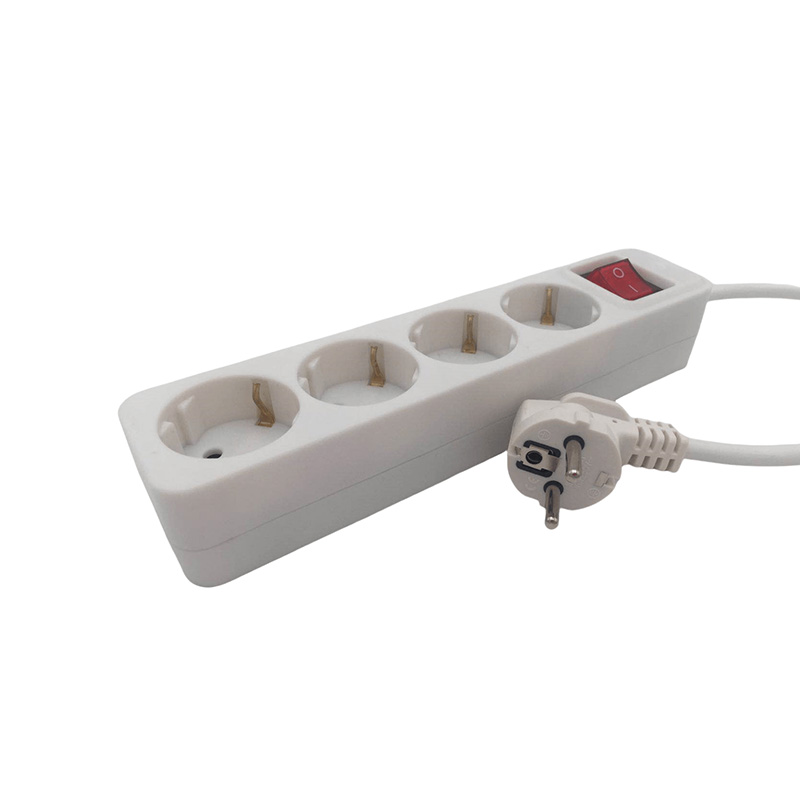
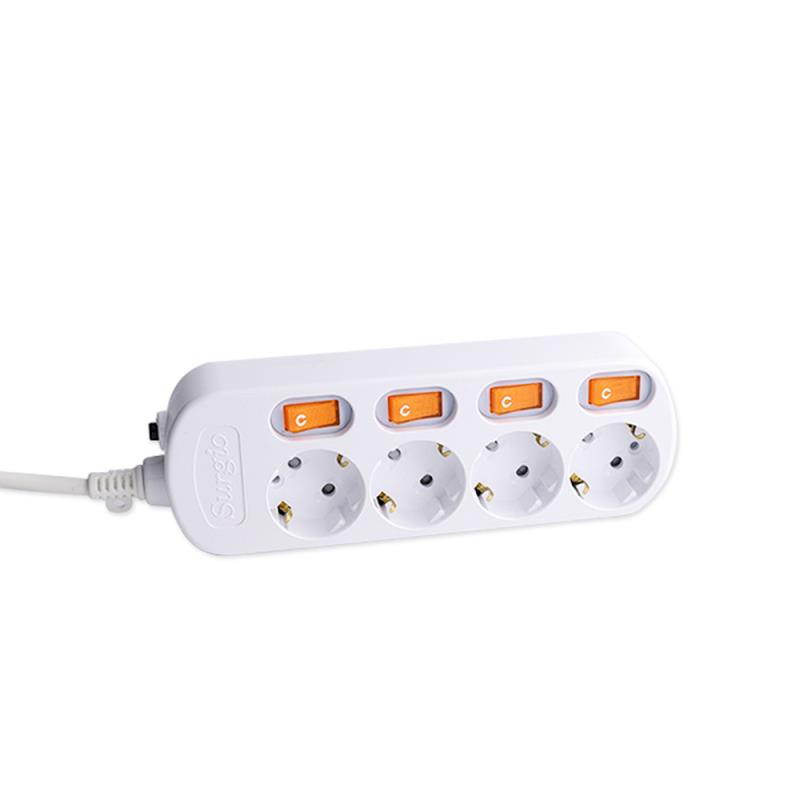 4-Outlet EU Power Strip with Independent Switches and Overload ProtectionThis 16A strip offers four individually controlled outlets, letting you cut standby power to idle devices. Its overload button trips automatically if the load exceeds the limit, providing reliable protection without relying on manual switching.View Product →
Some automatic strips also include independent switches. Each outlet can be shut down individually, so devices such as monitors, chargers, and desktop fans are not left energised when they are not in use. This combines convenience with visible control, but does not replace the automatic trip function.
Key Safety Features to Look For
When you compare automatic power strips, focus on the components and ratings. Look for a clear amperage rating on the housing. A 16 A strip will handle most household loads, while a 10 A strip is enough for a desk setup. The presence of an overload protection switch matters more than the switch position. The switch should be resettable after a trip so the strip can be used again after reducing the load.
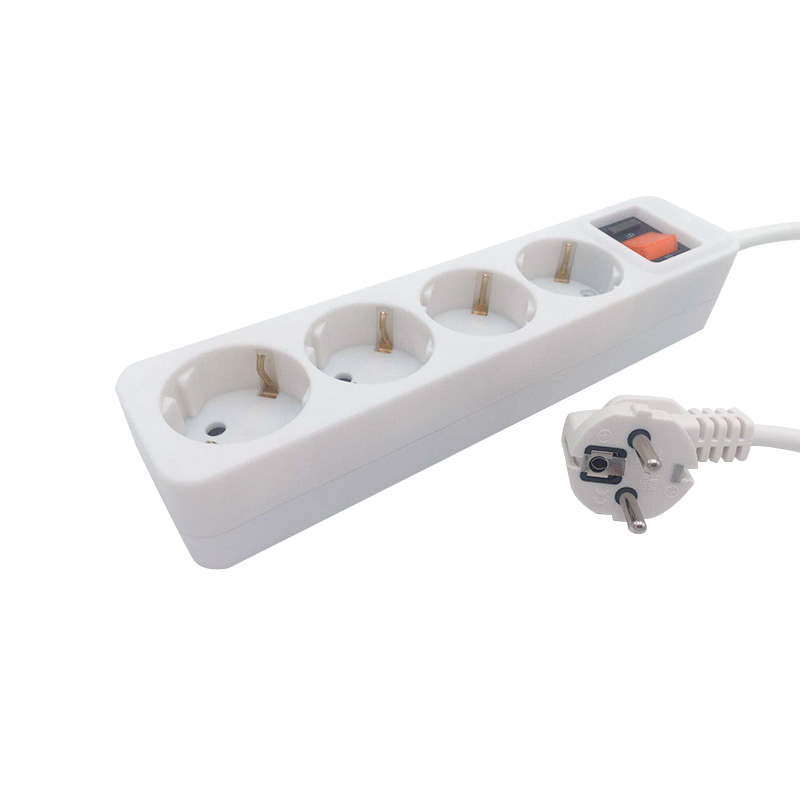
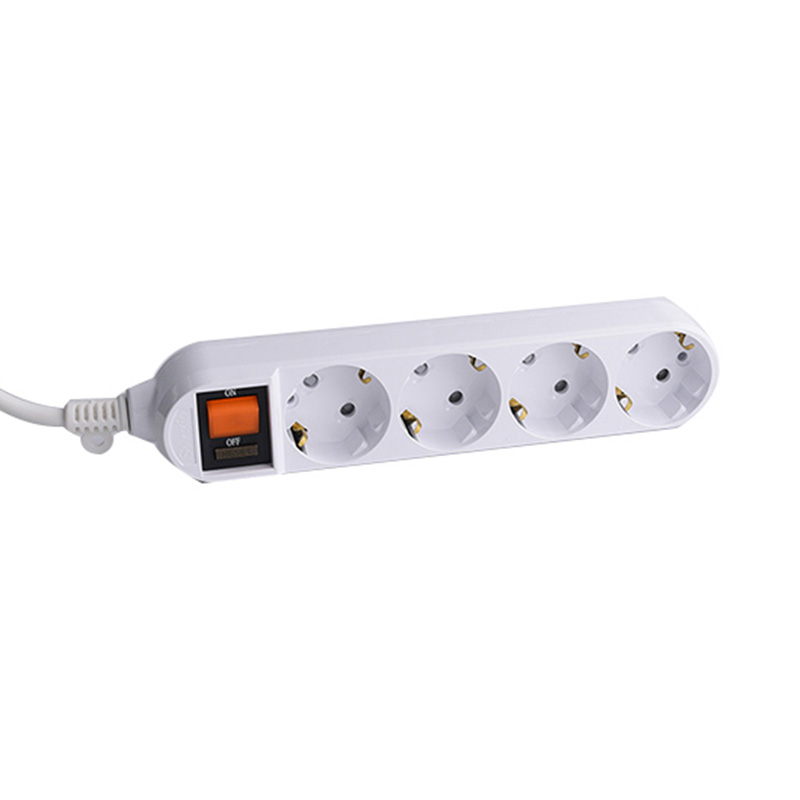 EU Power Strip with Four Outlets and Resettable Overload SwitchWith a 16A rating and a resettable protection button, this strip handles high-wattage appliances and can be restored after a trip. It suits workbenches or home offices where separate control and emergency cutoff are needed.View Product →
A unit with a single overload protection switch is often enough for general use. If you need to control several pieces of equipment separately, a strip with independent switches and a protection button gives you both individual control and an emergency cutoff. This is especially useful in a workshop, test bench, or home office where a single fault should not shut down everything.
How Automatic Power Strips Reduce Energy Waste
Standby power is the electricity that continues to flow even when a device is in sleep mode. A printer, a set-top box, or a gaming console can draw several watts around the clock. An automatic power strip can help you cut this waste by cutting power to the idle outlet group. When the main device is switched off, a smart strip shuts off the auxiliary outlets. This is not only good for your energy bill but also reduces the fire risk from warm transformers.
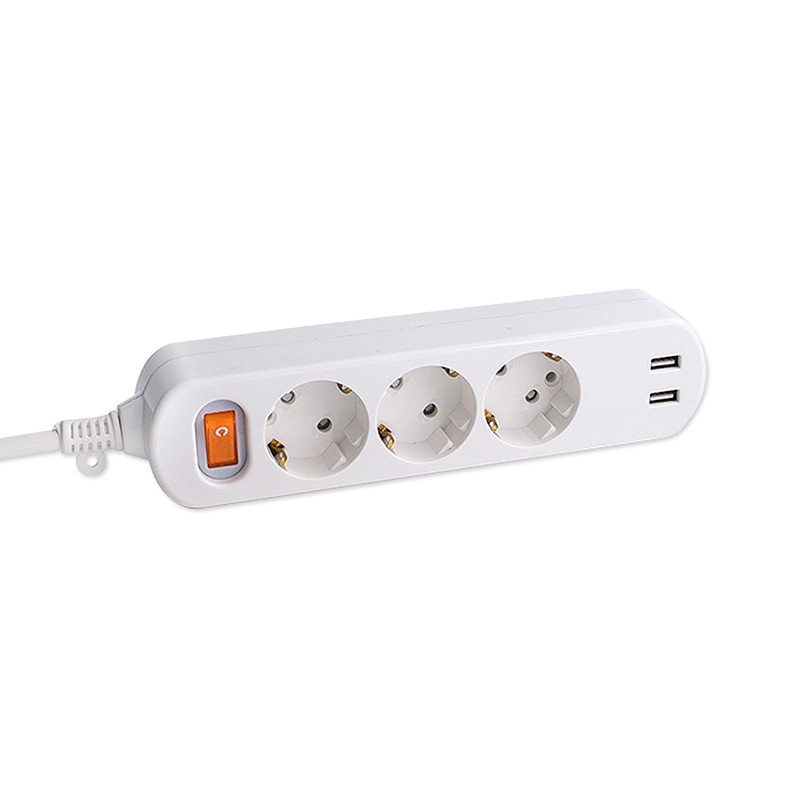
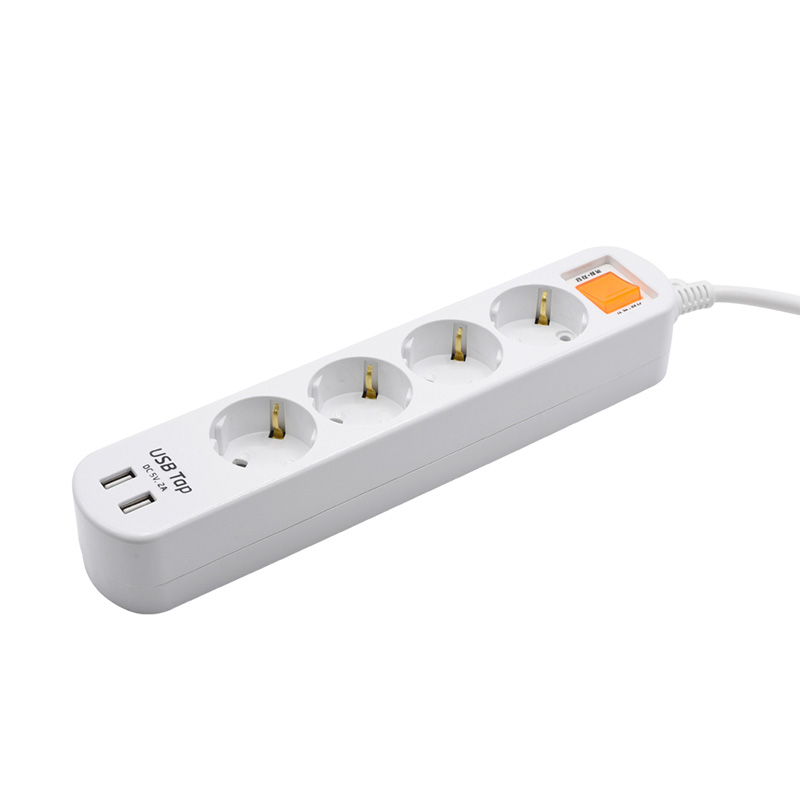 EU Power Strip with 4 Outlets, 2 USB Ports, and Overload ProtectionThis 16A strip pairs four AC outlets with dual 5V 2.4A USB ports, so you can charge devices without blocking sockets. Its overload switch and full copper wiring deliver both safety and convenience in a single unit.View Product →
USB-equipped automatic strips are another practical option. They allow you to charge phones, tablets, and portable tools without occupying a full socket. The USB ports in many modern strips are regulated to deliver stable current, so you do not need a bulky wall adapter. Combining USB charging with an automatic trip means one product can serve both safety and convenience.
Matching the Power Strip to Your Plug Standard and Environment
Buying an automatic power strip for an export market or a specific region means checking the plug type first. Many manufacturers produce separate EU-standard and KC-standard lines. A power strip built for European sockets will not fit a Korean wall outlet, and vice versa. If your equipment is shipped to different countries, using the correct standard avoids the common problem of loose connections and wandering pins.
For indoor use, most 4- or 6-outlet strips are adequate. For a garage or outdoor job, you need a product rated for IP44 or higher. Automatic overload protection matters even more in outdoor environments because water and dust can cause short circuits. A basic strip without a trip switch is not recommended for such conditions.
Choosing the Right Number of Outlets
The number of outlets affects both convenience and total load. Table 1 shows the most common configurations for automatic power strips and what they are best suited for.
| Outlets | Typical Rated Current | Best Use Case |
|---|---|---|
| 2 outlets | 10 A | Bedside lamps, routers, small chargers |
| 4 outlets | 16 A | Desktop computers, monitors, printers |
| 6 outlets | 16 A | Multimedia systems, workstations, lab benches |
The table is only a guide. A 4-outlet strip may draw more current than a 6-outlet strip if the devices connected are larger. Always add up the wattage of each connected appliance before relying on a single automatic strip.
Material and Construction Choices That Affect Reliability
The plastic housing plays a role that buyers usually overlook. Polycarbonate (PC) has high heat resistance and fire resistance, while polypropylene (PP) is more chemically resistant. For an automatic power strip, the housing must withstand occasional heat from the internal circuit breaker. A PC material strip is a solid choice for most indoor settings.
The relationship between heat resistance, fire resistance, and flame retardancy in PC materials is a key design factor that manufacturers study in depth. A strip that resists flame and does not soften under load will maintain the geometry of its sockets, preventing loose contacts and arcing. This is critical for an automatic power strip because the automatic trip function cannot protect against a fire caused by a failing housing.
For a technical view on how heat and flame resistance affect PC-based power strips, read the detailed discussion on material selection in this analysis of PC material power strip properties.
A Practical Checklist Before You Buy
- Check the rated current and wattage against your planned load.
- Confirm that the plug standard matches your wall socket.
- Look for a resettable overload protection switch or a circuit breaker.
- Decide if you need independent switches for each outlet.
- Choose a housing material that suits your room environment.
- Request a quote from the manufacturer to confirm the exact specifications.
An automatic power strip is a small investment that reduces energy waste and protects equipment against overload. The right model will include a trip mechanism, fit your socket type, and be built from a material that can handle heat. If you are sourcing these strips in bulk, verify the safety certification and ask for the test reports before approving a sample. Starting with a clear picture of the intended load and the electrical environment will help you choose a strip that performs for years.
PRODUCTS
ABOUT US
CONTACT INFO.
- +86-18758062352
- +86-0571-64701616
- [email protected]
- No. 7, Xinqu Road, Xin’Anjiang Street, Jiande, Hangzhou, Zhejiang, China

Copyright © 2023 Hangzhou Newmany Electronics Co., Ltd. All Rights Reserved. Power Strip Manufacturer in China| Login

 TOP
TOP