
 ENG
ENG
 English
 русский
 한국어
한국어 Deutsch
Submit feedback
News
 Home / News / Industry News / Energy Saving Power Strip: How Smart Design Cuts Standby Waste and Costs
 Energy Saving Power Strip: How Smart Design Cuts Standby Waste and Costs
 2026.09.21
 Industry News
You turn off the television, but the set-top box keeps glowing. The soundbar stays lit. The game console hums quietly. Together they pull 18 to 25 watts from the wall, around the clock. A standard multi-outlet strip will not stop this, because a standard strip is just a set of sockets with a switch. An energy saving power strip is designed to eliminate this waste, and the difference shows up on the next electricity bill.
Content
What Makes a Power Strip "Energy Saving"
An energy saving power strip is not one technology. It is a combination of switching and detection features that cut power to devices when they are not actually in use. The most common mechanism is the master-slave layout. You plug the main device, typically a television, computer, or monitor, into the master outlet. The remaining controlled outlets follow its state. When the master device is switched off or enters standby, the strip cuts power to the controlled outlets, so peripherals such as printers, speakers, and chargers stop drawing electricity.
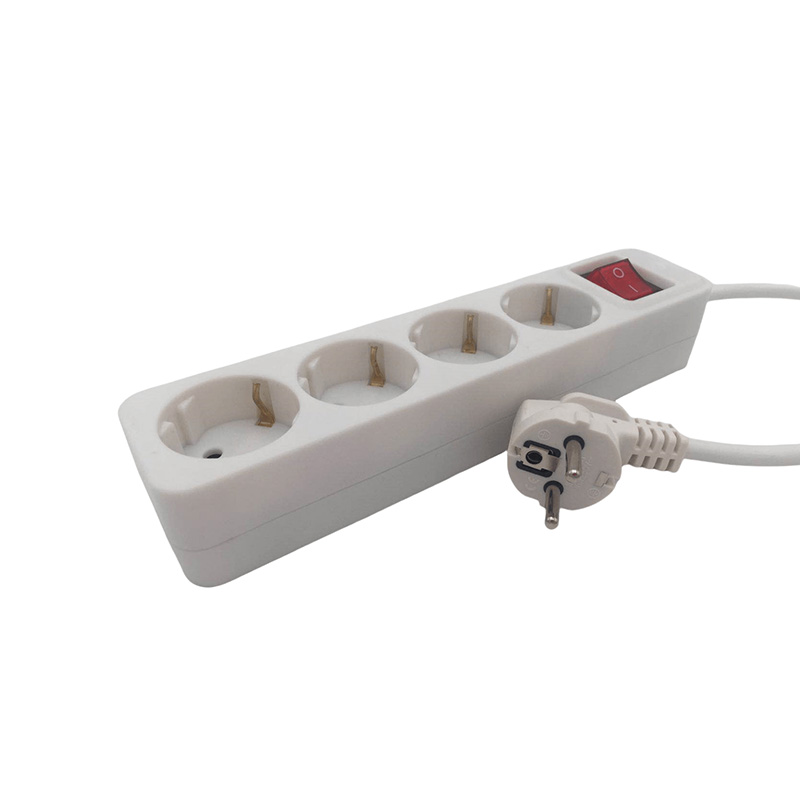
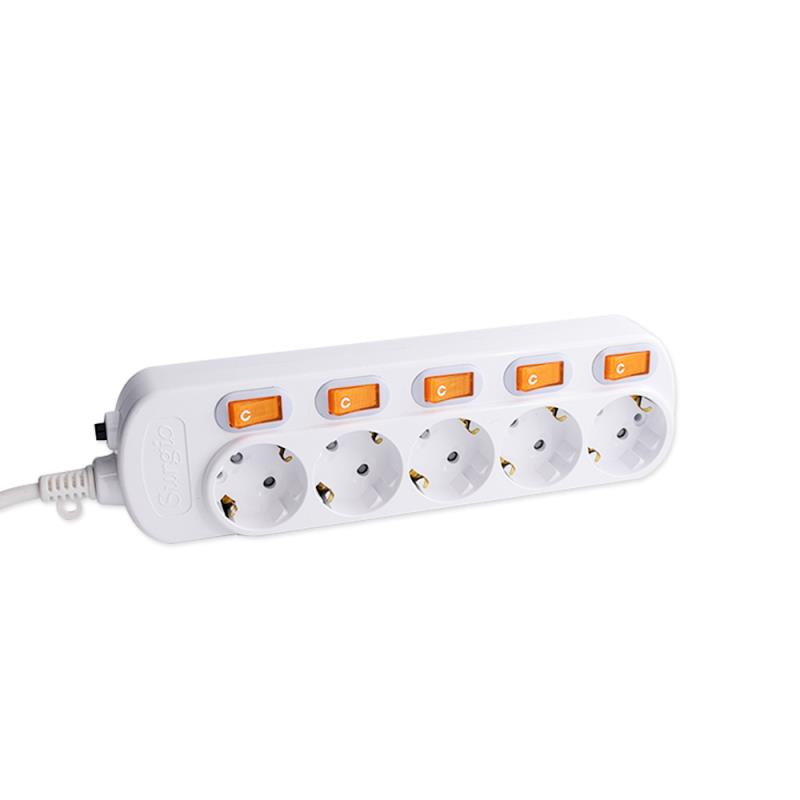
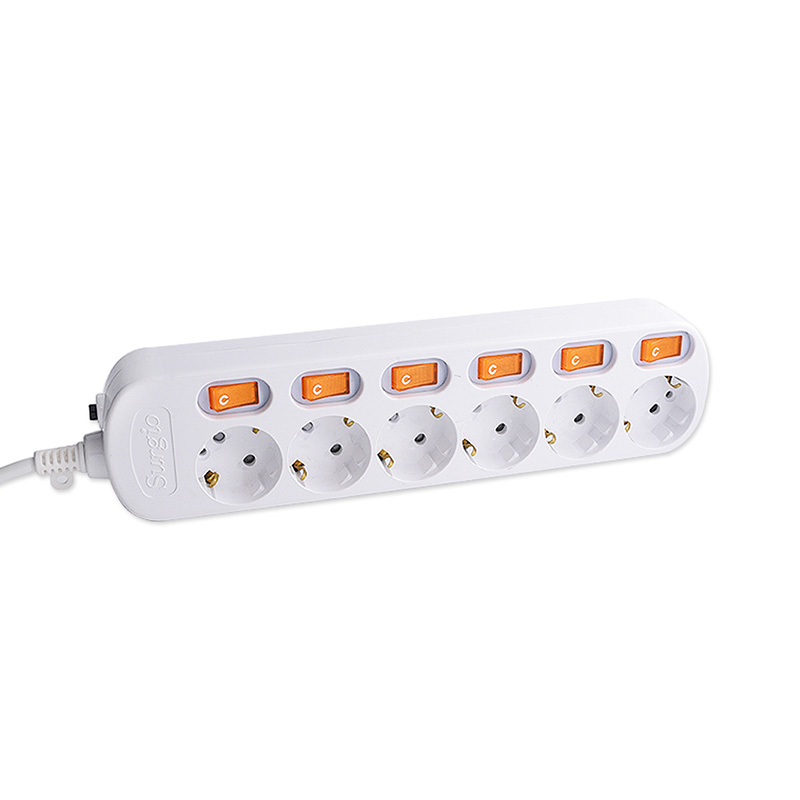
Individual switches give you a more direct form of control. Instead of relying on detection logic, you physically switch off each socket that is not in use. This is especially useful at a desk where the monitor, phone charger, and desk lamp each have a switch. Not every strip combines both approaches, so the choice of layout depends on how the strip will be used.
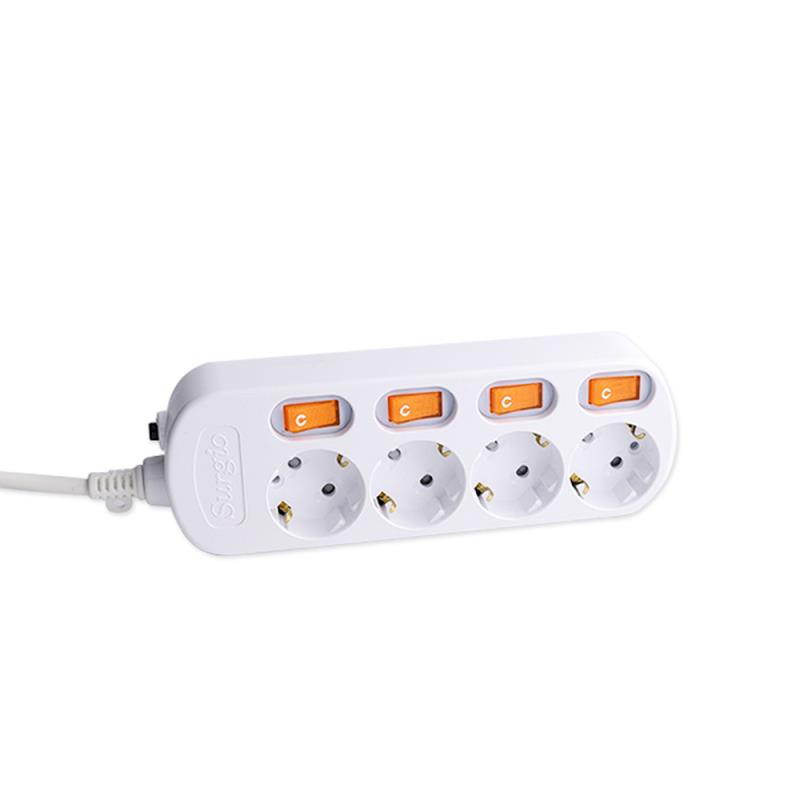 EU Standard Power Strip with 4 Independently Switched OutletsThis socket lets you control each of its four outlets separately, making it easy to cut standby power at a desk. Its fireproof PC shell and 16A rating support reliable daily use.View Product →
USB charging ports add another layer of energy control. A well-designed USB outlet stops drawing meaningful power when no device is connected. Cheaper outlets keep a small control circuit alive, which is why the charging circuit needs to be designed with the same care as the socket contacts. A strip with an efficient USB section charges a phone or tablet quickly and then drops its own draw to near zero when the device is unplugged.
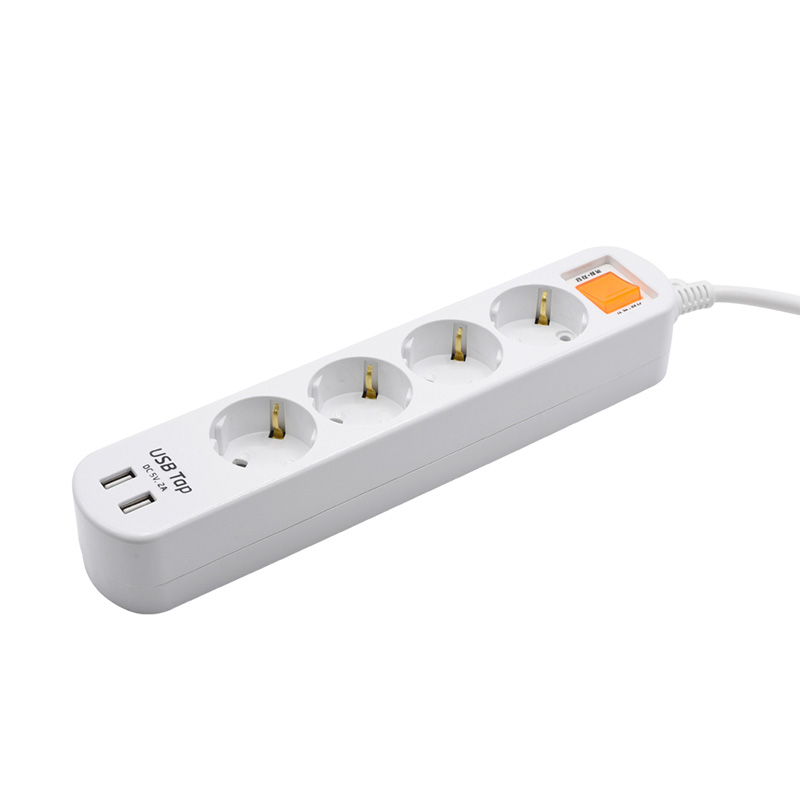 EU Power Strip with 4 Outlets, 2 USB Ports, and Overload ProtectionCombining AC outlets and USB charging, this strip offers efficient 5V 2.4A output and near-zero idle draw. The overload switch adds safety, making it a practical choice for mixed-device setups.View Product →
Timer-based strips are less common in Europe, but they exist for specific applications such as heating pads, aquarium lights, or shop window displays. They switch a circuit on and off according to a schedule, which works well when the daily usage pattern is predictable.
The Real Cost of Standby Power
Standby consumption is not a rounding error. Studies on European households consistently put it at 5 to 10 percent of total residential electricity use. In a home with a modern television, a router, a cordless phone base, a microwave with a clock, and several wall chargers, the continuous load adds up to 40 watts or more. That is roughly 350 kWh per year per home, depending on the tariff.
The equipment that benefits most sits in standby for twenty hours a day and runs for four. A video game console, for example, may draw 10 to 15 watts while "off" so that it can download updates. A desktop computer in sleep mode plus a monitor on standby can account for 25 to 35 watts. A master-slave strip cuts most of that draw the moment the main device is turned off.
What matters is the total, not the individual figures. A single set-top box wasting 12 watts is easy to ignore. Twelve watts, twenty-four hours a day, 365 days a year, is about 105 kWh annually. Multiply that by the five or six similar devices in a typical home, and the annual waste becomes substantial. An energy saving strip cannot reduce the power a device uses while running, but it can remove the portion consumed for no purpose.
Safety Is Part of Energy Efficiency
An energy saving strip is still a power strip, which means its primary job is to carry current safely. Every efficiency feature must be built on top of sound electrical protection. Overload protection is the baseline. A thermal circuit breaker or over-current switch trips when the total load exceeds the strip's rating, preventing overheating of the socket contacts and the attached cable.
Some strips go further. They include a self-diagnostic circuit that monitors the condition of the internal protection and reports abnormal states, rather than silently resetting after a fault. This matters because a strip that keeps tripping is a warning sign, not a nuisance. Our articles on power strip protection explain how these self-diagnostic features detect and report fault information before a small problem becomes dangerous.
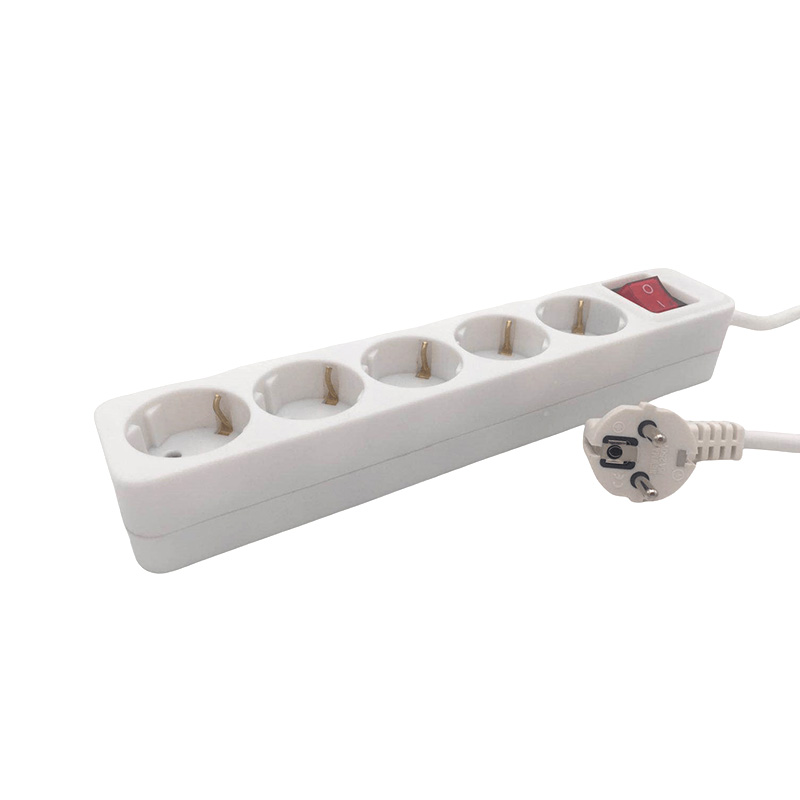
When you compare strips for a commercial purchase, look beyond the number of outlets. Check the current rating, the cross-section of the internal conductors, the quality of the switch contacts, and whether the overload protection resets manually or automatically. Manual reset is generally safer, because it forces someone to investigate the cause before restoring power.
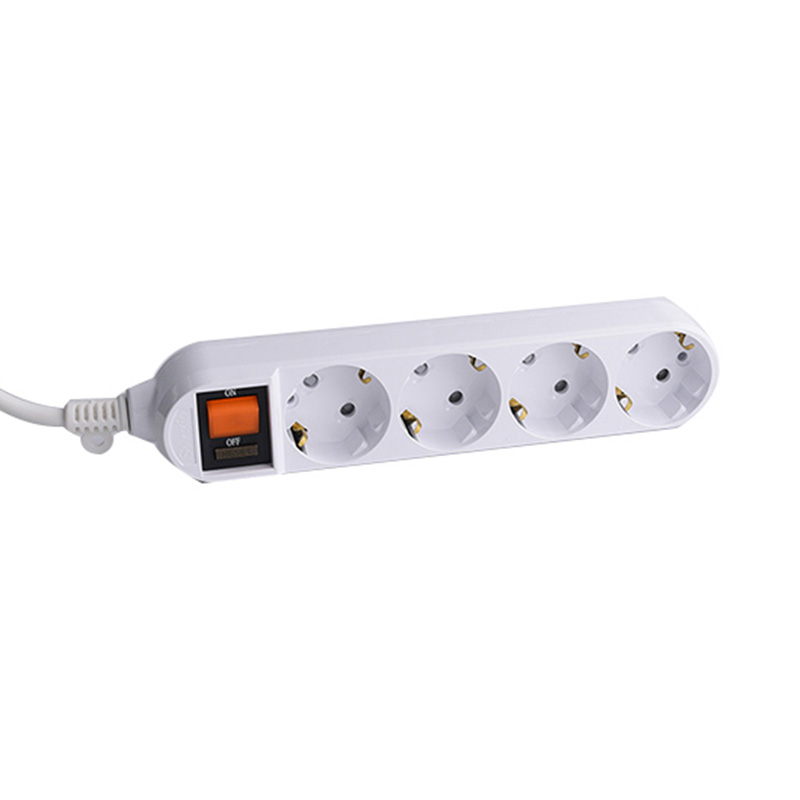 EU Standard Power Strip with 4 Outlets and Overload ProtectionBuilt with a fire-resistant PC shell and full copper internals, this strip suits continuous high-power loads. Manual-reset overload protection and 16A capacity support safe, long-term commercial use.View Product →
Materials Determine How Long a Strip Lasts
The housing material has a direct influence on both safety and lifetime. Two plastics dominate the power strip market: polycarbonate and polypropylene. Polycarbonate is valued for its heat resistance, fire resistance, and flame-retardant behavior. A PC housing holds its shape under sustained load and contains a fault without melting or dripping. This is why PC material strips are the usual choice for continuous high-power applications such as heaters, kettles, and professional equipment.
Polypropylene brings a different set of properties. It offers excellent chemical resistance, which matters in workshops, garages, and industrial environments where cleaning agents, oils, or solvents may contact the housing. PP is tougher under mechanical stress when formulated correctly, though it has a lower heat deflection point than PC. The right choice depends on where the strip is installed and what it will be near. A strip in a kitchen or a workshop has different demands from one behind a television.
Material quality shows up over time. A cheap housing becomes brittle or deforms after prolonged current draw, which loosens the grip on a plug, raises contact resistance, and generates heat. Material choice is therefore an energy issue as well as a safety issue.
What to Check When Sourcing Energy Saving Power Strips
Whether you buy a single strip for a home office or a container load for a distribution business, the same questions apply. The first is the standard. Strips must match the plug and socket system of the target market, not just physically but electrically. An EU-standard strip with Schuko sockets is not interchangeable with a Korean-standard strip, even if the voltage is similar. The second question is certification.
Certifications such as ISO 9001 for manufacturing quality, national electrical safety marks, and the relevant product standards are not paperwork. They are evidence that the production process has been audited and that the strip has passed tests for contact temperature, insulation, and overload behavior. A manufacturer that has been in production since 1989 and exports over five million overcurrent protectors, switches, and converters per year has processes in place that a small assembler simply does not have.
The third question is how much of the design the manufacturer controls. If the housing, the internal structure, and the micro-controller circuit are all developed in-house, changes to outlet spacing, switch type, USB power delivery, or wire length can be made without starting from zero. That flexibility matters when you launch a private-label energy saving strip and need to differentiate it from what competitors already carry.
| Feature | Master-slave outlets | Independent switches | USB charging | Overload protection |
|---|---|---|---|---|
| Primary benefit | Automatic cutoff of peripherals | Manual control per socket | Efficient low-voltage charging | Prevents overheating |
| Best application | TV and desktop setups | Desks and workbenches | Nightstands and counters | High-power appliances |
| Energy saving effect | High, automatic | Medium, depends on habit | Low but steady | Indirect, via safety |
| Added cost | Moderate | Low | Moderate | Low |
Where an Energy Saving Strip Makes the Biggest Difference
The return on an energy saving power strip depends entirely on the devices you connect to it. The best candidates are workstations that are switched off for long stretches but leave peripherals alive, entertainment systems that remain in standby overnight, and any setup where a network device or charger keeps drawing current for no reason.
- Home office: PC, monitor, printer, and phone charger. When the PC shuts down, the monitor and printer follow.
- Living room: television as master, with soundbar, game console, and streaming box on controlled outlets.
- Retail display: a demo unit that stays active during opening hours but is fully cut off at night.
- Workshop: separate outlets with individual switches for tools, battery chargers, and test equipment.
For each of these setups, the payback is not measured in weeks; it is a slow, continuous reduction in the building's base load. In a small office with ten workstations, that reduction can be enough to noticeably change the monthly bill.
An energy saving power strip is a simple answer to a specific problem: electricity that is paid for but not used. The mechanism matters less than the match between the strip's features and the devices it serves. Master-slave detection works for entertainment and computer setups. Independent switches work where habits are consistent. USB ports save a little on their own but matter more within a complete solution. When you evaluate a strip, consider the standby load of your actual equipment, the material of the housing, the presence of real overload protection, and the track record of the factory behind it. Those four factors separate a strip that merely labels itself "energy saving" from one that actually reduces your power use.
If you are sourcing power strips for distribution or for a specific project, review the product range and compare the configurations available for your target market.

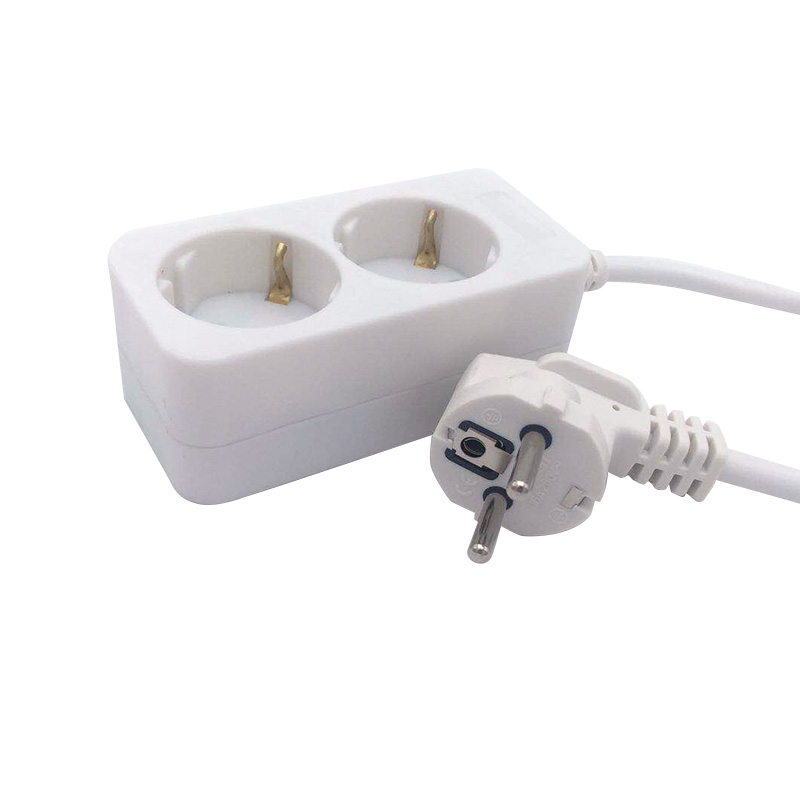
PRODUCTS
ABOUT US
CONTACT INFO.
- +86-18758062352
- +86-0571-64701616
- [email protected]
- No. 7, Xinqu Road, Xin’Anjiang Street, Jiande, Hangzhou, Zhejiang, China

Copyright © 2023 Hangzhou Newmany Electronics Co., Ltd. All Rights Reserved. Power Strip Manufacturer in China| Login

 TOP
TOP