
 ENG
ENG
 English
 русский
 한국어
한국어 Deutsch
Submit feedback
News

Are Your Old Power Strips a Hidden Fire Hazard? Signs to Know
 2026.04.08
 Industry News
Content
How Long Do Power Strips Actually Last?
Most people never think about replacing their power strips — they just keep using the same one from a decade ago. But the average power strip has a functional lifespan of 3 to 5 years under normal use conditions. After that point, internal components such as the wiring insulation, circuit breaker mechanisms, and outlet contacts begin to degrade, even if the unit appears to work fine on the outside.
The problem is invisible. Aging power strips do not always show obvious external damage before they become dangerous. Worn internal wiring can arc silently inside the casing for weeks before triggering a fire. Consumer product safety data consistently shows that a significant share of residential electrical fires trace back to overloaded or deteriorated power distribution devices — not faulty appliances.
If you bought your current power strip before 2020 and have been using it daily, the calendar alone is reason enough to inspect it carefully.
Warning Signs Your Old Power Strip Is a Fire Risk
You do not need technical expertise to spot a failing power strip. The following physical and behavioral signs are reliable indicators that a unit should be taken out of service immediately:
- Discoloration or scorch marks around any outlet or along the casing — even faint yellowing is a red flag.
- Burning or plastic smell when devices are plugged in, even briefly. This smell indicates internal arcing or melting insulation.
- Outlets that feel loose or fail to grip plugs firmly. A loose connection generates resistance heat, which accelerates damage.
- Warm or hot casing during normal use. A power strip should never be more than slightly warm to the touch.
- Intermittent power loss to connected devices without a clear cause, suggesting internal contact failure.
- Cracked, brittle, or frayed cord jacket anywhere along the power cable. UV exposure and repeated bending degrade insulation over time.
- A reset button that no longer stays engaged or trips without any apparent overload, indicating a failing internal breaker.
If your power strip shows any two of the above signs simultaneously, stop using it the same day. Do not wait for the next convenient moment to replace it.
Common Mistakes That Shorten a Power Strip's Lifespan
Many power strips age faster than necessary because of everyday habits that most users are unaware of. Understanding these patterns helps extend the life of any unit — and more importantly, keeps it from becoming hazardous before its time.
Overloading with High-Wattage Appliances
A standard household power strip is rated for 15 amperes at 125 volts — roughly 1,875 watts total. Space heaters, air conditioners, microwave ovens, and refrigerators routinely draw between 800 and 1,500 watts each. Running even one of these through a power strip pushes it near its rated limit, leaving no headroom for other devices and generating sustained heat that degrades internal components. High-wattage appliances should always be plugged directly into a wall outlet.
Burying the Strip Under Rugs or Furniture
Power strips generate heat during normal operation and require airflow to dissipate it. Placing a strip beneath a carpet, inside a cabinet, or pressed against a wall eliminates that airflow. Heat accumulates, accelerating insulation breakdown and increasing fire risk — especially in older units already approaching the end of their service life.
Daisy-Chaining Multiple Strips
Plugging one power strip into another is explicitly prohibited by most electrical safety codes. The practice multiplies the load on a single circuit without any additional overcurrent protection, and any failure in the first strip instantly affects everything connected to both. Despite being widely known as unsafe, daisy-chaining remains one of the most common causes of power strip fires in home office environments.
Leaving Strips Permanently Powered in Idle Environments
Power strips that remain energized continuously — in storage rooms, behind TVs, or under desks — accumulate standby heat over years of use. Even with nothing plugged in, an energized strip is under minor electrical stress. For strips that serve seasonal or occasional needs, switching off at the wall when not in use meaningfully extends their safe lifespan.
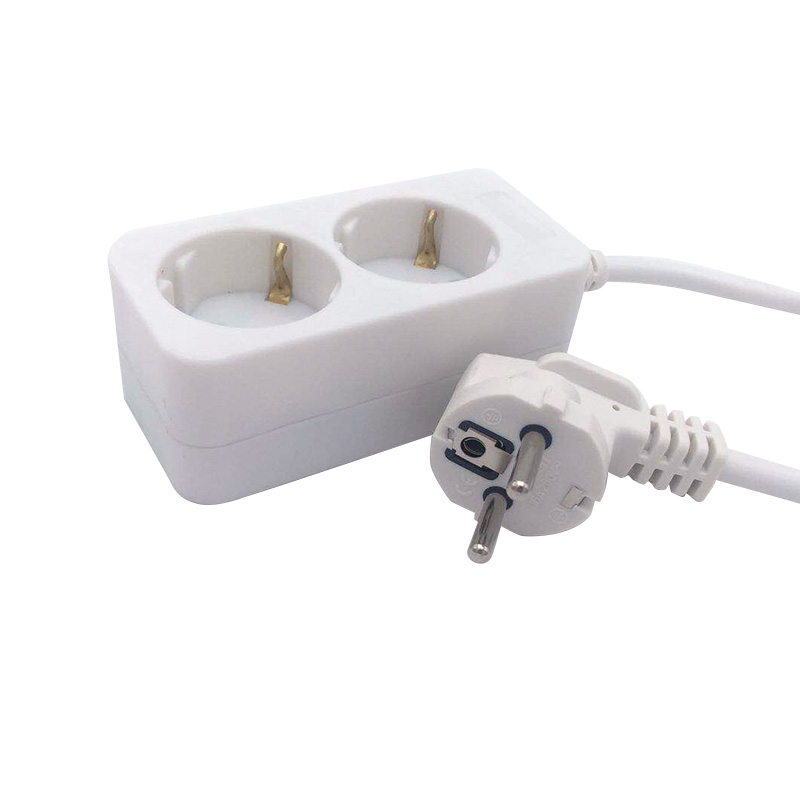
What to Check Before Replacing vs. Recycling
Once you decide an old power strip needs to go, the next question is how to dispose of it responsibly. Power strips contain copper wiring, mixed plastics, and in older models, small circuit board components — none of which should go directly into household trash in most jurisdictions.
| Condition | Recommended Action |
|---|---|
| Scorch marks, melted plastic, burn smell | Discard immediately — do not donate or resell |
| Older than 5 years, no visible damage | E-waste drop-off or municipal recycling program |
| Subject to a product recall | Contact manufacturer for refund per CPSC instructions |
| Cord damaged, outlets intact | Do not attempt repair — replace the entire unit |
Never attempt to repair a power strip yourself. The internal components are not designed for field service, and improper reassembly can create hazards that are worse than the original fault. Replacement is always the safer and more cost-effective choice.
How to Choose a Safer Replacement
Not all replacement power strips offer equivalent protection. When selecting a new unit, four features meaningfully reduce long-term risk:
- UL or ETL certification. Independent safety certification ensures the unit has been tested against recognized electrical standards. Avoid uncertified units regardless of price or appearance.
- Supplementary overcurrent protection. A built-in circuit breaker or fuse stops current flow if the strip is overloaded, preventing the heat buildup that drives most power strip fires. Recent CPSC recalls have specifically targeted units lacking this protection.
- Adequate outlet spacing. Wide spacing between outlets accommodates large power adapters without blocking adjacent sockets, which reduces the temptation to use adapters or extension cords.
- Appropriate cord length for the actual installation. Using an extension cord to extend a power strip introduces additional resistance and connection points. Choose a strip whose cord reaches the wall outlet directly.
For setups with multiple devices that require simultaneous charging, consider power strips with USB ports, which consolidate charging for phones, tablets, and laptops into a single certified unit rather than relying on multiple wall adapters.
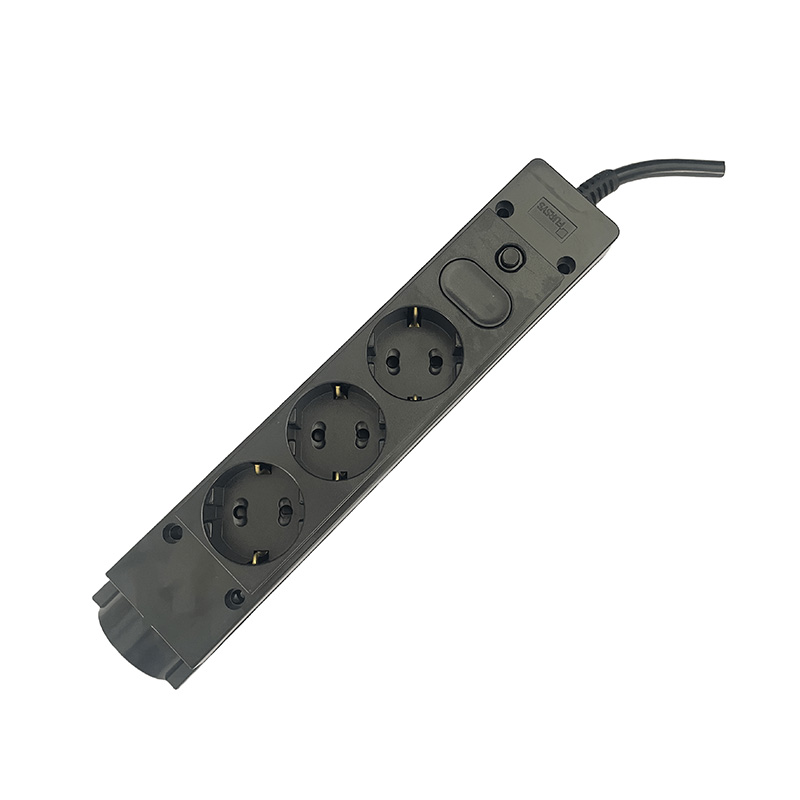
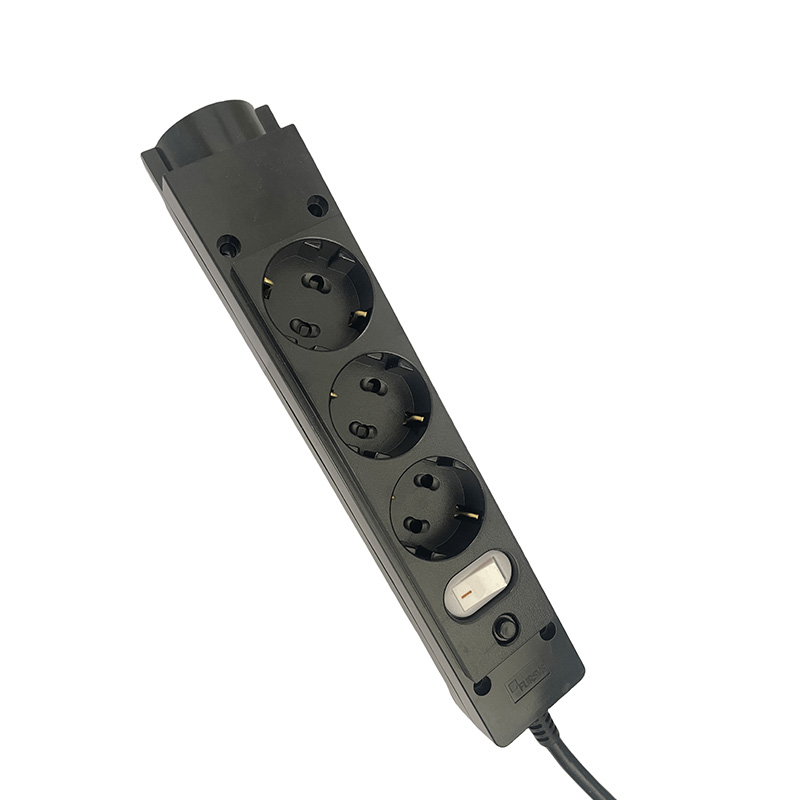
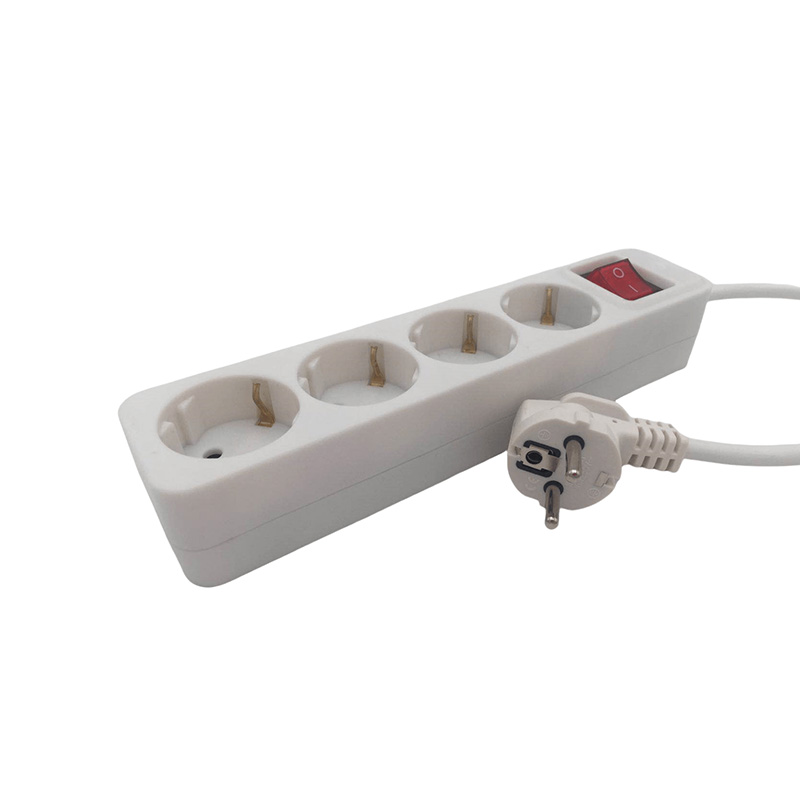
It is also worth understanding the difference between a basic extension unit and a model with voltage spike protection before purchasing — for a detailed breakdown, see the guide on power strip vs surge protector. For office environments, sensitive electronics, and any location prone to power fluctuations, the added protection of a surge-rated unit is worth the modest price premium.

PRODUCTS
ABOUT US
CONTACT INFO.
- +86-18758062352
- +86-0571-64701616
- [email protected]
- No. 7, Xinqu Road, Xin’Anjiang Street, Jiande, Hangzhou, Zhejiang, China

Copyright © 2023 Hangzhou Newmany Electronics Co., Ltd. All Rights Reserved. Power Strip Manufacturer in China| Login

 TOP
TOP