
 ENG
ENG
 English
 русский
 한국어
한국어 Deutsch
Submit feedback
News

Power Strips vs Extension Cords: Differences, Uses & Safety Guide
 2026.04.22
 Industry News
Power strips and extension cords are two of the most commonly misused electrical accessories in homes and offices. Most people treat them as interchangeable — grabbing whichever is closest when they need more reach or more outlets. That habit is the source of a significant share of residential electrical fires every year. Power strips and extension cords are engineered for fundamentally different purposes, carry different load ratings, and fail in different ways when used incorrectly. Understanding exactly what each device does, where it belongs, and where it absolutely does not belong is the first step toward using both safely and effectively.
Content
What Is a Power Strip and What Is an Extension Cord?
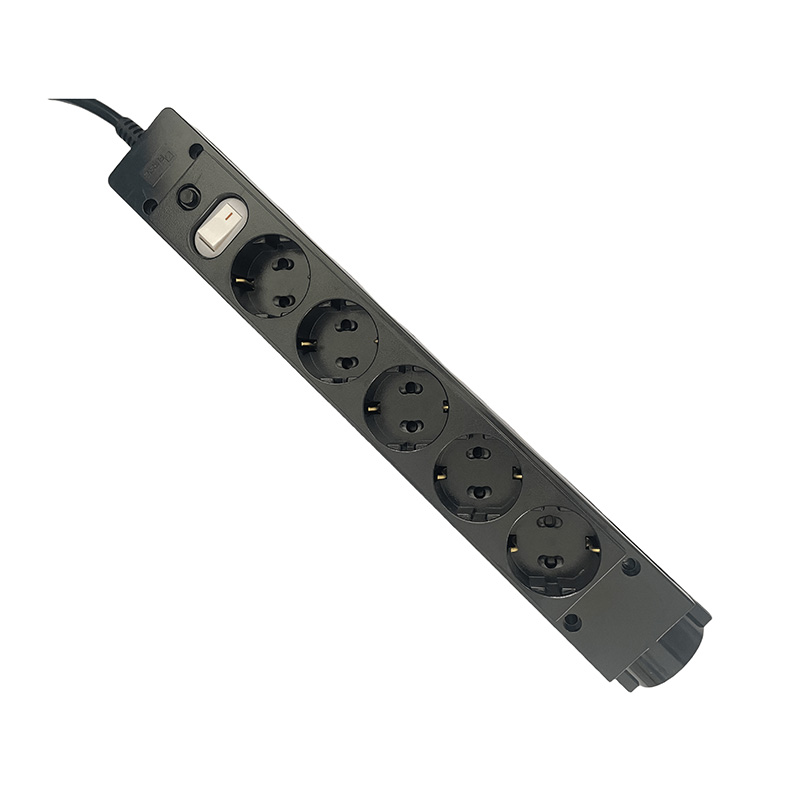
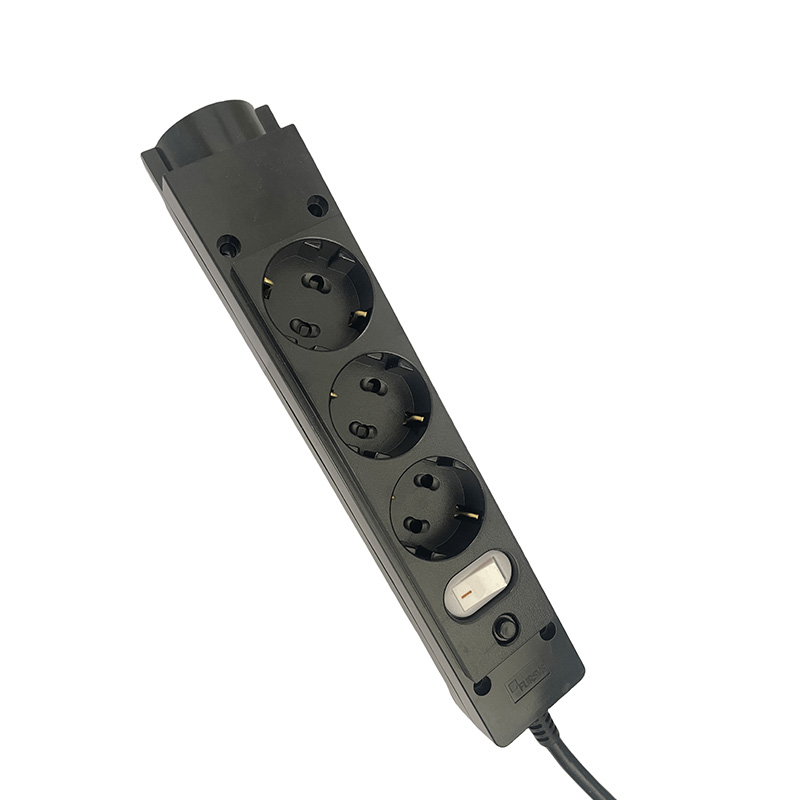
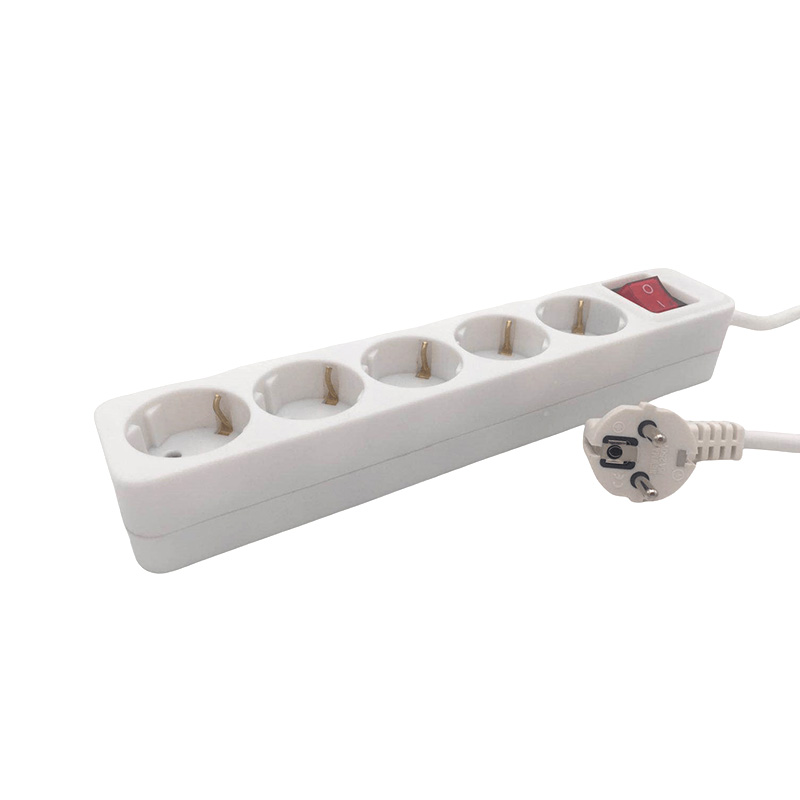
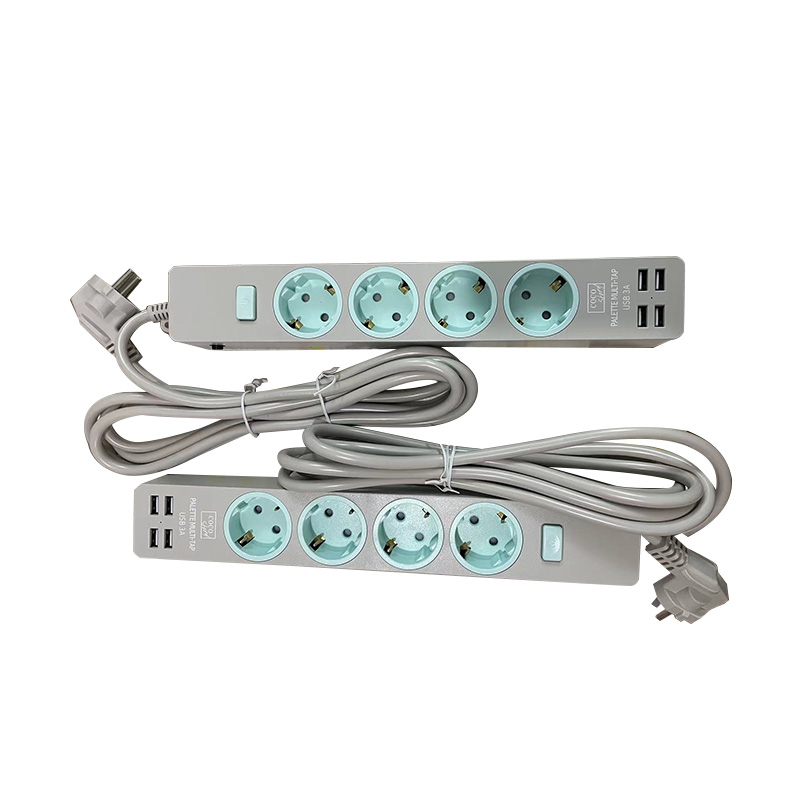
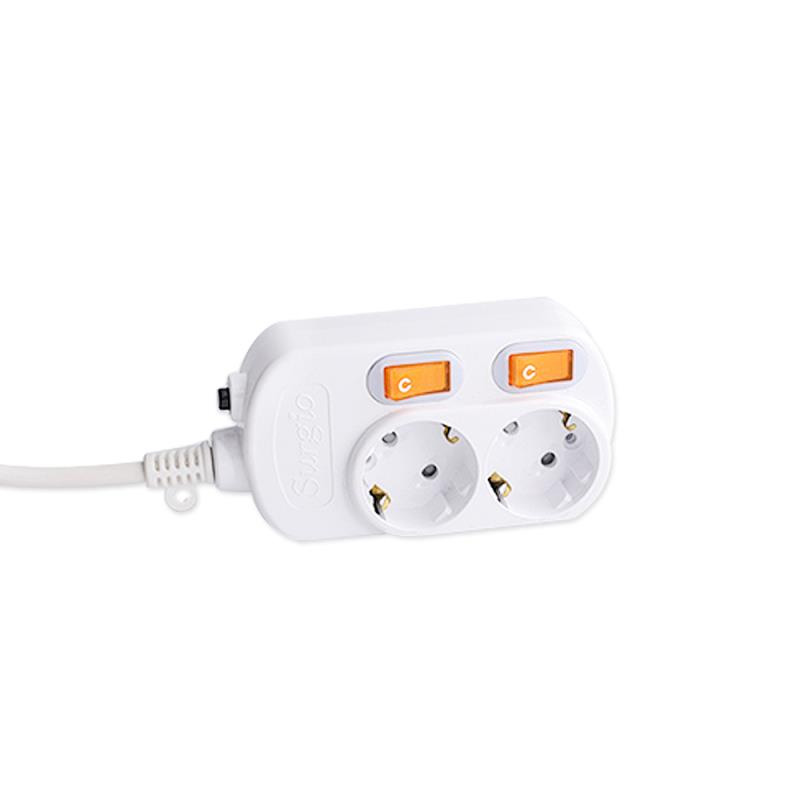
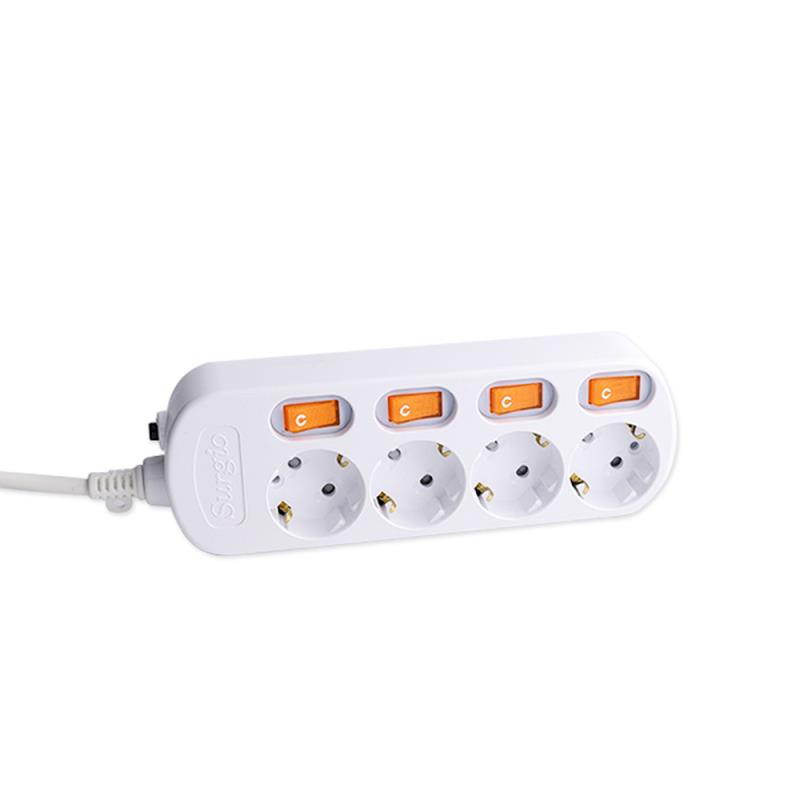
A power strip is an electrical device that converts a single wall outlet into multiple outlets — typically between 3 and 12 — housed in a single rectangular block connected to the wall by a fixed cord. Its primary function is power distribution: it allows several devices to draw from one circuit simultaneously. Most modern power strips include a built-in circuit breaker that trips when total load exceeds the rated amperage, and many include surge protection circuitry that absorbs voltage spikes before they reach connected devices. Power strips are designed for fixed, indoor locations where multiple devices need a shared power source — a desk with a computer, monitor, and chargers; an entertainment center with a TV, receiver, and console.
An extension cord is a length of flexible insulated electrical cable with a plug on one end and one or more sockets on the other. Its primary function is reach extension: it moves the effective location of an outlet to wherever the cord terminates. Extension cords come in lengths from 3 feet to over 100 feet, in a range of wire gauges, and in configurations rated for indoor or outdoor use. They are designed for temporary setups — powering a tool at a job site, running a lamp to a corner of a room that lacks a nearby outlet, connecting holiday lights to a distant socket. They are not designed to remain in place as permanent wiring substitutes.
The core distinction is directional: a power strip multiplies outlets at one fixed point; an extension cord moves a single outlet to a new location. Confusing the two — or trying to combine their functions by plugging one into the other — is where electrical problems begin.
Key Differences: Power Strips vs Extension Cords
The differences between power strips and extension cords span function, construction, safety features, and appropriate use cases. The comparison below covers the specifications that matter most for safe, effective use.
| Feature | Power Strip | Extension Cord |
|---|---|---|
| Primary function | Distribute power to multiple devices from one outlet | Extend reach of a single outlet over distance |
| Number of outlets | 3–12 outlets in one unit | Usually 1–3 sockets, focus is on cord length |
| Surge protection | Often included; rated in joules | Rarely included |
| Circuit breaker | Commonly built in | Not standard |
| Wire gauge (AWG) | Typically 14–16 AWG | 12–16 AWG depending on load rating |
| Intended use duration | Semi-permanent indoor fixture | Temporary; unplug when not in use |
| Outdoor rating | Most are indoor only | Available in outdoor/weatherproof versions |
| High-power appliances | Not recommended | Heavy-duty cords rated for high-load tools |
| Safety certifications | UL/ETL with joule and amp ratings | UL/ETL with AWG, amp, and outdoor ratings |
One specification that applies to both but is frequently overlooked is the amperage rating. Most household circuits run at 15 or 20 amperes. A power strip or extension cord rated below the demand of connected devices becomes a heat source — the resistance in an undersized conductor generates thermal energy that cannot dissipate fast enough, leading to insulation degradation and, in severe cases, ignition. Always match the rated amperage of any extension cord or power strip to the total draw of the devices it will serve.
When to Use a Power Strip
A power strip is the right choice whenever you need to run multiple low-to-moderate power devices from a single outlet at a fixed location. The defining criterion is not the number of devices — it is the nature of those devices and the permanence of the setup.
Home office and workstation setups are the clearest application. A desktop computer, monitor, external hard drive, desk lamp, phone charger, and USB hub can all draw from a single surge-protected power strip without exceeding its rated capacity. The surge protection built into quality power strips is not a marketing feature — voltage spikes from utility switching, nearby lightning strikes, or large appliance cycling can reach hundreds of volts above normal line voltage in a fraction of a second. A surge protector rated at 1,000 joules or higher absorbs these spikes before they reach the sensitive electronics connected to it, potentially saving hundreds or thousands of dollars in equipment damage.
Home entertainment centers present the same multi-device pattern: television, streaming device, soundbar, gaming console, and Blu-ray player are all low-draw devices that belong on a quality power strip with surge protection. The on/off switch present on most power strips also provides a convenient way to fully cut power to the entire entertainment system when not in use, eliminating standby draw.
When selecting a power strip, look for three specific specifications: the joule rating for surge protection (higher is better — 1,000 joules minimum for electronics, 2,000+ for computers and televisions); the amperage rating of the built-in circuit breaker (15A is standard for most household applications); and a UL or ETL certification mark, which confirms the unit has been independently tested to meet safety standards. Avoid uncertified power strips from unknown manufacturers — the cost difference between a certified and uncertified unit is minor; the performance difference in a surge event is significant.
When to Use an Extension Cord
An extension cord is the right choice when the problem is distance, not outlet count — when a device simply cannot reach the nearest wall outlet from where it needs to operate. The key variables in selecting the correct extension cord are length, wire gauge (AWG), and load rating.
Wire gauge is measured in AWG (American Wire Gauge), where a lower number indicates a thicker, higher-capacity conductor. The relationship between gauge, length, and safe load is direct: the longer the cord and the higher the power draw of the connected device, the thicker the wire must be to carry that current without dangerous resistance heating. As a practical guide: 16 AWG cords are appropriate for light loads — lamps, phone chargers, small fans — at lengths up to 25 feet. 14 AWG cords handle medium loads — power tools, larger appliances — up to 50 feet. 12 AWG cords are required for high-draw equipment or runs exceeding 50 feet.
Outdoor use requires a cord specifically rated for exterior conditions. Outdoor-rated extension cords use weather-resistant insulation that resists moisture, UV degradation, and temperature extremes. Using an indoor cord outdoors — even briefly — exposes the insulation to conditions it is not designed to withstand, accelerating degradation and creating shock and fire risk. Outdoor cords are typically marked "W" or "WA" in their product designation and carry an outdoor-use rating on the packaging.
Temporary is the operative word for all extension cord use. Extension cords are not substitutes for permanent wiring. A cord run under a rug to reach a lamp across a room is not a permanent solution — it is a deferred installation problem and a fire hazard. Foot traffic, furniture weight, and trapped heat combine to damage insulation in ways that are invisible until they fail. If a location consistently needs power and lacks a convenient outlet, the correct solution is a licensed electrician installing a new outlet — not an extension cord that stays in place for years.
Critical Safety Rules for Both
The majority of electrical fires attributed to power strips and extension cords result from a small number of specific misuse patterns. Following these rules eliminates the most common failure modes for both devices.
- Never daisy-chain power strips or extension cords: Plugging one power strip into another, or connecting extension cords end-to-end, multiplies the resistance in the circuit and creates a cumulative load that exceeds what any individual component was rated to handle. Daisy-chaining is explicitly prohibited by the National Electrical Code and is one of the leading causes of extension cord and power strip fires. Each device must plug directly into a wall outlet or a single power strip — never into another extension cord or power strip.
- Never run cords under rugs, carpet, or through doorways: Covered cords cannot dissipate heat, and the insulation is subject to physical damage from foot traffic and door compression. Both conditions create ignition risk that develops over months or years — long enough for occupants to forget the cord is there and long enough for serious damage to accumulate.
- Never plug high-power appliances into a power strip: Space heaters, window air conditioners, refrigerators, washing machines, and microwave ovens draw 10–15 amperes or more continuously. Power strips are not designed for sustained high-current loads — they are designed for the intermittent, moderate draw of electronics. High-power appliances must plug directly into a dedicated wall outlet. This rule applies regardless of how many outlets are available on the power strip or how large the power strip appears.
- Inspect cords and strips regularly for damage: Frayed insulation, bent prongs, discolored outlets, burning smells, and warm-to-the-touch cord bodies are all indicators of a failing component. Any damaged power strip or extension cord should be replaced immediately — electrical tape is not an acceptable repair for damaged cord insulation.
- Unplug extension cords when not in use: Extension cords left permanently plugged in — even with nothing connected to them — remain live conductors. Unplugging them when the task is complete eliminates the standby risk and reinforces their intended status as temporary devices.
- Replace surge protectors after major events: Surge protection components degrade with each absorbed spike and have a finite joule capacity. After a significant surge event — a nearby lightning strike, a utility outage with a hard restoration — the surge protector may have exhausted its absorption capacity while appearing functionally normal. Many quality surge protectors include an indicator light that extinguishes when protection is depleted; if that indicator is absent or off, replace the unit.
How to Choose the Right One for Your Needs
The decision between a power strip and an extension cord comes down to four questions about your specific situation. Working through them in order produces a clear answer for almost every scenario.
1. Is the problem distance or outlet count? If a device cannot reach the nearest outlet, the solution is an extension cord. If the outlet is close enough but there are not enough sockets for all the devices that need to run simultaneously, the solution is a power strip. If both problems exist — the outlet is too far away and you need multiple sockets at the destination — the correct approach is an extension cord to bridge the distance, with devices plugged directly into the wall outlet at the far end, not daisy-chained through both devices.
2. Is this a temporary or semi-permanent setup? Temporary, task-based use (a power tool during a renovation, outdoor lighting for a party, a lamp in a room being staged) calls for an extension cord. A fixed workstation, entertainment center, or desk setup that will remain in place for months or years calls for a power strip.
3. What is the power draw of the connected devices? Low-to-moderate draw devices — computers, monitors, televisions, phone chargers, lamps, speakers — are appropriate for a power strip. High-draw devices — space heaters, air conditioners, refrigerators, power saws — require either a direct wall outlet connection or a heavy-duty extension cord rated for the specific load, and should never connect to a standard power strip.
4. Is the environment indoor or outdoor? Standard power strips are indoor-only devices. Any outdoor power need requires an outdoor-rated extension cord with weatherproof insulation and, for equipment near water sources, a GFCI (ground fault circuit interrupter) protected outlet or cord.
For most home and office electronics, a surge-protected power strip with a UL certification, a joule rating above 1,000, and a 15-ampere circuit breaker is the right long-term solution. For any application involving distance, temporary use, or outdoor conditions, a properly gauged, appropriately rated extension cord is the correct tool. Using each device within its designed parameters — and never substituting one for the other — is the straightforward practice that keeps both effective and safe.

PRODUCTS
ABOUT US
CONTACT INFO.
- +86-18758062352
- +86-0571-64701616
- [email protected]
- No. 7, Xinqu Road, Xin’Anjiang Street, Jiande, Hangzhou, Zhejiang, China

Copyright © 2023 Hangzhou Newmany Electronics Co., Ltd. All Rights Reserved. Power Strip Manufacturer in China| Login

 TOP
TOP