
 ENG
 English
 русский
 한국어
 Deutsch

Submit feedback
News
 Home / News / Industry News / Cable Chase Bracket Guide: Fit, Load, Routing, and Installation Checks
Cable Chase Bracket Guide: Fit, Load, Routing, and Installation Checks
 2026.11.23
 Industry News
On a mezzanine, in a workshop, or along an outdoor equipment run, a cable route often fails at a small point: the bracket. A cable chase bracket that is slightly too narrow, fixed to a surface that cannot carry the pull, or left with a sharp cut edge can turn a tidy installation into rework. The practical conclusion is straightforward: treat the cable chase bracket as an engineered interface, not a hardware afterthought. It must match the chase profile, support the intended load at the specified spacing, suit the mounting surface, and preserve electrical and environmental requirements.
Content
- 1 What a Cable Chase Bracket Is Doing in the Route
- 2 Size the Bracket From the Chase, Not From a Catalog Number
- 3 Selection Checks That Prevent Callbacks
- 4 Load, Spacing, Bend Radius, and Movement
- 5 Mounting Surface, Corrosion, and Electrical Continuity
- 6 Installation Checks That Catch Problems Early
- 7 Procurement Details That Affect Total Cost
- 8 When the Fixed Chase Meets a Cable Reel
- 9 A Small Part With a Large Effect
What a Cable Chase Bracket Is Doing in the Route
A cable chase bracket positions and supports a cable chase: the enclosed or open channel that carries cables from one point to another. Depending on the system, the bracket may be a wall saddle, a strut-mounted clamp, a floor stand, or a custom support. Its job is not simply to hold a channel in the air. It keeps the chase aligned, maintains the intended bend radius, prevents sag between supports, protects the cable jacket from abrasion, and allows covers or access panels to seat correctly.
This is why a bracket is not interchangeable with a cable clip or a generic pipe clamp. A clip may hold a single cable, and a pipe clamp may close around a round conduit, but a chase bracket usually has to match a specific profile, width, height, and cover clearance. If the bracket distorts the chase, the cover may not fit, the cable may rub at a joint, and the next contractor may have to cut or shim the support to make the route work.
Size the Bracket From the Chase, Not From a Catalog Number
Start with the chase, not the bracket. Measure the outside width, height, wall thickness, cover clearance, and any snap-fit or return flange at three points along a batch. A single measurement can miss bowing, coating thickness, or normal production tolerance. For powder-coated or painted chases, remember that the finish adds thickness. In long runs, thermal expansion also matters, so the bracket should allow the chase to move slightly rather than clamping it so tightly that it buckles.
As a working rule, the bracket should hold the chase firmly without requiring force to close. A bracket that needs to be spread, twisted, or hammered into place is the wrong size, even if the catalog number looks close. Check fastener access as well. A bracket that fits the chase but leaves no room for a socket or screwdriver will slow installation and increase the chance of a loose fixing.
Selection Checks That Prevent Callbacks
The most expensive bracket is the one that has to be removed after the cable is pulled. Use the checks below before releasing a purchase order or approving a sample.
| Check | What to verify | Why it matters |
|---|---|---|
| Chase profile | Outside width, height, wall thickness, cover clearance, and mounting hole pattern | Prevents distortion, poor cover fit, and forced assembly |
| Load and spacing | Filled chase weight, cable load, support spacing, and pull at changes of direction | Controls sag, fastener pull-out, and long-term creep |
| Mounting surface | Concrete, steel strut, wood, sheet metal, or equipment frame; anchor type and edge distance | Reduces vibration loosening and substrate failure |
| Environment and bonding | Indoor or outdoor exposure, corrosion class, drainage, paint insulation, and grounding path | Protects continuity, finish, and service life |
Load, Spacing, Bend Radius, and Movement
Size the bracket for the filled chase, not the empty channel. Cable weight adds up quickly over a long run, and the load is often higher near vertical drops, pull points, and equipment connections. Support spacing should be tighter where the route changes direction, where vibration is present, and where workers may lean on or lift the chase during maintenance. A bracket that is adequate in a straight ceiling run may be inadequate beside a machine that starts and stops all day.
Bend radius deserves equal attention. The bracket should guide the chase without forcing a tight bend at a corner or transition. If the chase enters a box, panel, or cable reel at an awkward angle, the cable may rub against a lip or experience side load at the fitting. Allow controlled movement for expansion and contraction. Slotted holes, saddle washers, or a small clearance can prevent buckling without leaving the chase loose enough to rattle.
Mounting Surface, Corrosion, and Electrical Continuity
Fastener choice follows the surface. Concrete needs anchors with adequate embedment and edge distance. Steel strut needs the correct channel nut and thread engagement. Sheet metal may need reinforcement to prevent tear-out. Wood can shrink and swell, so a bracket that is tight in summer may be loose in winter. For outdoor or washdown areas, look for water traps, drainage paths, and finishes that survive UV exposure and repeated cleaning. Stainless steel, hot-dip galvanized steel, and suitable powder-coated finishes behave differently, and mixing dissimilar metals can accelerate corrosion.
For metal chases, electrical continuity is part of the bracket decision. Paint, powder coat, and anodizing can insulate joints that are expected to bond. Bonding jumpers, star washers, and designated bonding points may be required, and the work should be checked by a qualified person against local electrical code. If the fixed chase feeds a cable reel, verify the reel's grounding path separately; a bracket that looks mechanically sound does not prove electrical continuity. The guidance on how to properly ground a cable reel is useful when the route includes a pay-off reel.
Installation Checks That Catch Problems Early
- Dry-fit the bracket and chase before fixing anything to the structure.
- Deburr cut edges and check that the cable path has no sharp lip or exposed thread.
- Set spacing from the filled-load requirement, not from the empty chase alone.
- Fasten to the specified torque and confirm that anchors, nuts, and washers seat correctly.
- Check cover fit, access clearance, and bend radius at every transition.
- Pull the cable without forcing it over a bracket edge or through a distorted chase.
- Reinspect after the cable is loaded, especially at vertical drops and equipment connections.
Procurement Details That Affect Total Cost
A low unit price can disappear quickly when brackets do not fit, arrive with the wrong finish, or require extra labor on site. Ask for a dimensioned drawing, material and finish confirmation, load or application data where available, and a sample that can be fitted to a short section of the actual chase. Confirm the hole pattern and saddle radius rather than relying on a photo. For export projects, check packaging, labeling, and documentation requirements before the order is placed. Mixing bracket systems from different suppliers can also create hidden incompatibility, because two parts may look similar but have different return flanges or locking features.
A one-meter trial fit is cheap insurance. It reveals whether the bracket closes without distortion, whether the cover seats, and whether the fastener can be reached with normal tools. If the project has multiple chase sizes, label the brackets by location and size so the installation crew does not substitute a near-match at a critical bend.
When the Fixed Chase Meets a Cable Reel
Some routes combine a fixed cable chase with a pay-off reel for temporary power, events, maintenance, or outdoor equipment. The bracket keeps the fixed chase aligned and the cable entry clear. The reel stores and pays out cable. Do not use the chase bracket to correct a misaligned reel or to carry the reel's pull. For projects that need a matched pay-off point, the EU standard cable reel for indoor and outdoor use is the relevant product category.
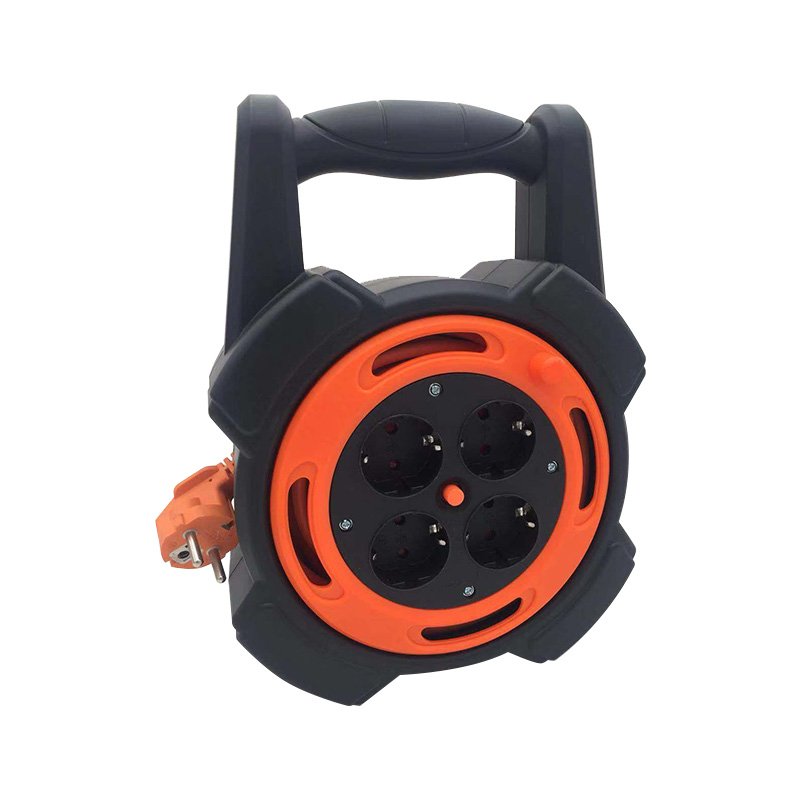 EU Standard Indoor and Outdoor Cable ReelFor projects needing a matched pay-off point, this 10 m cable reel supports indoor and outdoor cable management with overload protection and a durable shell.View Product →
A Small Part With a Large Effect
A cable chase bracket is easy to overlook because it is small and often hidden above a ceiling or behind equipment. That is exactly why it deserves a specification check. Match the bracket to the chase profile, load it for the filled cable weight, fix it to the right substrate, protect the finish, and confirm the grounding path where metal parts are involved. When those details are settled before purchase, the bracket does its real job: keeping the cable route straight, serviceable, and safe for the life of the installation.


PRODUCTS
ABOUT US
CONTACT INFO.
- +86-18758062352
- +86-0571-64701616
- [email protected]
- No. 7, Xinqu Road, Xin’Anjiang Street, Jiande, Hangzhou, Zhejiang, China

Copyright © 2023 Hangzhou Newmany Electronics Co., Ltd. All Rights Reserved. Power Strip Manufacturer in China| Login

 TOP