
 ENG
ENG
 English
 русский
 한국어
한국어 Deutsch
Submit feedback
News
 Home / News / Industry News / Battery Gets Hot While Charging: Causes, Safe Limits, and Practical Fixes
 Battery Gets Hot While Charging: Causes, Safe Limits, and Practical Fixes
 2026.10.12
 Industry News
A phone that has been sitting on a charger for twenty minutes feels warm against your palm, and the first instinct is to wonder whether something is wrong. Usually nothing is. Charging is an exothermic process: turning alternating current from the wall into the low-voltage direct current a battery needs, and then pushing lithium ions from one electrode to the other, both release heat as a by-product.
The conclusion first: surface temperatures of roughly 30°C to 40°C (86°F to 104°F) during charging are ordinary, and fast charging can push a battery to about 45°C (113°F) before the charge controller deliberately slows down. Heat that becomes painful to hold, keeps climbing after the first half hour, or arrives together with a swollen case, a chemical smell, or a connector that is hot while the battery is cool, points to a fault rather than normal losses.
Content
How Much Heat Is Actually Normal While Charging?
Temperature is the most useful single reading you can take, because it separates ordinary losses from a developing failure. The bands below reflect typical behaviour for lithium-ion phones, tablets, laptops, and tool packs; exact figures depend on the cell, the charger, and the enclosure, so read them as ranges rather than fixed limits.
| Charging scenario | Typical surface temperature | What it usually means |
|---|---|---|
| Trickle charge, around 5 W | 25°C to 35°C (77°F to 95°F) | Barely noticeable warmth; normal. |
| Standard charge, 10 W to 18 W | 33°C to 40°C (91°F to 104°F) | Warm to the touch; expected. |
| Fast charge, 30 W and above | 38°C to 45°C (100°F to 113°F) | Charge rate is throttled to hold the ceiling. |
| Prolonged heat at the top of the fast-charge band | 45°C to 55°C (113°F to 131°F) | Charging may pause; check charger, cable, case, and airflow. |
| Above 60°C (140°F), swelling, or odour | Out of specification | Stop charging, isolate the device, replace the cell or pack. |
Why a Battery Gets Hot While Charging
Heat has to come from somewhere, and a charging circuit only offers a few places for it to originate. Working through them in order is faster than guessing.
- Conversion losses. A charger converts AC to DC, and the device converts that again to the voltage the cell needs. Each stage loses roughly 10 to 20 percent as heat, which appears in the adapter, the cable, and the battery.
- Charging current. Resistive heating rises with the square of current. Doubling the charge current roughly quadruples the heat generated inside the cell and the wiring, which is why a 65 W charge warms a phone far more than a 5 W overnight charge.
- Ageing cells. After about 500 full cycles a cell commonly retains 80 percent of its capacity, and internal resistance has grown. The same current now produces more heat than it did when the pack was new.
- Ambient temperature and airflow. A device charging under a pillow, inside a closed case, or on a car dashboard has nowhere to shed heat. Charging in a 35°C room can add several degrees on its own.
- Cable and connector resistance. Thin, long, or worn cables, damaged plugs, and corroded socket contacts add resistance outside the battery. That heat shows up at the plug rather than the cell.
- Charger placement. An adapter buried under soft furnishings or stacked in a closed drawer cannot dissipate its own losses and passes that warmth along.
- Load during charging. Navigation, video, and games add discharge heat from the processor on top of charge heat.
- The supply side. Overloaded power strips, partly coiled extension cords, and loose socket contacts contribute their own share, which is easy to overlook.
What the Outlet and Power Strip Side Contributes
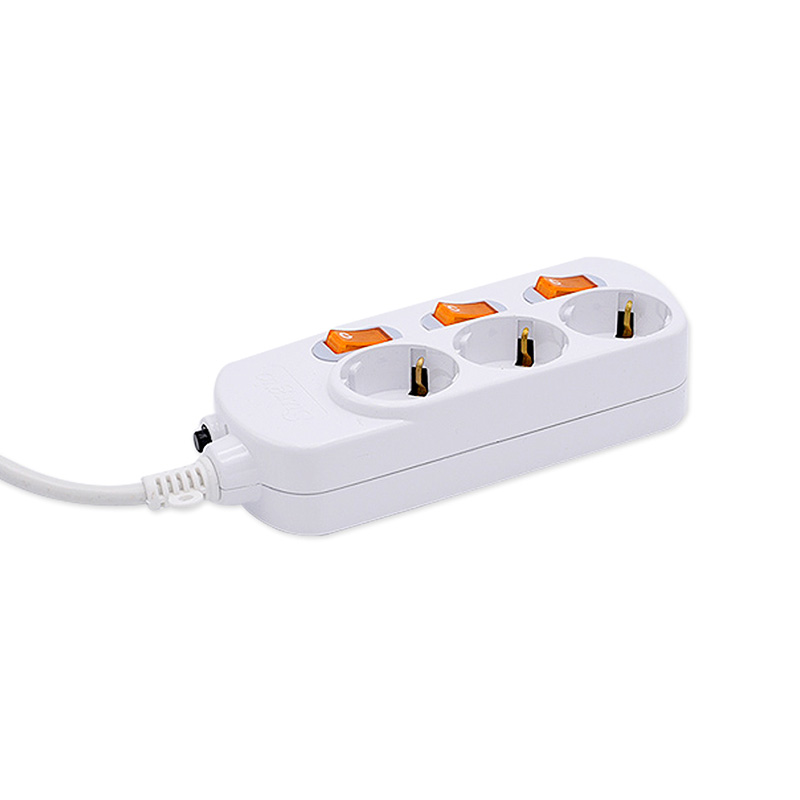
Most advice about a hot battery focuses on the phone. In practice, a meaningful share of overheating cases traces back to the socket, the extension cord, or the strip the charger is plugged into. Contact resistance is the usual culprit. A socket that grips the plug loosely forces current through a smaller contact area, and that area behaves like a heating element: the plug body turns noticeably warm within minutes while the battery stays cool. If the plug is hotter than the phone, the problem is upstream.
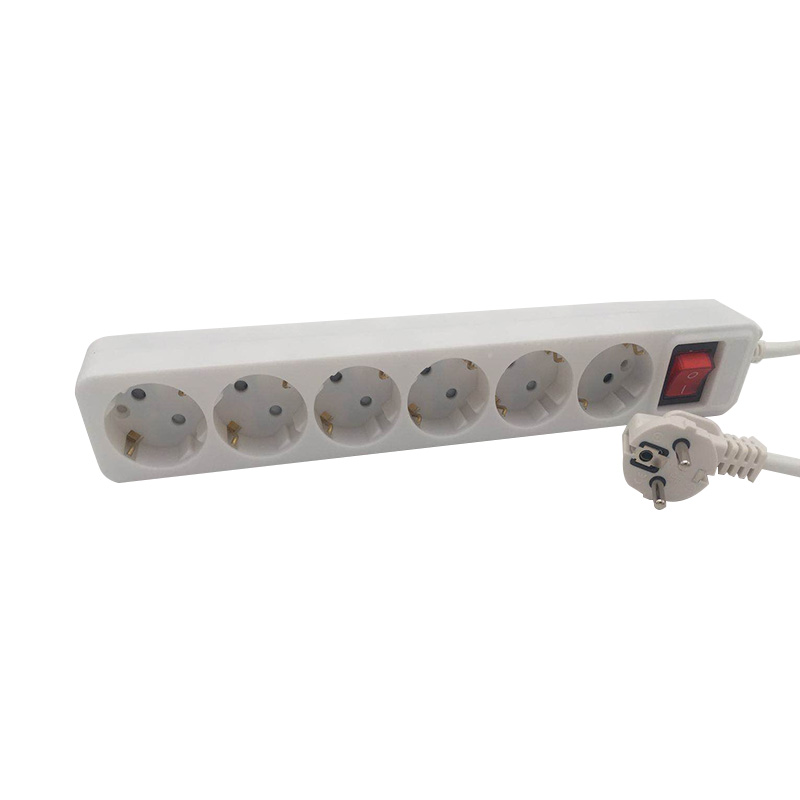
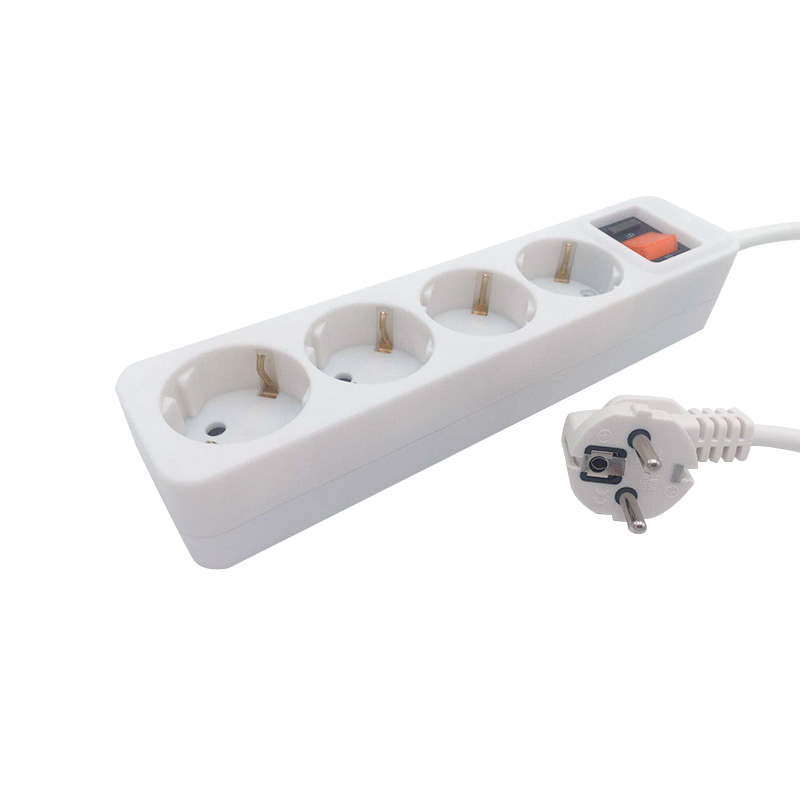
Overload protection matters for the same reason at a larger scale. A strip rated at 16 A that is asked to feed a heater, a laptop adapter, and a phone charger at once will run warmer than it should, and a strip with a proper overload protection switch or thermal breaker will open the circuit before housing temperature becomes a hazard. Housings moulded from polycarbonate are the better choice in warm environments, because the material holds its mechanical strength and flame-retardant behaviour at higher temperatures than many alternatives used in low-cost strips.
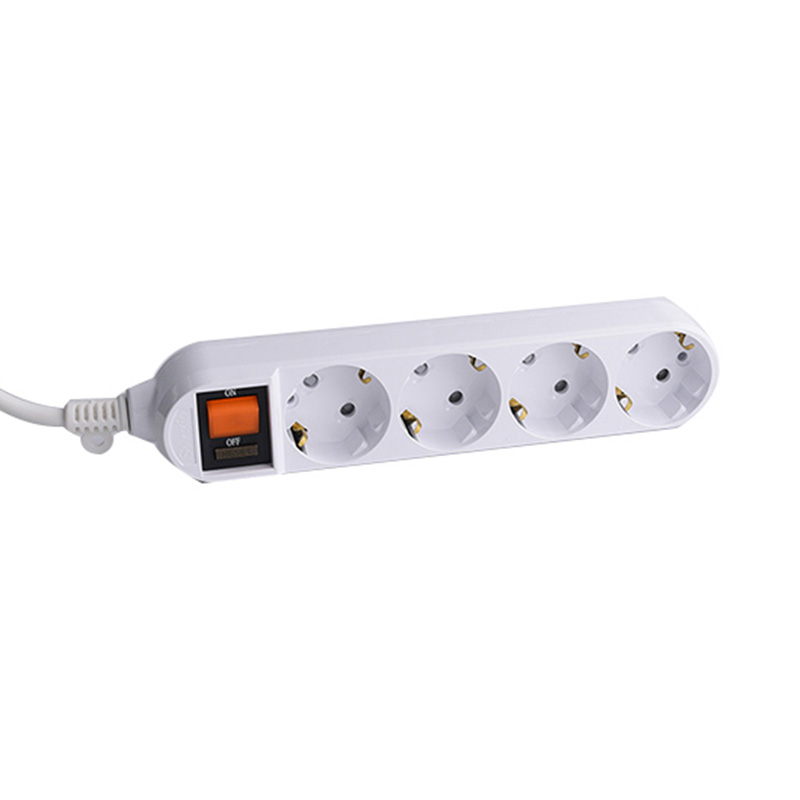 Cable3G 4-Outlet EU Power Strip with Overload ProtectionFour EU outlets at 16A/220-250V with overload protection switch, full-copper internals, and a flame-retardant PC shell for household power distribution.View Product →
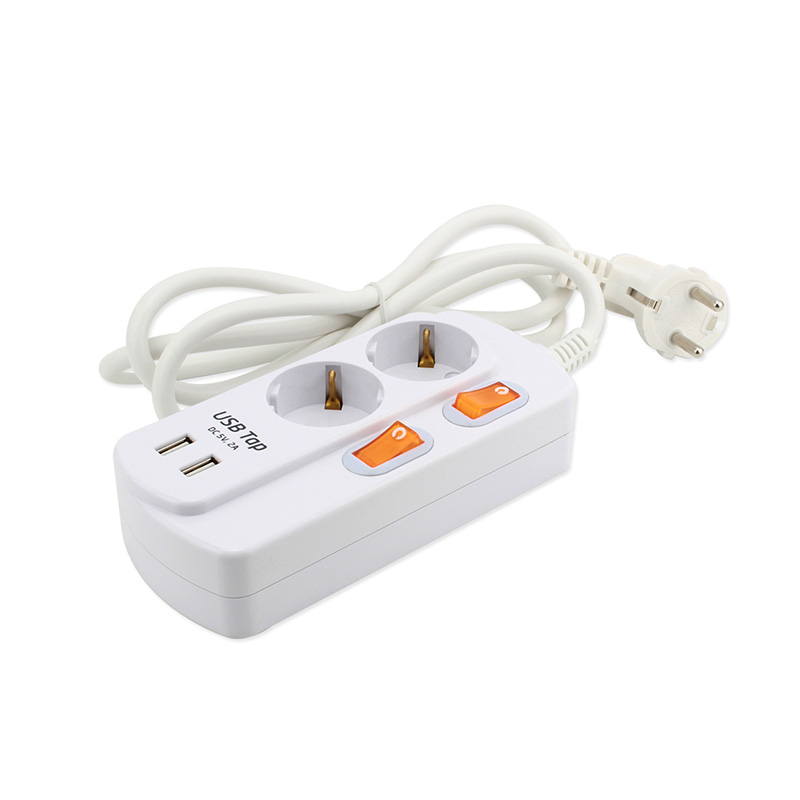
Strips with USB ports add a second heat source. The AC-to-DC converter inside the strip works continuously and warms on its own; when a four-outlet strip with two USB ports is loaded close to its rating, that internal heat escapes through the same housing. Leaving air space around the strip and avoiding daisy-chaining it behind furniture keeps the converter inside its design window.
Cable reels are the item most often misused in this context. A fully wound reel carrying a heavy charging or heating load cannot dissipate heat from the coiled conductor, and the inner turns get progressively hotter. Unwind the cable completely before use, respect the reel's current rating, and confirm the ground connection is intact whenever the reel feeds outdoor equipment.
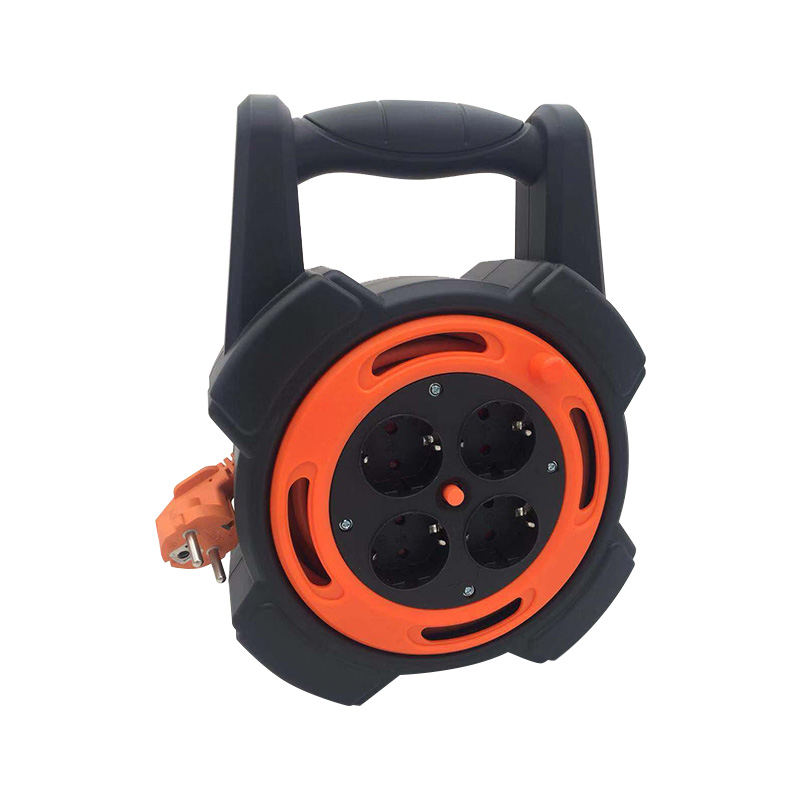 EU Standard 10m Cable Reel with Overload ProtectionTen-meter EU cable reel rated 16A/220-250V, with fireproof PP shell, full-copper core, and overload protection switch for indoor or outdoor use.View Product →
Warning Signs That Mean Stop Charging Now
Warmth is not the same as danger, but a few specific signals are worth acting on immediately rather than monitoring.
| Warning sign | What it suggests | Action |
|---|---|---|
| Battery surface above 55°C (131°F) | Cell or charge-circuit fault | Unplug, let it cool to room temperature, retest with a known-good charger |
| Plug hot while the battery stays cool | Resistance in the cable, plug, or socket | Replace the cable, try a different outlet or strip |
| Swollen case, lifted screen, bulging back panel | Gas build-up inside the cell | Stop charging, do not press or puncture, take it to a repair or recycling point |
| Sharp or sweet chemical smell | Electrolyte venting | Move the device to a ventilated non-flammable surface and keep it away from people |
| Heat continues after charging stops | Internal short or parasitic drain | Disconnect from the strip entirely and monitor the temperature |
Practical Ways to Keep Charging Temperatures Down
- Charge on a hard, open surface such as a desk or a shelf, never on bedding, upholstery, or paper.
- Remove thick or insulated cases during fast charging so the pack can radiate heat.
- Match the adapter to the device. A charger rated far above the device's input pushes current the charge circuit has to dissipate.
- Use a cable rated for the current, and replace any cable whose plug has discoloured or feels loose.
- Avoid charging in direct sunlight, in a parked vehicle, or next to a radiator.
- Keep heavy use such as navigation and gaming for after the charge, not during it.
- Reserve overnight charging for a low-wattage adapter rather than a fast charger.
- Check the temperature of the plug body, not only the battery; a warm plug usually means a socket or cable issue.
What Buyers Should Check in Charging Hardware
For distributors and equipment manufacturers specifying power strips, extension cords, or reels alongside charger products, a few measurable points decide whether the hardware runs cool over years of service. Rated current must exceed the realistic connected load, not the nameplate of a single adapter. Contact assemblies should use proper copper alloy with enough insertion force and cycle life to avoid the loose-grip condition described above. Housing material should be a heat-resistant, flame-retardant grade, and the product should carry the standards relevant to its destination market, such as GB2099.1 and GB1002 for China, or the corresponding European and Korean configurations for export.
A supplier's quality system is part of the thermal story. Manufacturers working to ISO 9001 with in-house design capability can adjust contact geometry, wall thickness, and material grade when a customer's application runs warm, instead of only offering catalogue variants. Temperature-rise testing at rated load, documented contact materials, and a clear overload protection specification are reasonable items to request before ordering. The power strip range covering these parameters is the practical starting point for most charging-adjacent applications.
In most cases, a battery that gets hot while charging is simply doing what physics requires, and the warmth settles within the normal band once the charge current drops at the end of the cycle. The habit worth building is to check temperatures in two places, the battery and the plug, and to treat the trend as the signal. Rising heat with a cool plug is a cell or charger conversation; a hot plug with a cool battery is a socket, cable, or strip conversation, and it is usually the cheaper one to solve.
PRODUCTS
ABOUT US
CONTACT INFO.
- +86-18758062352
- +86-0571-64701616
- [email protected]
- No. 7, Xinqu Road, Xin’Anjiang Street, Jiande, Hangzhou, Zhejiang, China

Copyright © 2023 Hangzhou Newmany Electronics Co., Ltd. All Rights Reserved. Power Strip Manufacturer in China| Login

 TOP
TOP