
 ENG
ENG
 English
 русский
 한국어
한국어 Deutsch
Submit feedback
News

Extension Cable Reel Guide: Types, Features & Safe Usage Tips
 2026.02.06
 Industry News
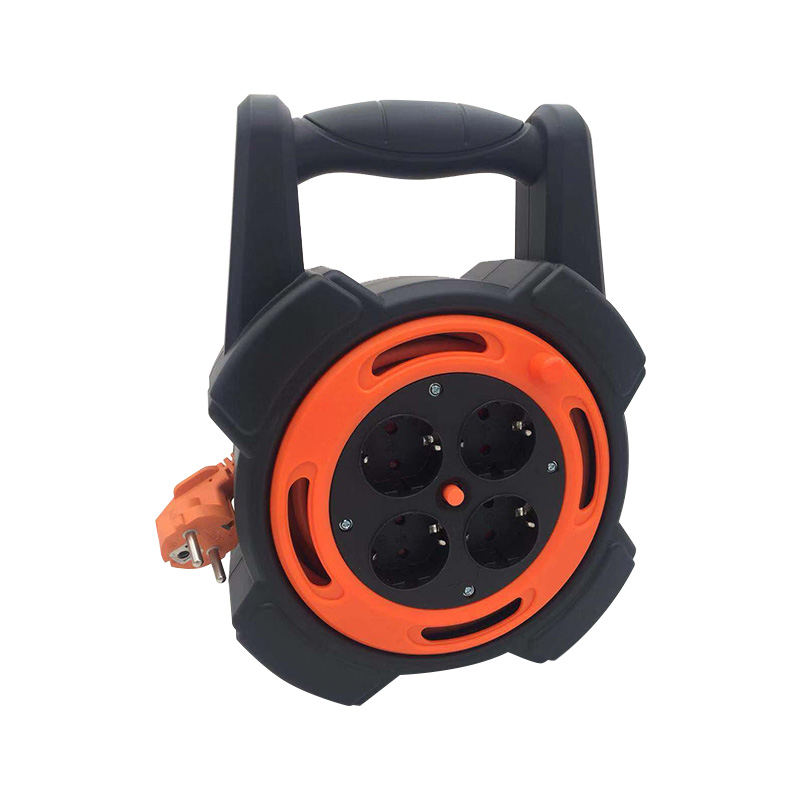
An extension cable reel is a portable power distribution device that winds and stores electrical cable on a rotating drum, providing convenient access to electricity at variable distances from a fixed outlet. These reels typically range from 10 to 100 meters in cable length and handle power loads between 1,500 to 3,500 watts, making them essential tools for both domestic and professional applications where temporary power access is needed.
The fundamental advantage of cable reels over standard extension cords lies in their organized storage, reduced tangling, and improved safety through controlled deployment. Modern units incorporate thermal cut-out switches, circuit breakers, and weather-resistant housing to prevent overheating and electrical hazards during extended use.
Content
Types and Configurations
Manual vs. Automatic Rewind Systems
Manual cable reels require hand-cranking to retract the cable, offering greater control and durability with fewer mechanical parts that can fail. A typical manual reel can be fully retracted in 30-45 seconds with moderate effort. Automatic rewind models use spring-loaded or motor-driven mechanisms that retract cable at the press of a button, though these systems add 15-30% to the purchase price and may require periodic maintenance.
Open Frame vs. Enclosed Drum Designs
Open frame reels expose the cable windings, reducing weight by approximately 20-25% and allowing better heat dissipation during high-load operations. Enclosed drum designs protect cables from dust, moisture, and mechanical damage, making them preferable for construction sites where the reel experiences rough handling. Enclosed models maintain an IP rating of IP44 or higher, suitable for outdoor use in wet conditions.
| Reel Type | Cable Length | Power Rating | Typical Applications |
|---|---|---|---|
| Compact Domestic | 10-25m | 1,500W | Home gardening, cleaning |
| Heavy-Duty Workshop | 25-50m | 2,500-3,000W | Power tools, workshops |
| Industrial/Commercial | 50-100m | 3,500W+ | Construction, events |
Critical Safety Features
Thermal Overload Protection
When cable remains coiled on the reel during use, it cannot dissipate heat effectively, causing temperature buildup that can melt insulation or trigger fires. Quality cable reels incorporate thermal cut-out switches that automatically disconnect power when internal temperatures exceed 60-70°C. Testing by electrical safety organizations shows that a fully coiled 25-meter cable under 13-amp load can reach dangerous temperatures within 15-20 minutes, while fully unwound cable under identical load remains safely below 40°C.
Circuit Breaker and RCD Integration
Premium models include residual current devices (RCDs) that detect earth leakage currents as small as 30mA and cut power within 40 milliseconds, providing protection against electric shock. Standard circuit breakers prevent overload by tripping when current exceeds rated capacity, typically at 13A for domestic units and up to 32A for industrial models.
Cable Capacity Indicators
Most reels display two power ratings on their housing: one for fully unwound cable and a significantly lower rating for wound cable. For example, a typical reel might offer 3,000W unwound but only 1,000W wound. This differential exists because coiled cable traps heat, reducing safe current capacity by approximately 65-70%.
Cable Specifications and Performance
Wire Gauge and Current Capacity
European cable reels typically use H05VV-F or H07RN-F cable types with copper conductors. The cross-sectional area determines current capacity:
- 1.5mm² conductors: Maximum 16A, suitable for 3,680W at 230V
- 2.5mm² conductors: Maximum 25A, suitable for 5,750W at 230V
- 4.0mm² conductors: Maximum 32A, suitable for industrial applications up to 7,360W
North American models use AWG sizing, with 12 AWG (equivalent to 3.3mm²) being standard for 20-amp circuits and 14 AWG (2.1mm²) for 15-amp applications.
Voltage Drop Considerations
Extended cable lengths experience voltage drop due to conductor resistance. A 50-meter cable with 1.5mm² conductors carrying 10 amps will experience approximately 6.5 volts drop, reducing available voltage to 223.5V from a 230V supply. This represents a 2.8% reduction that can affect motor performance and tool efficiency. For cables exceeding 25 meters, upgrading to 2.5mm² conductors reduces voltage drop by approximately 40%.
Selection Criteria for Different Applications
Domestic Garden and DIY Use
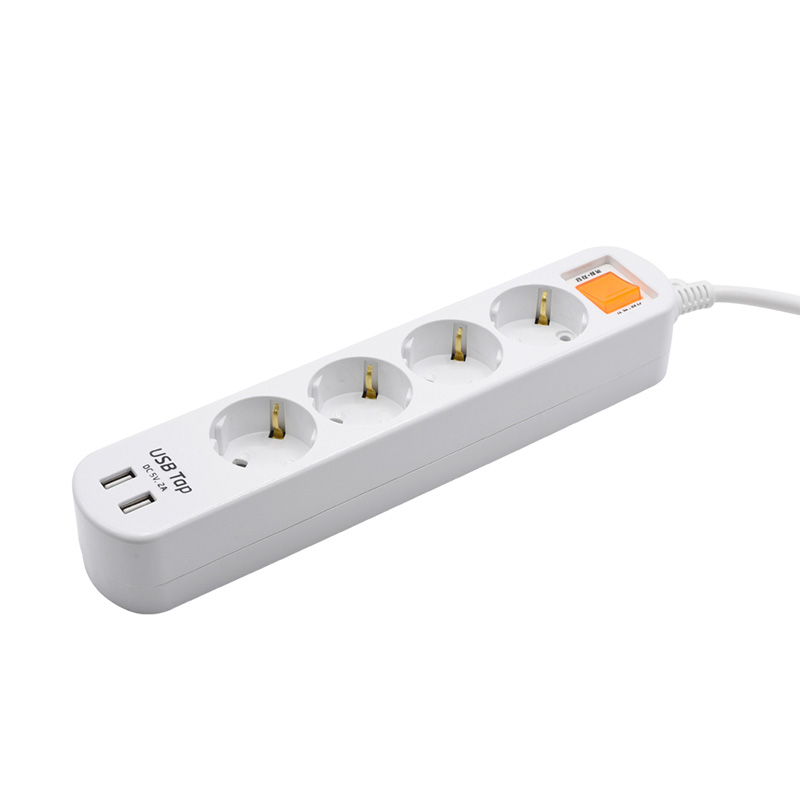
Homeowners typically require 15-25 meter reels with 13-amp capacity for lawn mowers, hedge trimmers, and outdoor lighting. Key features include weatherproof sockets with individual protective covers, a carrying handle for portability weighing under 5 kilograms, and a stable base preventing tip-over during use. Models with 4-socket outlets allow simultaneous operation of multiple low-power devices without exceeding the reel's total capacity.
Professional Workshop Requirements
Trade professionals need reels handling sustained loads from angle grinders, circular saws, and compressors that draw 10-15 amps continuously. Industrial-grade reels feature:
- Steel or reinforced polypropylene drums resistant to impact damage
- H07RN-F rubber cable rated for -25°C to +60°C operating temperatures
- Mounting brackets for wall or vehicle installation
- Cable lengths of 40-50 meters providing workspace flexibility
Construction Site and Event Power Distribution
Large-scale temporary power applications demand reels with 32-amp three-phase capability or multiple 16-amp outlets. These units incorporate IP65-rated weatherproof housings, cable lengths up to 100 meters, and wheeled bases for transportation across uneven terrain. Construction-grade reels cost between $200-600 depending on specifications, representing a significant investment that requires proper maintenance to ensure longevity.
Proper Operating Procedures
Cable Deployment Best Practices
Always fully unwind cable when operating devices exceeding 1,000 watts to prevent heat accumulation. For lighter loads under 500 watts, partial unwinding is acceptable, but monitor the reel housing temperature—if it becomes warm to touch, immediately unwind more cable. When deploying cable, pull steadily without jerking to avoid damaging internal connections at the reel's rotating contact assembly.
Load Calculation and Management
Calculate total connected load by adding the wattage of all devices plugged into the reel. For example, connecting a 2,000W heater plus a 500W light creates a 2,500W total load requiring 10.9 amps at 230V. This exceeds the wound rating of most domestic reels but remains within unwound capacity. Inductive loads from motors and compressors draw surge currents 3-5 times higher than running current during startup, which must be considered when using multiple socket outlets simultaneously.
Environmental Protection Measures
Position cable reels elevated above ground level when used in wet conditions to prevent water ingress into socket outlets. Even IP44-rated reels can fail if sockets become submerged. After outdoor use in rain, leave cable fully unwound for 2-3 hours to air-dry before rewinding and storing. Moisture trapped between cable layers promotes corrosion of copper conductors, reducing cable lifespan by up to 50% according to manufacturer testing data.
Maintenance and Longevity
Regular Inspection Schedule
Examine cable insulation monthly for cuts, abrasions, or exposed conductors, particularly near the plug and at the reel exit point where flexing is greatest. Test the thermal cut-out and RCD functions quarterly by pressing test buttons—failure to trip indicates device malfunction requiring professional repair or replacement. Check socket outlet contacts for discoloration or burning, which indicates poor connection and arcing that degrades electrical safety.
Cable Winding Technique
Rewind cable under slight tension to prevent loose coils that can tangle during subsequent deployment. Guide the cable evenly across the drum width rather than allowing it to bunch on one side, which causes uneven wear and potential jamming. For automatic rewind reels, never allow the cable to snap back freely—control the retraction speed to prevent internal damage to the spring mechanism or swivel contacts.
Storage Conditions
Store cable reels in dry locations between 5°C and 25°C to prevent insulation degradation. Extreme cold makes PVC insulation brittle and prone to cracking, while excessive heat accelerates plasticizer migration that reduces flexibility. Keep reels away from direct sunlight, which causes UV degradation reducing insulation strength by 20-30% annually in outdoor storage situations.
| Maintenance Task | Frequency | Key Check Points |
|---|---|---|
| Visual Cable Inspection | Monthly | Cuts, abrasions, exposed wire |
| Safety Device Testing | Quarterly | RCD trip function, thermal cut-out |
| Socket Contact Inspection | Every 6 months | Burning, discoloration, looseness |
| Complete Electrical Test | Annually | Insulation resistance, earth continuity |
Common Problems and Solutions
Overheating During Normal Operation
If the reel housing becomes excessively hot despite operating within rated capacity, first verify cable is fully unwound. Persistent overheating indicates degraded thermal cut-out calibration or blocked ventilation slots in the drum housing. Operating a reel that has previously overheated risks insulation failure—discontinue use and replace the unit. Manufacturers design thermal protection with limited activation cycles, typically 50-100 trips before reliability degrades.
Intermittent Power Loss
Cable reels use rotating contact assemblies (slip rings or brush contacts) to maintain electrical connection while the drum rotates. These contacts accumulate carbon deposits and oxidation over time, causing intermittent connectivity. Symptoms include flickering lights or motor stuttering during cable deployment. Professional cleaning or contact replacement restores function, costing $30-60 compared to $100-300 for complete reel replacement.
Cable Jamming on Rewind
Tangled or jammed cable results from uneven winding or debris accumulation in drum channels. Fully extend cable, clean the drum surface, and manually rewind while maintaining even tension and proper layer distribution. For automatic reels with persistent jamming, the spring tension may require adjustment—a task best performed by qualified technicians as incorrect spring tension creates recoil hazards.
Cost-Benefit Analysis and Value Assessment
Entry-level domestic cable reels retail between $25-50 for 15-meter units with basic features. Mid-range professional models with thermal protection, RCD, and 25-40 meter heavy-duty cable cost $80-150. Premium industrial reels with weatherproof construction and extended cable reach command $200-600.
When compared to standard extension cords of equivalent length, cable reels cost approximately 2-3 times more initially but deliver superior organization, reduced trip hazards, and extended cable life through protected storage. A quality reel provides 10-15 years of service with proper maintenance, while loose extension cords typically degrade within 5-7 years due to handling damage and improper storage.
For users requiring temporary power access more than once weekly, the convenience and safety benefits justify the premium cost. Occasional users may find standard extension cords adequate for their limited requirements, though they sacrifice the organizational advantages that cable reels provide.
PRODUCTS
ABOUT US
CONTACT INFO.
- +86-18758062352
- +86-0571-64701616
- [email protected]
- No. 7, Xinqu Road, Xin’Anjiang Street, Jiande, Hangzhou, Zhejiang, China

Copyright © 2023 Hangzhou Newmany Electronics Co., Ltd. All Rights Reserved. Power Strip Manufacturer in China| Login

 TOP
TOP